Exhibitions
A century-old look
Artur Ramon Art celebrates the centenary of that first antiques ad published in 1926, a milestone that summarizes a family career that began in Reus in 1893 and has been linked from its origins to the transformation of Sitges into one of the great cultural and tourist centers of Catalonia in the first third of the 20th century.
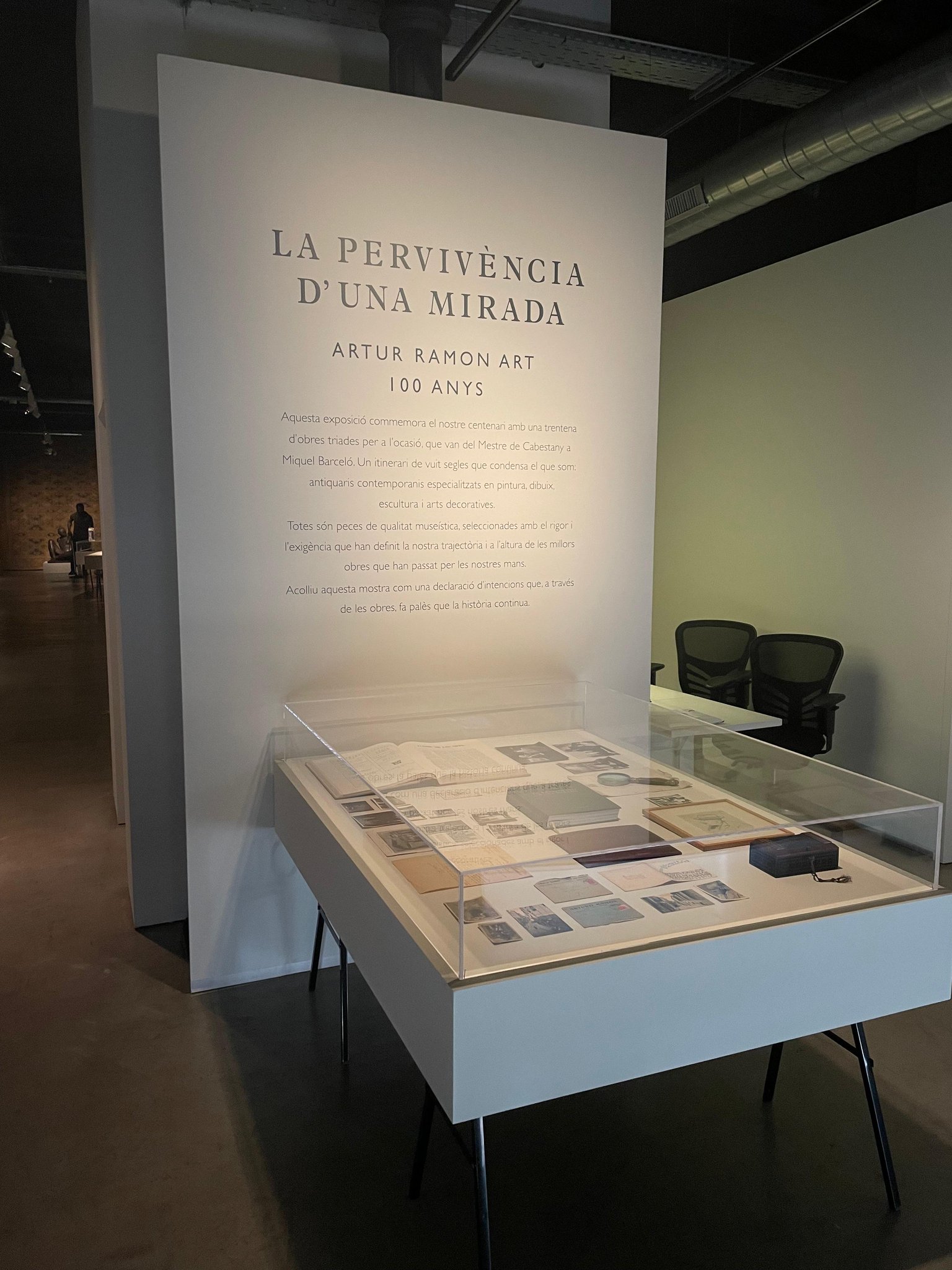
In 2026, Artur Ramon Art celebrates one hundred years of experience as an antique dealer. In October 1926, Artur Ramon Vendrell presented himself as an antique dealer in an advertisement published in L'Amic de les Arts, the Sitges magazine that, during those years, would become one of the main spaces for debate and dissemination of Catalan avant-garde art. That advertisement constitutes the documentary milestone that the family has chosen to commemorate a century of activity, but the history of the Ramon family in the world of antiques goes even further back in time. Its origins date back to Reus, in 1893, when the great-grandfather of the current generation began to direct an activity that until then had been linked to the family jewelry store towards the antiques sector.
Shortly afterwards, the Ramon family's career would become closely linked to Sitges, a town that was undergoing a profound transformation in those years and that would become a meeting point for artists, collectors, intellectuals and a new international bourgeoisie attracted by its status as a summer resort. In this context, one of the first fundamental figures in the history of the Ramon family appeared: Miquel Utrillo. Artist, engineer, critic and one of the main promoters of the cultural project that would eventually crystallize in the Palau de Maricel, Utrillo maintained a friendship with Artur Ramon and sold him approximately two hundred antique pieces. Part of that set is preserved today in the Palau de Maricel and constitutes an exceptional testimony to the intense activity of recovery, acquisition and circulation of antiques that took place in Sitges.
The history of these pieces is also linked to Charles Deering, the American industrialist who had commissioned Utrillo to design the Maricel Palace. Economic disagreements between the two ended up causing the relationship to break down and Deering to leave Sitges for the United States, specifically Chicago. He took a good part of his extraordinary collection with him. Among the works that left Catalonia was the well-known panel of Saint George and the Princess, by Bernat Martorell, today considered one of the most outstanding pieces of Catalan Gothic painting.
For the Ramon family, those years meant much more than the beginning of a commercial activity. The great-grandfather began to organize exhibitions, participate in auctions and develop an activity that combined knowledge of antiques with a careful reading of the social transformations of the time. The tourism that was beginning to arrive in Sitges, the urbanization of Terramar and the desire to turn the town into a destination comparable to the large towns of the French Côte d'Azur contributed to creating a new market for art and antiques.
The family's career then passed into the hands of the grandfather, also Artur Ramon, but the Civil War abruptly interrupted that evolution. Imprisoned on the ship Argentina, he experienced one of the most traumatic episodes in a family history marked, like so many others, by the fracture caused by the conflict. When he was released, the Ramons began a new stage in Barcelona. However, they had to do so practically from scratch: the war had destroyed much of what they had built up until then.
Barcelona would thus become the new stage for an activity that, since 1942, has had one of its reference points on Carrer de la Palla. The move to Carrer de Bailèn, 19, in 2017, opened a new stage without breaking with this heritage. Over five generations, the family has maintained the same dedication to the world of antiques, but also a capacity to adapt to the transformations of the market, collecting and the very idea of heritage.
Today Artur Ramon Art is led by Artur Ramon Navarro, with his sister Mònica as partner and director of the gallery, and with the full incorporation of the generation represented by Artur Ramon Renau. The gallery combines commercial activity with its own exhibition program and a continuous presence in the main international fairs. In this journey, antiques are no longer presented solely as objects of the past, but as pieces capable of establishing dialogues with contemporaneity, often through the eyes of curators, historians and artists.
This desire to open up heritage to the present is especially visible in the gallery's participation in international events such as Frieze Masters, in London, and TEFAF Maastricht, two of the world's major showcases for the art and antiques market. It is in these spaces where Artur Ramon Art projects internationally a way of working built over a century and based on the combination of knowledge, research, collecting and contemporary sensitivity.
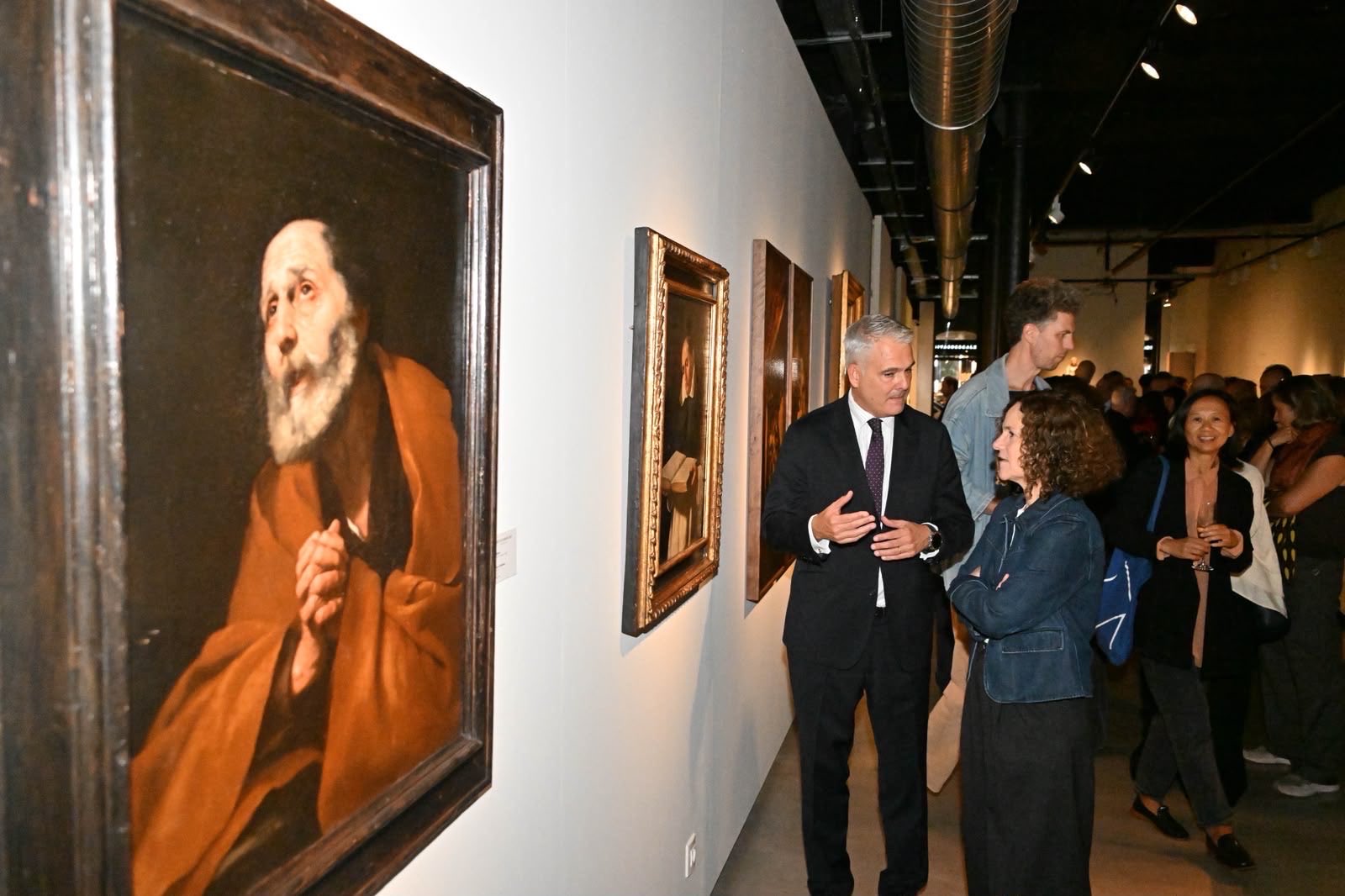
To commemorate the centenary, on October 27 the gallery will inaugurate an exhibition conceived as a synthesis of this trajectory. The project will bring together around thirty works of extraordinary quality and from different periods, styles and disciplines, with artists and masters such as Zurbarán, Meléndez, Ribera, Goya, Ramon Casas, Picasso and Miquel Barceló. Rather than constructing a strictly chronological narrative, the selection aims to relate different moments in the history of art and show the continuity of a view that has been passed down from generation to generation.
The exhibition will coincide with the presentation of La pervivència d'una mirada, a book dedicated to the history of the Ramon family and their role in the evolution of antiques and collecting in Catalonia. The volume will also include a selection of some of the most significant works that have passed through the gallery during these hundred years, recovering a memory made up of pieces, exhibitions, clients, collectors and episodes that explain a part of Catalan cultural history.
One hundred years after that announcement in L'Amic de les Arts, Artur Ramon Art continues to link the past with the present. The date of 1926 officially marks the centenary, but the family story begins in 1893 and passes through Reus, Sitges and Barcelona; through jewelry and antiques, through auctions and exhibitions, through Utrillo and Deering, through the Civil War and the subsequent reconstruction. A story that has survived a war, changes of city and generation, and also the profound transformation of the world of art and collecting.

You may be
interested
...