Exhibitions
Santiago Sierra and the choreography of submission
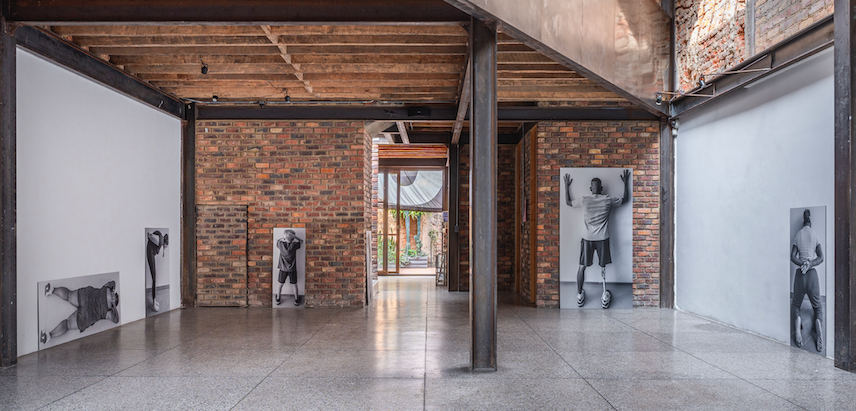
There are gestures that sometimes need no words. Raising one's arms, bending over, placing one's hands against a wall, or remaining motionless can be everyday actions, but they are also positions imposed by an authority that watches, commands, and subjugates. In Popular Gymnastics , Santiago Sierra shifts these movements into the realm of artistic representation to highlight the physical and symbolic dimensions of power. What at first glance might seem like a set of exercises reveals, in reality, a grammar of obedience.
Presented by Visto Bueno in collaboration with Plural Nodo Cultural, the exhibition brings together photographs taken in Cali as part of "Exercises for a Popular Gymnastics ." The project constructs a repertoire of bodily postures linked to detention, surveillance, and subjugation, isolating each position to make visible what, in a situation of coercion, usually occurs rapidly, under pressure, and without the possibility of rebuttal.
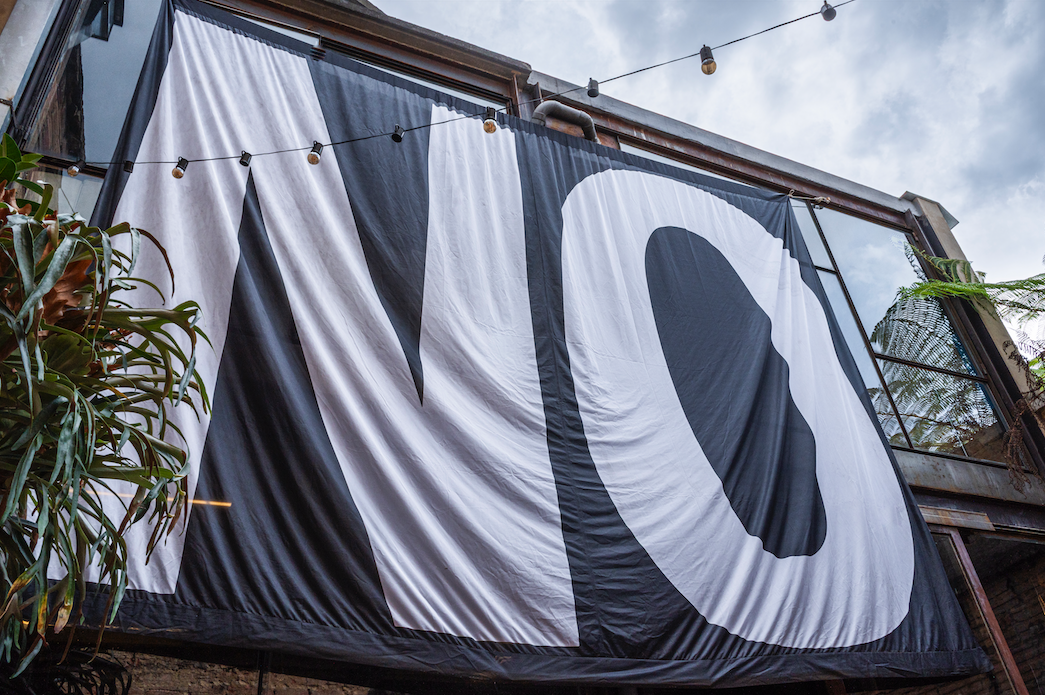
Photo credit: Gregorio Díaz Díaz Granados.
Sierra's conceptual operation lies, to a large extent, in the choice of the term "gymnastics." The word refers to training, repetition, and the acquisition of physical discipline, but here it acquires a disturbing resonance. The bodies seem to execute a sequence of learned movements, as if submission could be practiced until it becomes a habit. Violence ceases to appear exclusively as an exceptional episode and is revealed as a system of gestures that can be repeated, recognized, and even naturalized.
The photographs don't need to reconstruct a complete scene to trigger this interpretation. The project's visual economy focuses attention on the position of the bodies and their relationship to a space that seems to impose its own rules. Raised arms, leaning torsos, and hands against the wall function as signs of an authority that doesn't always need to be displayed to be effective. Power manifests itself in posture, in the restriction of movement, and in the forced renunciation of freely occupying the space.
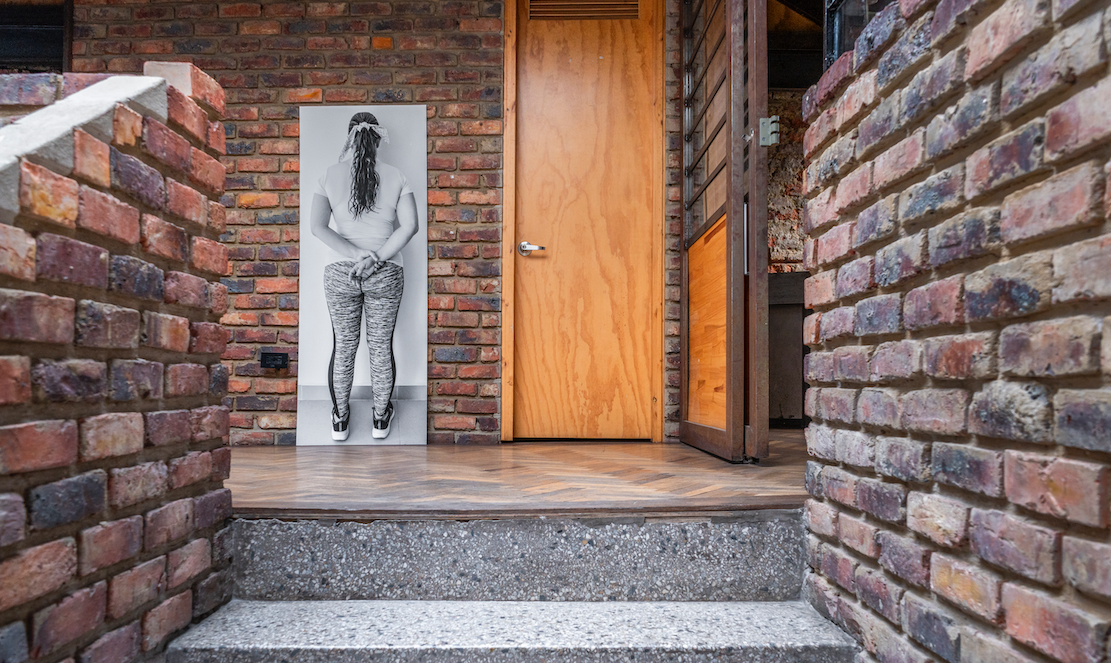
Photo credit: Gregorio Díaz Díaz Granados.
From a critical perspective, this strategy situates the work within a territory characteristic of Santiago Sierra's practice, marked by the analysis of structures of domination, power relations, and the mechanisms of instrumentalization of bodies. His work has repeatedly questioned the material and symbolic conditions that determine the position of individuals within a social order. In Popular Gymnastics , this concern is articulated through an apparent formal simplicity that shifts the expressive weight toward the political meaning of each gesture.
Photographic fragmentation plays a crucial role here. By separating each pose from its temporal development, Sierra forces us to pause and focus on what is normally perceived as a fleeting action. The image suspends movement and opens a space for observation: what distinguishes a voluntary body position from an imposed one? When does discipline become submission? To what extent do gestures of obedience outlast the situations that produce them and ultimately become part of the collective memory?
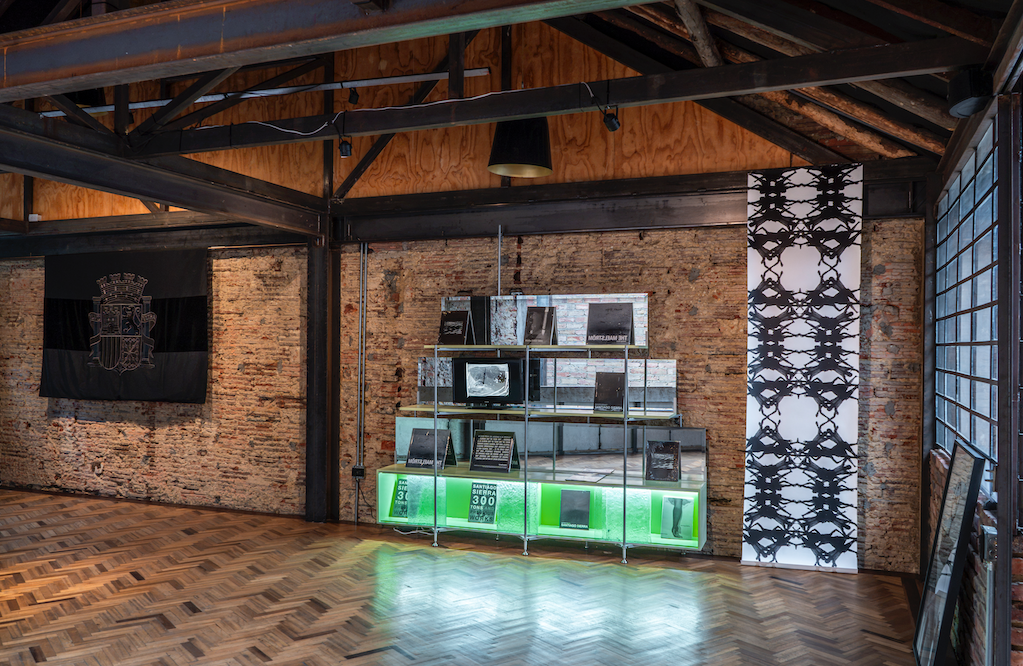
Photo credit: Gregorio Díaz Díaz Granados.
The series offers no definitive answers. Its strength lies precisely in this ambiguity, in its ability to transform a physical position into an image laden with threat, memory, and social significance. However, the apparent neutrality of the record also raises a relevant question: by isolating the postures, the photographs compel us to consider the conditions of violence that give rise to them, but leave the viewer with the task of reconstructing the context that imbues them with meaning. This distance does not necessarily weaken the project; it constitutes part of its critical imperative.

You may be
interested
...