
News
The courts halt the removal of more pieces from the National Museum of Colombia
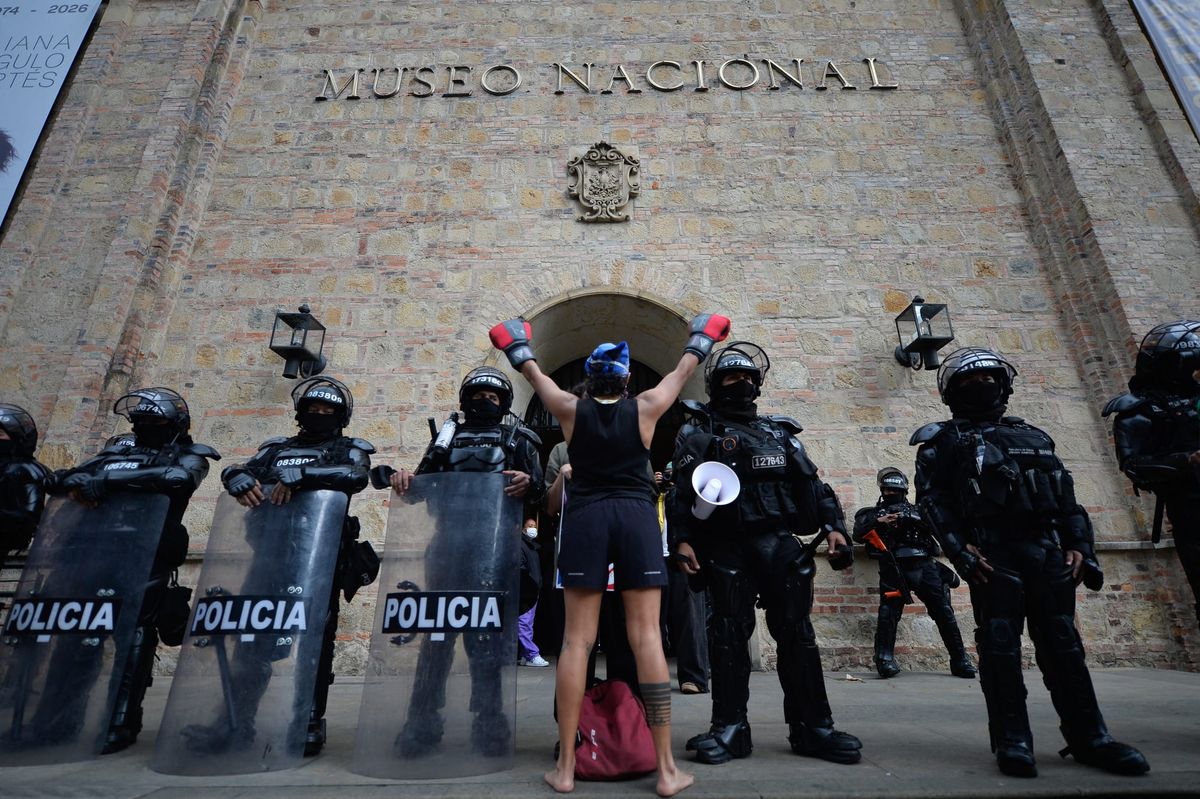
The controversy surrounding the removal of 30 pieces from the permanent exhibition of the National Museum of Colombia has triggered an institutional crisis that extends far beyond the museum sphere. The decision by the Ministry of Culture, defended by the government of President Abelardo de la Espriella as part of its offensive against what it calls "Wokism ," has provoked citizen protests, rejection from artistic institutions, and criticism from across the political spectrum. The controversy has also reached the courts: a judge in Bogotá has ordered, as a provisional measure, that no further removals be carried out and that the preservation of the affected objects be guaranteed.
Judge César Osorio Ortiz's ruling came after he accepted a legal action filed by three citizens who believe their rights related to historical memory, truth, symbolic reparation, and freedom of artistic expression have been violated. The measure compels the Ministry of Culture to preserve the removed pieces and prohibits their destruction, removal from the museum, decommissioning, return to third parties, or alteration. It also stipulates that other works may not be removed or altered from the exhibitions based on their content without administrative justification for such decisions.
The plaintiffs in the legal action are Gabriel Becerra, a representative in the House for the Historical Pact and secretary general of the Patriotic Union; Jorge Virviescas, a member of the León Zuleta LGBTIQ+ collective; and Kevyn Muñoz Torres, a member of the trans organization Revolución Rosa. The judge has given the Ministry one business day to submit a detailed report on the removed artifacts, their current location, their state of preservation, and the authorities responsible for each decision.
Objects that tell a disputed story
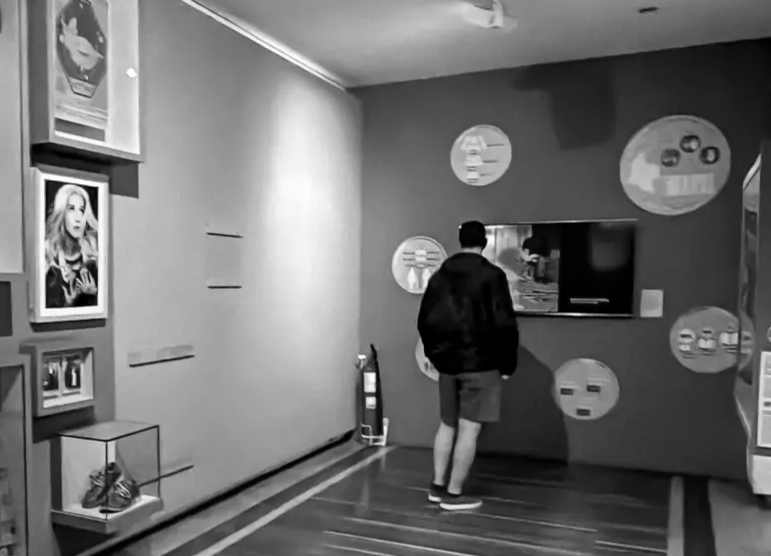
Among the items removed are objects and photographs related to sexual diversity and feminist movements, as well as materials linked to leftist leaders assassinated in 1990. Among them is Bernardo Jaramillo, presidential candidate of the Patriotic Union, whose trajectory is part of one of the most painful episodes in Colombian political history.
The intervention has also affected objects that document fundamental processes in the country's recent history. This is the case with a sample of the Seventh Ballot, the initiative promoted by the student movement in 1989 that contributed to the constituent process that culminated in the 1991 Constitution. The pen used by the former FARC and former President Juan Manuel Santos to sign the 2016 peace agreement has also been removed. The list of items also includes the jersey that cyclist Lucho Herrera wore when he won the King of the Mountains classification in the Tour de France.
The diversity of these objects has intensified criticism of the intervention. Beyond their material nature, the pieces document struggles for civil rights, processes of democratic participation, political conflicts, peace agreements, and sporting events that form part of the Colombian collective imagination. Their removal thus raises a central question about the role of national museums: who decides which episodes should be represented and by what criteria the narrative of a society is constructed?
Political discourse and the response of the cultural world
The controversy has been exacerbated by the political context in which the decision was made. On the same day the pieces were removed, President De la Espriella gave a speech at the Ministry of Culture in which he announced a crackdown on gender ideology and inclusive language. In his address, he questioned perspectives that, in his view, deny the biological differences between men and women, justify terrorism, or interpret history solely in terms of the relationship between oppressors and oppressed.
The Minister of Culture, Holguín, has defended the need to reevaluate the curatorial approach of the National Museum, but has not offered a detailed explanation of the criteria used to select the pieces or the reasons for their sudden removal. The intervention has left empty spaces in the galleries and fueled suspicions that the reorganization is ideologically motivated.
After two days of protests, the minister maintained her position and published a statement on her social media accounts accusing those who organized the demonstrations of having transformed culture into a tool for "historical deconstruction, glorification of crime, and revictimization of victims." Her statements have contributed to prolonging the confrontation between the government and those sectors demanding public explanations about the intervention.
Colombian galleries assert cultural autonomy
The rejection doesn't come solely from political organizations or social groups. The debate has also mobilized institutions and professionals in the art sector, concerned about the consequences such a decision could have on museum autonomy and freedom of historical interpretation.
The Colombian Association of Art Galleries (AGAC) has highlighted the role galleries play in the professional development of artists, gallerists, curators, cultural managers, and other agents in the sector. The organization champions these spaces not only as venues for exhibiting, selling, and circulating art, but also as meeting points that promote access to culture through exhibitions, talks, courses, seminars, and workshops, many of which are free.
In its institutional statement, the association underscores the historical contribution of galleries to the autonomy of the Colombian art scene, the consolidation of modern and contemporary art, the internationalization of its artists, and the development of audiences and collectors. It also highlights their work in areas such as collection advising, cataloging, conservation, and the sale of artworks. Since its founding, AGAC has championed the revitalization of the national and international art market and the promotion of best practices in collecting, based on the conviction that culture contributes to the social and economic well-being of the country.
In this context, the controversy surrounding the National Museum touches on an issue that goes beyond the management of a specific collection: the ability of cultural institutions to carry out their work with professional criteria, preserve the plurality of historical narratives, and maintain their independence in the face of changes in political orientation.
A rejection that cuts across the political spectrum
Criticism of the removal of the artifacts has transcended traditional ideological boundaries. Representatives from liberal and right-wing sectors have publicly expressed their disagreement with the intervention, questioning the government's right to determine which historical events should remain visible in a museum.
Federico Hoyos, a former congressman from the Democratic Center party, has expressed his opposition to the removal of artifacts that illustrate a part of Colombian history. Meanwhile, Juan Manuel Galán, director of the New Liberalism movement and son of presidential candidate Luis Carlos Galán, who was assassinated in 1989, has warned of the risks of turning museum galleries into instruments of political propaganda. His criticism focuses on the possibility that an administration might adapt the past to its own interests, instead of facilitating a pluralistic understanding of events.
María Paz Gaviria, art curator and former Senate candidate for the Liberal Party, has also questioned the decision, asking how the achievement of citizenship can be explained without showing those who had to fight for it. Her reflection summarizes one of the main objections to the removal: eliminating the material traces of certain movements can hinder the understanding of the social processes that transformed the country.
The intervention has also provoked outrage from several Colombian modern art museums, which have demanded respect for institutional autonomy and a public review of the decisions made. Critics agree that the selection and presentation of museum collections should be based on transparent and professional criteria, not on the desire to impose a single interpretation of history.

You may be
interested
...