Exhibitions
Pere Portabella without limits
Pere Portabella's cinema has never understood borders as limits. Between image and music, between film and the visual arts, between formal experimentation and political intervention, his work has, over more than five decades, constructed its own territory, radically attentive to what happens beyond the margins. The Reina Sofía Museum now celebrates this trajectory with *The Cinema of Pere Portabella: Challenging the Norms* , a retrospective held from October 15 to 24 at the Sabatini Building Cinema, which is conceived as an introduction to one of the essential figures of the Spanish cinematic avant-garde.
The program, structured in ten sessions, coincides with the preparations for the centenary of Portabella's birth. Born in Figueres in 1927, his career spanned some of the most decisive moments in Spanish culture during the second half of the 20th century. His cinema stems from a desire to question the conventions of cinematic language, but also from a political stance that, during the Franco regime, found in artistic creation a form of resistance.
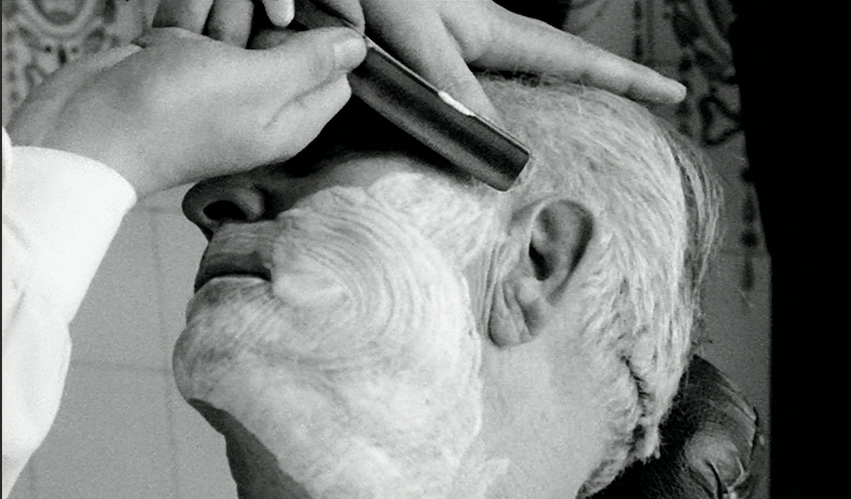
Pere Portabella, Pont de Varsòvia [Warsaw Bridge], 1990, film.
Portabella was also a key figure in the emergence of the so-called New Spanish Cinema of the 1960s. Before fully developing his own filmography, he worked as a producer on some of the films that helped transform the cinematic landscape of the time. These include Carlos Saura's *Los golfos* (1959), Marco Ferreri's *El cochecito* (1960), and Luis Buñuel's *Viridiana* (1961). The latter, which won the Palme d'Or at Cannes and was later banned by the Franco regime, is one of the most significant episodes in Portabella's relationship with cinema, which he understood as a space for cultural and political confrontation.
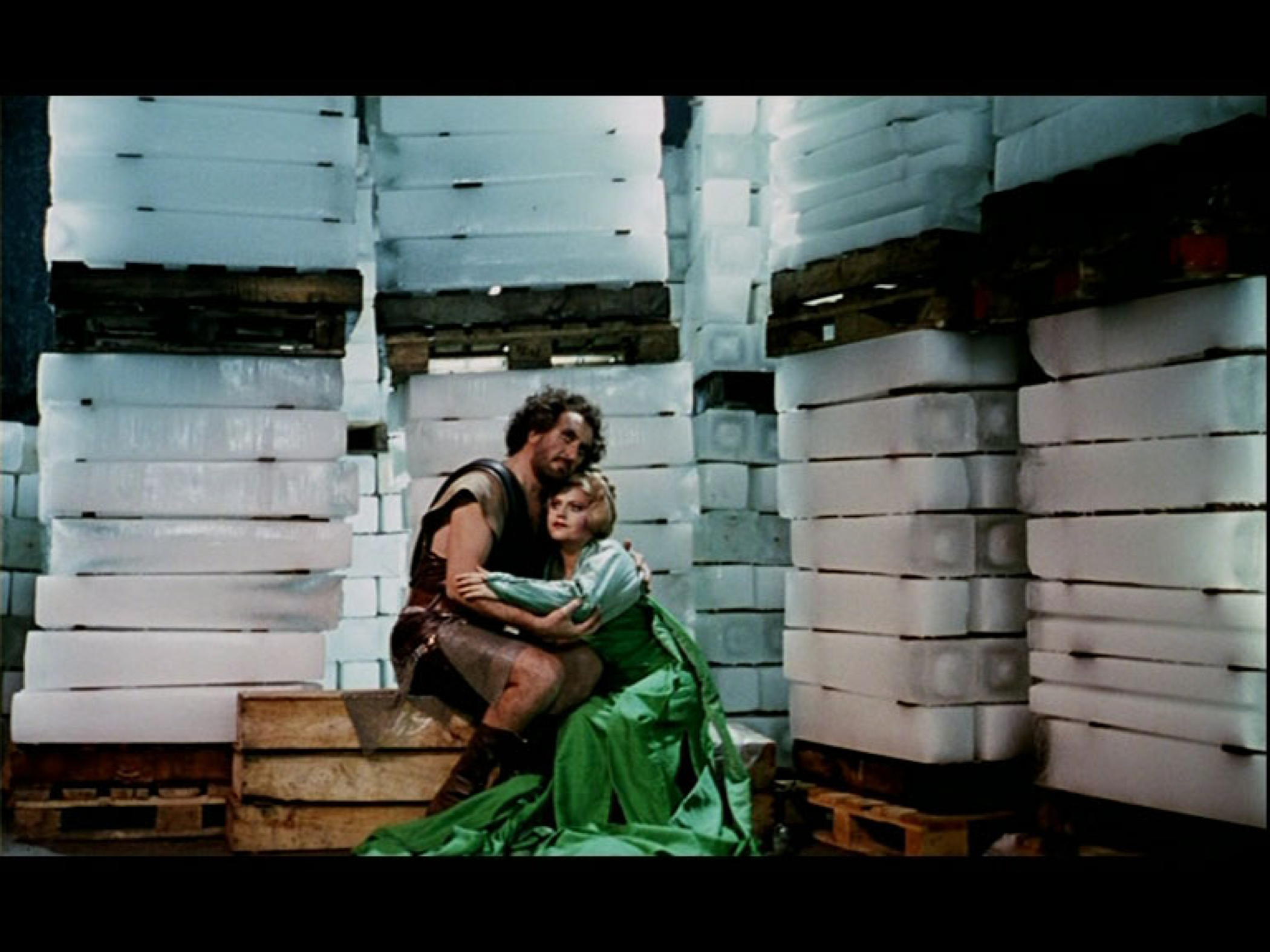
His own cinematic work would further explore this desire for rupture. In films like Vampir-Cuadecuc (1970), Portabella dismantles the conventions of horror cinema to transform filmmaking and the very construction of the image into cinematic material. The film, linked to the production of Count Dracula by Jesús Franco, departs from conventional narrative to explore artifice, the body, darkness, and the very nature of representation.
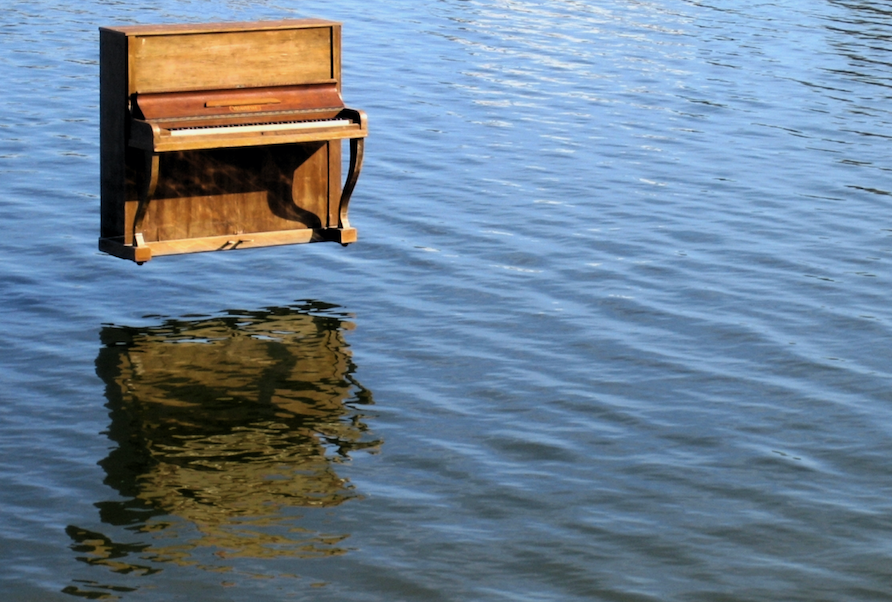
Pere Portabella. Die Stille vor Bach [The Silence Before Bach], 2007, film.
Music and sound experimentation also occupy a central place in his work. Acció Santos (1973) reflects his collaboration with the composer and artist Carles Santos, a relationship that exemplifies how Portabella has always understood cinema as a territory open to other disciplines. Joan Miró, Joan Brossa, Antoni Tàpies, and the Grup de Treball are also part of this universe of collaborations and affinities that place his film production in close relation to avant-garde artistic practices.
The political dimension reappears with particular intensity in General Report on Some Issues of Interest for a Public Projection (1976), made in the early years of the Transition. The film offers a perspective on the historical moment that followed Franco's death and on the transformations that accompanied the shift from dictatorship to democracy. Portabella uses cinema here as an instrument for observation, debate, and reflection on a society immersed in a process of profound change.
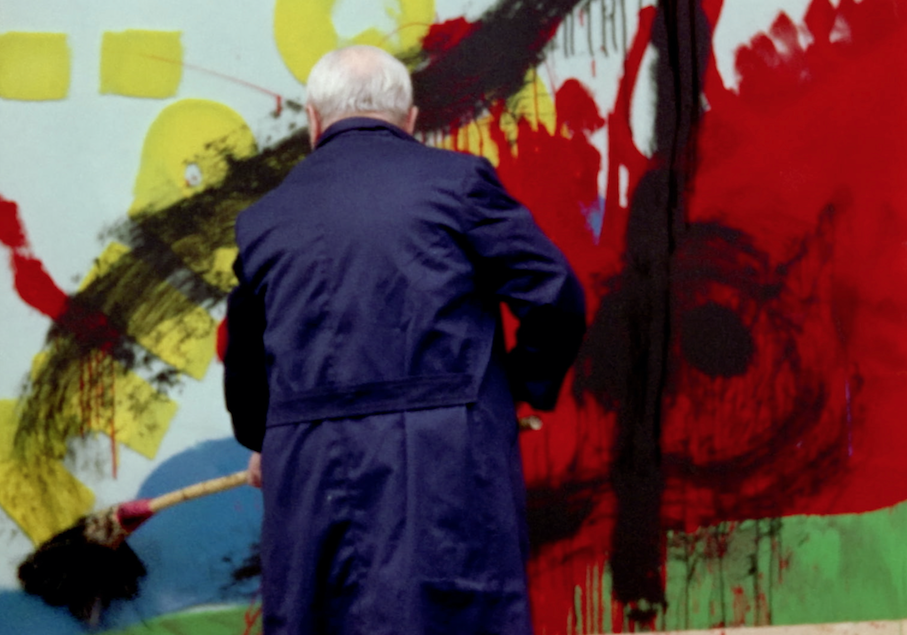
Pere Portabella, Miró l'altre [Looked at Another] 1969, film.
The journey through his filmography also includes Die Stille vor Bach [The Silence Before Bach] (2007), one of his most singular works. Using the figure of Johann Sebastian Bach as a starting point, Portabella constructs a film in which music becomes visual material and experience, focusing on the instruments, spaces, performers, and the crafts that make its existence possible. Once again, conventional narrative gives way to an open structure in which image and sound acquire an almost autonomous dimension.
One of the highlights of the retrospective will be Suite Miró, a session dedicated to the works Portabella created with Joan Miró. The relationship between the two is one of the most significant examples of the intersection between cinema and art that runs throughout the filmmaker's career. The camera does not merely document the artist's work, but participates in its reinterpretation and generates a new space for creation.
Alongside his own films, the program will allow viewers to rediscover some of the key works Portabella produced during the years of renewal in Spanish cinema. Thus, Los golfos and Viridiana will be presented within the cycle alongside his other films, establishing a continuity between Portabella the producer who helped pave new paths for Spanish cinema and the filmmaker who later took that desire for rupture to its ultimate conclusion.
You may be
interested
...