Opinion
Dawn breaks and the snow falls.
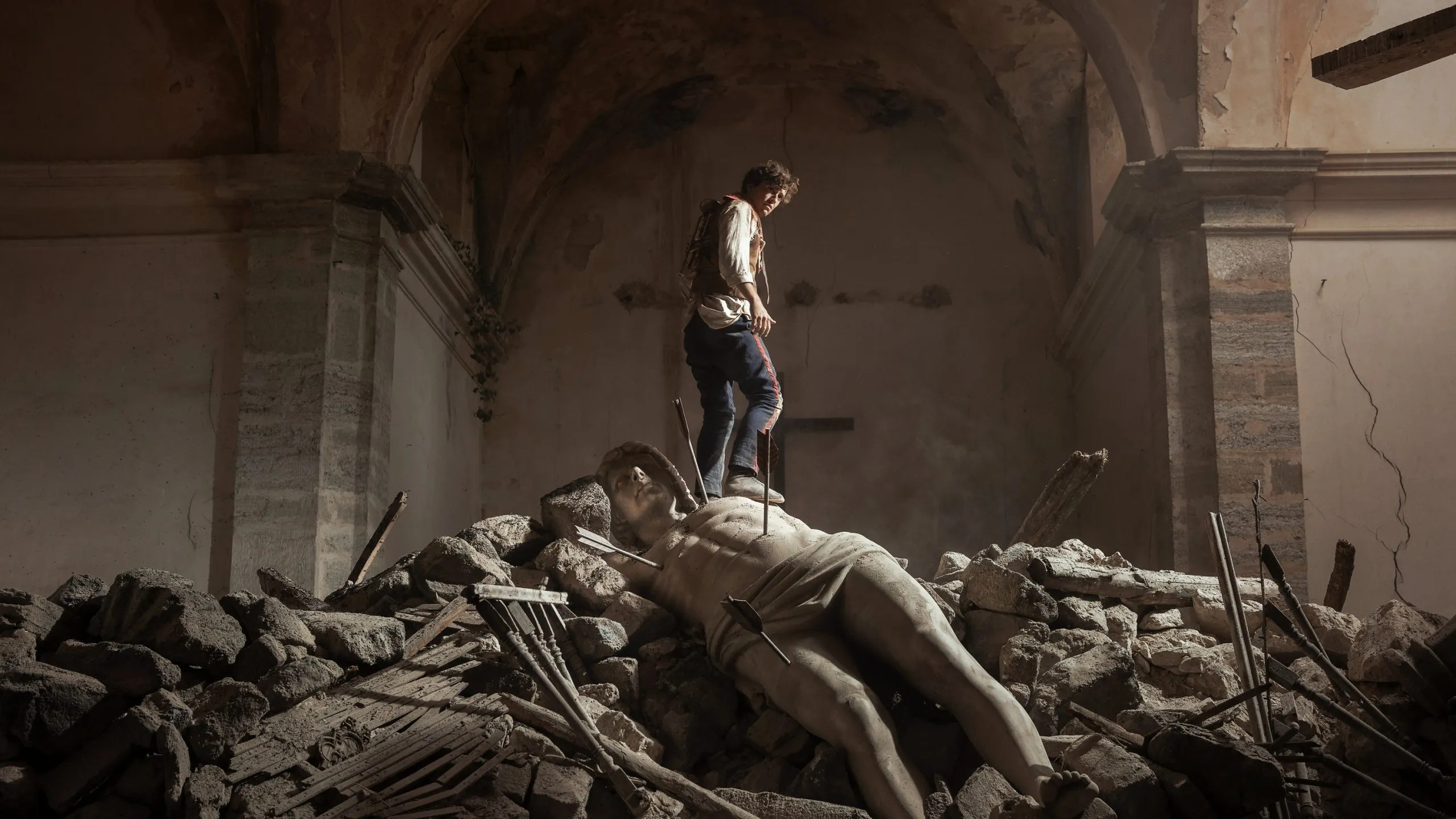
Seems that Sebastian goes to say something. So the light of the sunrise floods the room until do it disappear. Outside resounds he sea. AND dark end.
AND Sebastian No ha saying nothing, No ha had time, but he also He wants to believe it: “No one can disappear completely.” Perhaps that’s why the film allows him return. AND there, together to Rafael, it comes back to read:
You'll never understand how much I love you
because you sleep in me and you are asleep.
I hide you, crying, pursued.
by a voice of penetrating steel.
Rule that agita equal meat and morning star
It pierces my aching chest now.
and the murky words have bitten
the wings of your stern spirit.
Cluster of people jump in the grounds
waiting for your body and my agony
in horses of light and green manes.
But go on sleeping, life mine.
Hey my blood rattan in the violins!
Look that us they lurk still!
Is possible that so neither it I would understand. But it I doubt: who has had the chance — either the misery — of feel so much, feels For a lifetime. Love can't disappear completely. Neither can pain.
"This country — you says Federico to Rafael, approaching he end of the movie - has too many stories of love buried in the fields. "You have to scratch the ground to make them come out."
A young man returns home after hitting black at the casino. A musician is forced to exchange his trumpet for a rifle. A grandson piecees together his grandfather's past.
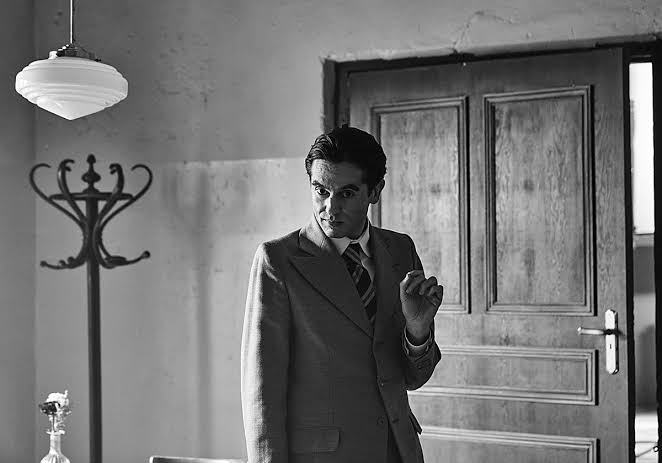
Starting with The Dark Stone , of Alberto Rabbit Hunter, and of the first Pages from Federico García Lorca's unfinished work, La bola negra (The Black Ball) , Los Javis shape a story that intertwines the lives of three men in different eras — Carlos, Sebastian and Alberto—, intimately bound by desire, pain and the inheritance. So, the movie finds in he poet a a way of naming and rejuvenating that which had been suspended in history.
Never nobody ha broken so many hearts as the war. He hate, his weapon more lethal; he same that the unleashes the shade that is left over after. AND that Nonsense! What nuisance he think that the life belongs only to some how many! But in the film, Life insists: "We must live." And that's because — Vicente Aleixandre writes — Lorca was " a sorcerer of the happiness, a conjurer of the joy of the life". Still So, you It hurt he world.
Aleixandre also said: "What hurts you, son?" the moon seemed to ask [Lorca]. "The earth hurts me, the earth and men, the flesh." and he soul human, mine and that of others, who are one with me."
Because Federico García Lorca believed in the heart: he saw from the heart and lived and It hurt from he heart. Her way of looking at the world is special because seems unearth a Truth without fully deciphering it; feeling it with all its magic. And the Snow.
Roadless field
and city without roofs.
The world is silent
and candid.
Pigeon gigantic
of the stars,
How come it doesn't go below blue?
the eternal kite?
It's impossible to clothe Lorca's eyes, to see everything from that perspective. But then again, it's not possible either. would have funny. I would be all a waste! Each which has their eyes, two eyes, and Xavier Bald and Xavier Ambrossi they have used the his — four, in total; so different, together so passionate— for look at him to he, to the poet. To tell a story through of the his own: The black ball . AND all, from the heart.
Note: The initial stage direction in italics belongs to La piedra oscura , by Alberto Conejero. The dialogues from La bola negra , by Javier Calvo and Javier Ambrossi, appear in quotation marks; the quotations from Vicente Aleixandre are expressly indicated. The verses correspond Love sleeps in the poet's chest and Snow , by Federico García Lorca.



You may be
interested
...