News
Nefertiti's tomb could be hidden next to Tutankhamun's.
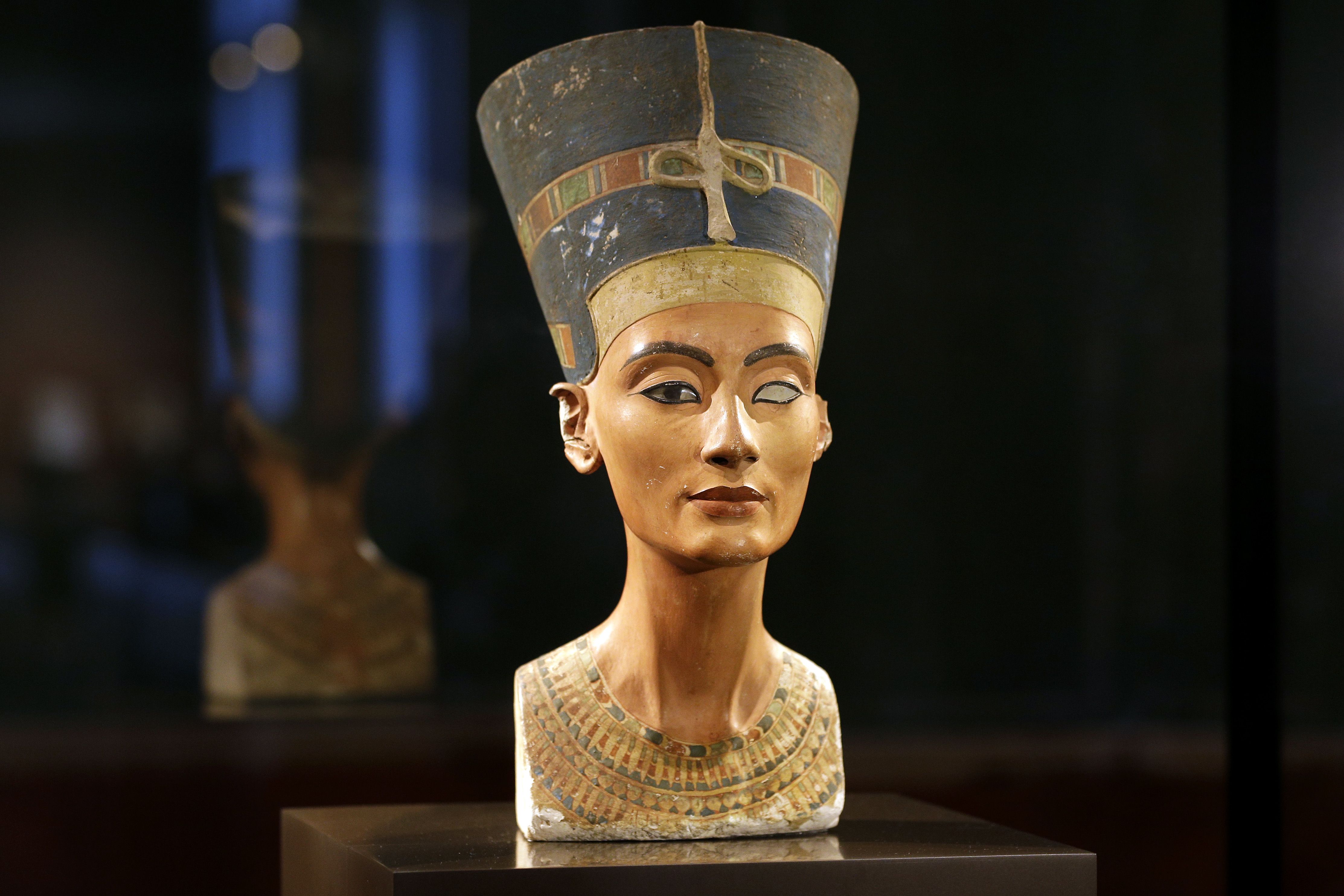
The possibility of finding Nefertiti's tomb, one of the great mysteries of Egyptian archaeology, is gaining momentum once again. New geophysical surveys have detected indications of possible hidden structures near Tutankhamun's tomb in the Valley of the Kings, a hypothesis that could change the interpretation of one of the most famous burials of ancient Egypt. However, for now, these are just indications that will need to be verified through direct exploration.
The research, whose results have been published in Nature , combines different subsurface analysis techniques. Previous studies using ground-penetrating radar and electrical resistivity tomography have been complemented by new microgravity measurements, a non-invasive procedure capable of detecting minute variations in soil density. The aim is to determine what may lie hidden beyond the walls of the tomb known as KV62.
The new data has been analyzed by a team led by archaeologist Mamdouh Eldamaty and engineer George Ballard, who reviewed both the new measurements and the results obtained in previous campaigns. According to Ballard, the markings could correspond to a corridor approximately two meters wide leading away from the burial chamber and densely filled with rubble. This very circumstance could explain why some previous investigations did not clearly identify the structure: those studies primarily focused on large empty spaces behind walls.
The investigation has also identified other anomalies with characteristics consistent with artificial structures. Microgravity measurements, taken from more than 1,200 readings across an area of approximately 35 square meters, reveal low-density zones with rectangular shapes oriented parallel to the tomb's north wall. One of these, dubbed "anomaly 7" by the researchers, features a higher-density area within a lower-density area—a configuration that could correspond to a chamber containing objects. The researchers themselves, however, acknowledge that these signals are near the detection limits of the technique.
The possibility that Tutankhamun's tomb may be architecturally linked to an earlier burial site is not new. Since Egyptologist Nicholas Reeves proposed in 2015 that KV62 could be part of a larger royal tomb, various investigations have attempted to determine if there are still inaccessible spaces behind its walls. The tomb's unusual configuration has further fueled speculation: its small size is uncommon for a pharaonic burial, and some researchers have suggested that it may have been hastily adapted after Tutankhamun's untimely death.
It is precisely at this point that the name of Nefertiti reappears. The queen, wife of Akhenaten and one of the most powerful figures of the Amarna period, disappeared from historical records under circumstances that still generate numerous hypotheses. The absence of an identified tomb has fueled, for decades, the possibility that her burial remains hidden somewhere in the Valley of the Kings.
The new data do not allow us to confirm that the detected structures belong to Nefertiti. The existence of the chambers has also not yet been confirmed. Independent experts consulted by Nature consider the results interesting, but call for more information before drawing definitive conclusions. Christopher Gaffney, a ground-penetrating radar specialist at the University of Bradford, has indicated that the available data do not yet allow for a firm conclusion, while geophysicist Peter Styles considers the presence of chambers plausible based on the microgravity measurements, although he too calls for further data.
The next phase of the investigation could be decisive. If Egyptian authorities authorize the intervention proposed by the team, researchers could drill small holes to insert camera-equipped devices and explore the suspected areas without the need for an initial conventional excavation. According to Ballard, this work could begin in November, although the final decision rests with Egypt's Supreme Council of Antiquities.
The interest of this potential discovery lies, therefore, both in what might be found and in what still remains hidden. If the anomalies were to confirm the existence of a funerary complex predating Tutankhamun, it would then be necessary to determine who was buried there and what relationship that space had with the young pharaoh's tomb. The connection with Nefertiti remains a hypothesis, but the new evidence once again places her name at the center of one of the great archaeological mysteries of ancient Egypt.



You may be
interested
...