Exhibitions
Cuba, between homeland and survival
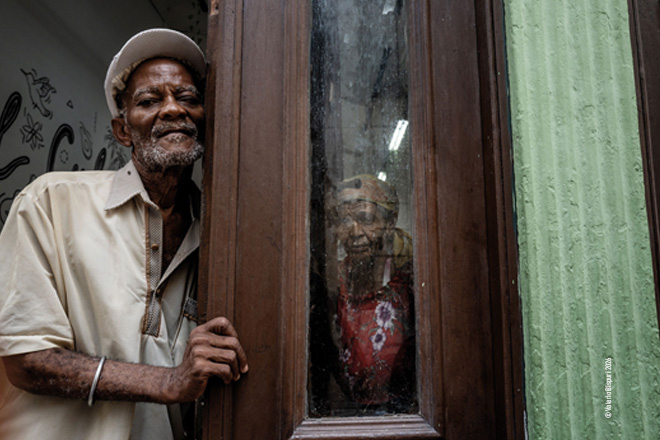
In the streets of Havana, in the harshest landscapes of the eastern part of the island, inside houses or in the everyday gestures of those who face the difficulties of the present, Valerio Bispuri finds the images of a society traversed by crisis, but also by a memory and a feeling of belonging that remain deeply rooted.
Homeland or Death. Voices from an island that resists brings together 33 photographs taken by the renowned Italian photojournalist during his immersion in contemporary Cuba in June and July of 2026. The exhibition, which can be visited from September 9 to 27 at the Santa Rita Gallery, proposes a journey divided into four narrative sections that leads from Havana to the eastern regions of the island to address, beyond the political dimension of the title, a much more complex question: what it means to belong to a place when that place is going through one of the most difficult periods in its recent history.
Bispuri has built much of his career by focusing on those who remain outside the mainstream narratives. His photography seeks to make visible those realities that are usually relegated to the margins, and in Cuba, this documentary approach encounters a society where the traces of the crisis are part of everyday life. Streets littered with garbage, dilapidated housing, ravaged landscapes, and faces looking directly at the camera coexist with domestic scenes, children's games, and small gestures that speak of a capacity for resilience that doesn't need to be dramatized.
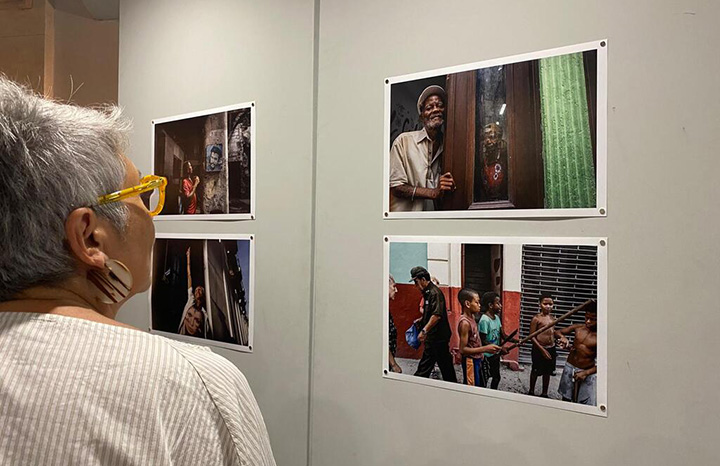
Light plays a fundamental role in this narrative. It appears among the shadows of the streets, penetrates the interiors of the homes, and concentrates in the glow of a makeshift fire used to prepare food. It is not merely a formal device, but a way of constructing a perspective on a reality that defies simplistic interpretations. Bispuri's photography moves precisely within this space of tension between visible precarity and what remains hidden: family ties, memory, beliefs, and an identity built over generations.
“Having photography means, above all, delving deeper, understanding the meaning of a look, a gesture, a movement,” the photographer explains. From this perspective, Patria o Muerte (Homeland or Death) distances itself from an exclusively political approach to Cuba. The title itself comes from one of the most recognizable expressions of the Cuban Revolution, a phrase that for decades has been present in schools, public squares, speeches, and the daily life of the country. But Bispuri observes how those words can acquire a different dimension today.
"Beyond the political statement, they tell the story of the profound relationship between a people and their land," he notes. His experience during the trip allowed him to see how, alongside economic hardship, the scarcity of essential goods, isolation, and social transformations, an emotional bond persists with the history of the Revolution and with what it represented for several generations of Cubans.
The exhibition thus occupies an ambiguous territory, far removed from both the idealized image of revolutionary Cuba and a representation reduced solely to the crisis. Between these two extremes emerges a complex society, marked by the contradictions of the present and the persistence of a collective memory. The camera does not seek to resolve these contradictions, but rather to make them visible.
In this human landscape, the spiritual dimension of the island also acquires special relevance. Cuba is, moreover, the land of Our Lady of Charity of El Cobre, patron saint of the country and a figure deeply rooted in its popular imagination. Religion, memory, revolution, family, and territory form part of the same cultural tapestry in which Cuban identity cannot be explained solely through politics or economic statistics.
Bispuri's photographs explore precisely that territory where the visible never exhausts the real. In the faces, the houses, the streets, and the landscapes, a wounded Cuba appears, but also a Cuba that remains connected to its land. An island where the homeland can be a slogan, a memory, a heritage, or an intimate feeling, and where, even amidst uncertainty, a stubborn sense of belonging persists.


You may be
interested
...