Exhibitions
Maurizio Cattelan confronts memory with the present in Berlin
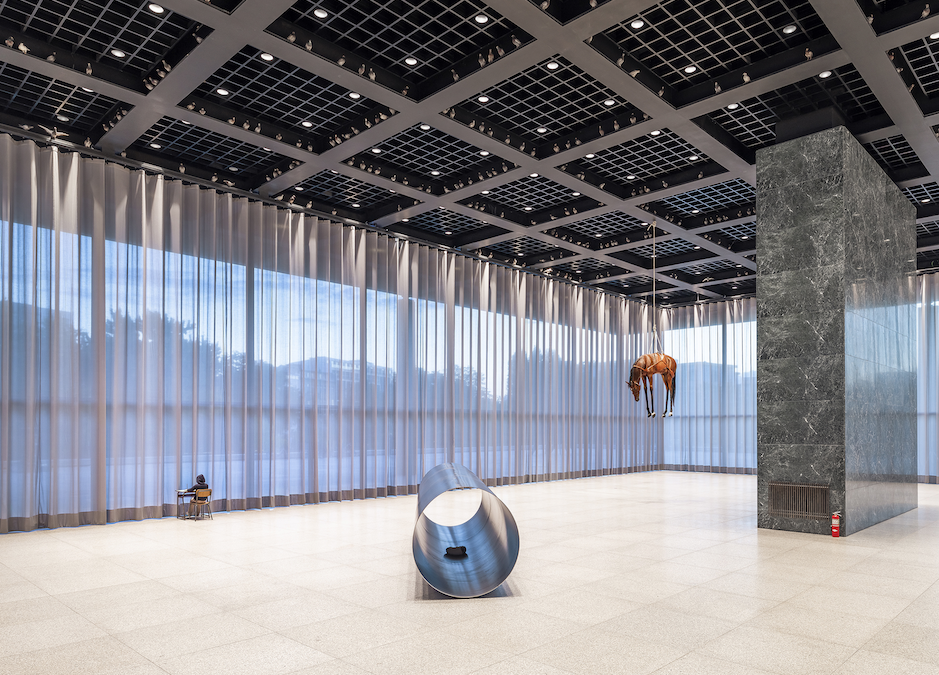
The Neue Nationalgalerie in Berlin is hosting NIGHT , the first major institutional solo exhibition of Maurizio Cattelan in Germany. The show brings together some of the most recognizable works by one of the most provocative Italian artists of recent decades alongside new pieces conceived specifically for the iconic building designed by Ludwig Mies van der Rohe. Opening on September 9 as part of the 15th Berlin Art Week, the exhibition will run until March 7, 2027, and is the entry for the 2026 Preis der Nationalgalerie, an award given to Cattelan by an international jury.
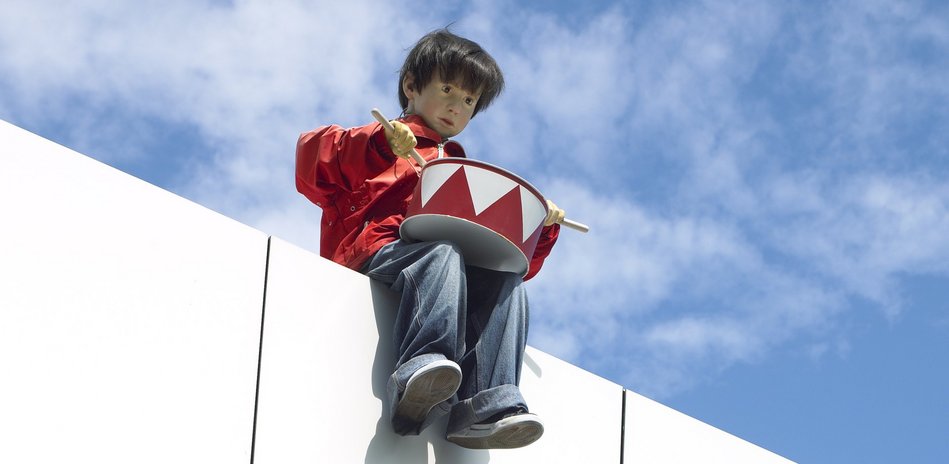
NIGHT begins with a selection of historical works that trace some of the obsessions that have run through the artist's career since the 1990s. These include Him (2001), one of his most controversial images on the representation of power and innocence; Novecento (1997); La Rivoluzione Siamo Noi (2000); and Untitled (2003), a piece inspired by Günter Grass's The Tin Drum . Alongside these are new works and commissions created specifically for the exhibition, generating a dialogue between different periods of Cattelan's career and the present.
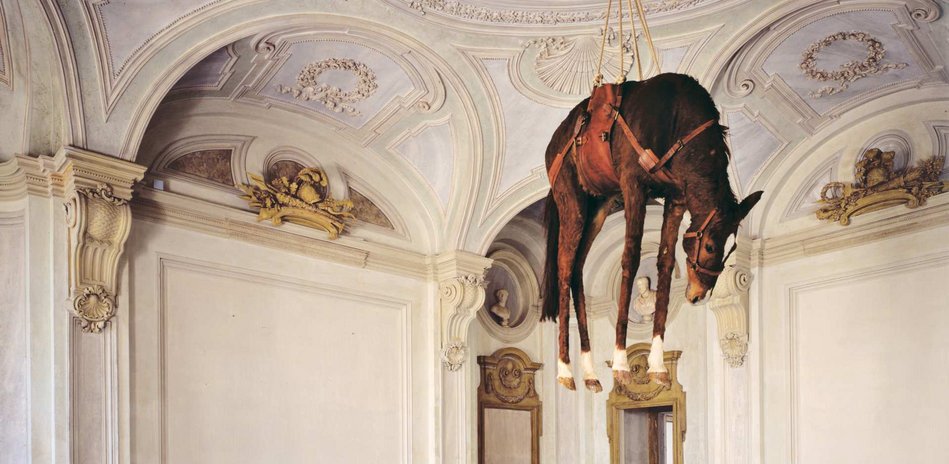
The title NIGHT immediately establishes an atmosphere marked by uncertainty. Darkness appears not only as a physical or scenic condition, but as a mental territory where certainties begin to crumble. Cattelan works precisely in this ambiguous space: he starts with seemingly recognizable images to subtly shift their meaning and provoke an unsettling reaction in the viewer. Irony, humor, exaggeration, and silence thus become strategies for addressing issues that can hardly remain neutral: religion, childhood, authority, identity, violence, and collective traumas passed down through generations.
One of the central elements of the exhibition is a new intervention conceived specifically for the Neue Nationalgalerie. The project does not simply introduce a sculpture or installation into the museum, but rather proposes a transformation of the building's spatial experience itself. Traditional exhibition formats give way to an environment designed for encounter, gathering, contemplation, and reflection. In this way, the architecture ceases to function as a mere backdrop and becomes an active part of the artwork.
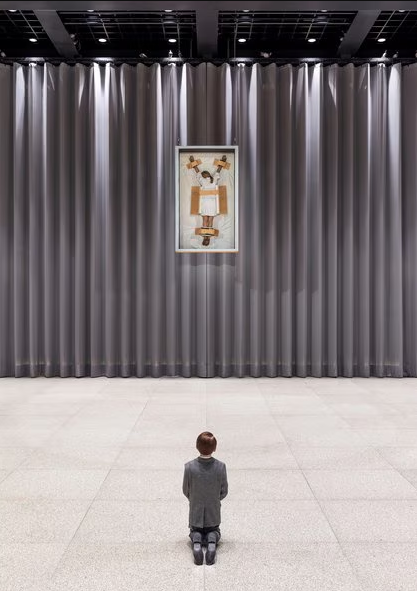
The choice of the Neue Nationalgalerie is particularly significant. Mies van der Rohe's building, constructed as one of the great icons of modern architecture, is characterized by its transparency, geometric rigor, and a conception of space based on the relationship between structure, light, and void. In contrast to this formal clarity, Cattelan introduces images laden with ambiguity, memory, and conflict. This contrast allows the works to acquire new interpretations and the building, in turn, to be experienced in a different way.
The German dimension of NIGHT is also significant. The exhibition is presented in a city and a country whose contemporary identity continues to be shaped by different layers of historical memory and a constant re-examination of how the past is represented. In this context, Cattelan's images acquire a particular intensity. His works do not offer definitive answers, but rather activate associations and contradictions surrounding what a society remembers, what it chooses to forget, and how images can play a role in this negotiation.
Born in Padua in 1960, Maurizio Cattelan has established himself since the early 1990s as one of the most singular voices in international art. His work is built upon a particularly complex relationship with art history and with the cultural codes we recognize almost automatically. His figures, objects, and installations sometimes seem to belong to a familiar imaginary world, but a slight shift is enough to completely alter their meaning. This ability to deactivate the viewer's expectations explains much of the power of his work.
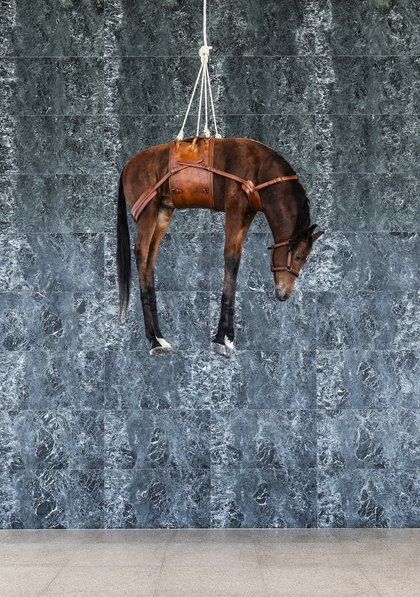
Cattelan has also consistently questioned the very structures of the art system. His relationship with the market, institutions, and fame is part of a trajectory in which the artist has used provocation not merely as a spectacular device, but as a way to interrogate the conventions that determine what we consider art, which images acquire authority, and who has the right to construct collective narratives.
With NIGHT , Cattelan also returns to Berlin two decades after his participation as co-curator of the fourth Berlin Biennale. The return thus takes on an almost circular dimension: the artist who then played a role in shaping the discourse of one of the major international events in contemporary art now returns as the protagonist of a large-scale institutional exhibition.
In an interview given in conjunction with the exhibition, Cattelan summarizes one of the moods that permeates the project with a particularly revealing phrase: "When the future seems terrifying, the past becomes attractive." This encapsulates much of the tension of NIGHT . Faced with a present marked by uncertainty, looking back can become a refuge, but also a source of conflict. The exhibition at the Neue Nationalgalerie is situated precisely in this territory: between memory and oblivion, between innocence and violence, between what we think we recognize and what, suddenly, ceases to be familiar.

You may be
interested
...