Exhibitions
Dámaxo Henao and the intimacy of closed doors
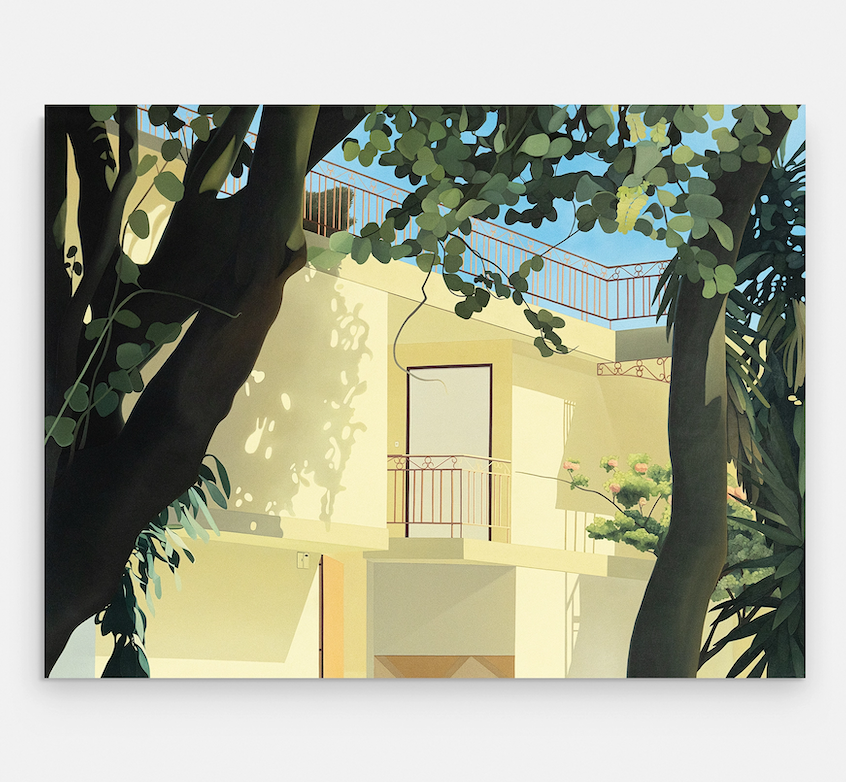
There are doors that invite you to enter and others that, precisely because they remain closed, awaken the imagination. Those painted by Dámaxo Henao (Medellín, Colombia, 1995) belong to this second category. Until September 12, the La Cometa gallery in Bogotá presents "The Volume Touched by Light ," an exhibition in which the artist transforms an everyday element of domestic architecture into a device for exploring intimacy, distance, and perception.
Henao's doors lack locks, handles, and any mechanism that would allow them to be opened. This absence isn't necessarily noticed immediately, but when the viewer discovers it, it introduces a silent disturbance. Something seemingly familiar ceases to function according to the rules we know. The door remains a door, but it has lost its status as a threshold. It no longer leads to any accessible place: it protects, conceals, and delimits a space we can only imagine.
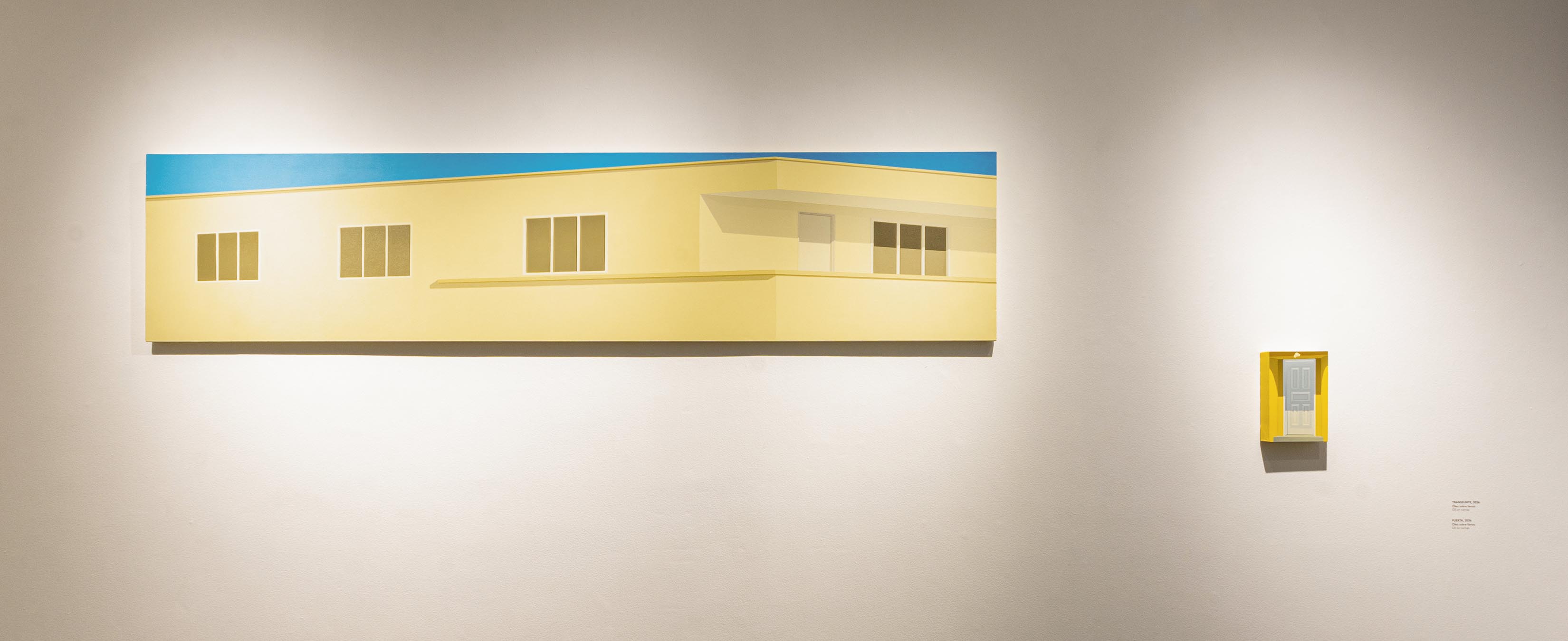
In these paintings, there is a particular focus on those seemingly insignificant moments when the gaze lingers on everyday architecture. Walking down a street as the sun begins to set, observing an unfamiliar house, or pausing before a window can become an exercise in speculation. What happens behind those walls? Who inhabits those spaces? What stories remain beyond our view? Henao draws on this common experience to construct paintings where the domestic takes on an almost psychological dimension.
The door thus functions as a boundary between public and private. It separates the street from the home, that which can be observed from that which must remain protected. In the artist's works, however, this boundary becomes absolute. There is no possibility of crossing it. By eliminating the elements that would allow it to be opened, Henao transforms architecture into an image of inaccessibility. On the other side, there is a volume, a presumably habitable space, but no body can occupy it. Intimacy, in this way, appears devoid of human presence.
Interest in architecture is not limited to the structural elements. The details surrounding the doors acquire fundamental importance: the ornamentation of a facade, a plant that rises above a wall, the structure of a railing, or the shadow cast on a surface. These are small clues that allow us to imagine a story where the painting offers none. Henao works precisely with this tension between what we see and what we must mentally fill in.
Their doors seem to acquire personalities. They can behave like silent passersby, sentinels watching over the space, or solitary figures withdrawn into themselves. The architecture ceases to be a mere backdrop and becomes the protagonist. Each facade seems to contain a biography that is never fully revealed.
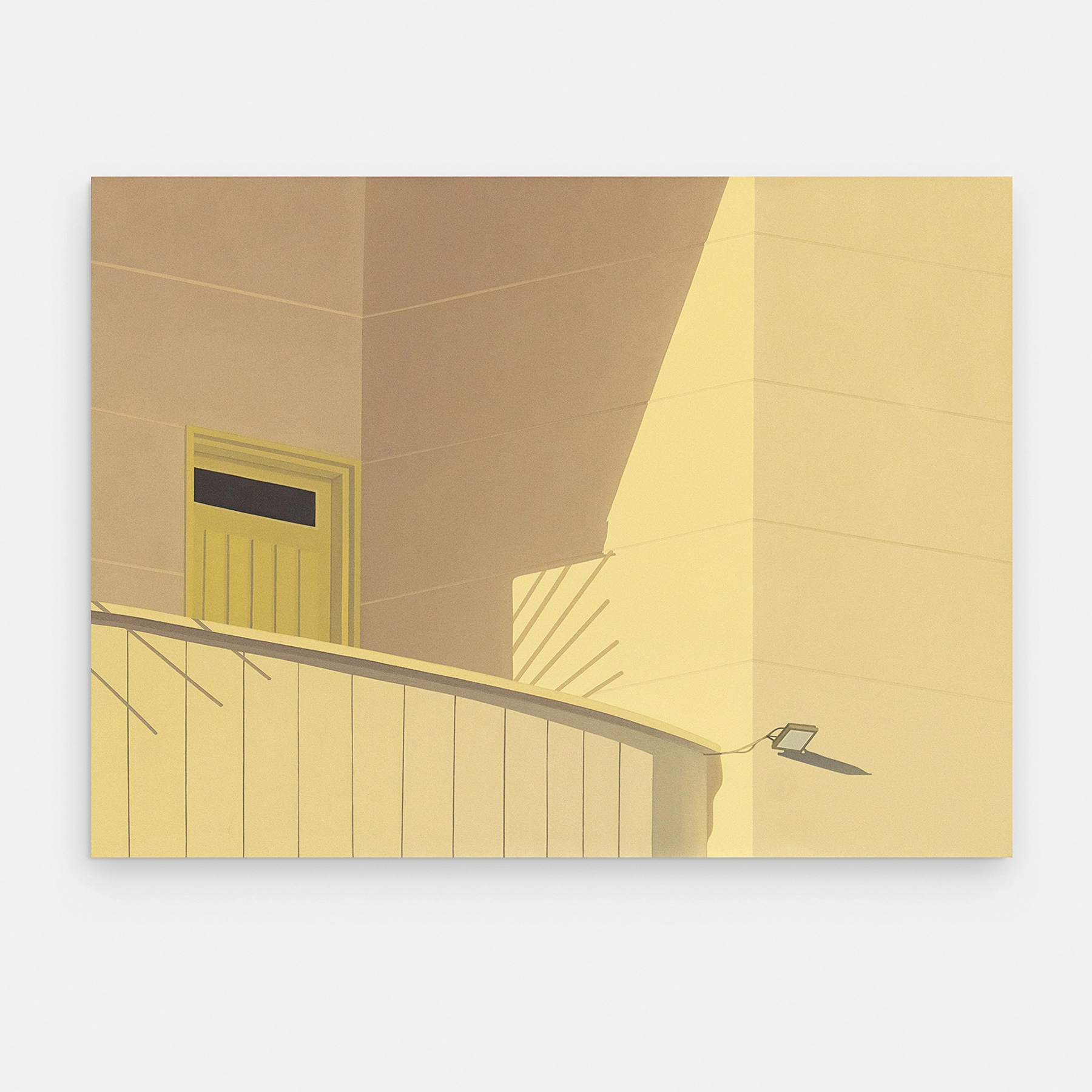
And yet, there is one visitor that does manage to cross those boundaries: light. Faced with the impossibility of physically accessing the represented spaces, light enters them, travels across their surfaces, and reveals volumes, textures, and shadows. It is precisely in this encounter that Henao's painting acquires a particular intensity. Light not only illuminates: it also constructs space and determines what can be seen.
The artist seems to observe his scenes with the patience of someone who has walked the same street many times and learned to recognize its subtle variations. The painting arises from this sustained attention, from the ability to discover a change in the light, an unexpected shadow, or an architectural detail that would normally go unnoticed. The everyday thus becomes a subject for contemplation.
The volume touched by the light ultimately proposes an experience of slow observation. In contrast to contemporary visual saturation, Dámaxo Henao constructs images that do not immediately reveal all their information. Their doors remain closed, forcing the viewer to accept this impossibility. What lies outside the frame, that which we cannot know or penetrate, acquires as much importance as what is represented.

You may be
interested
...