Exhibitions
Plateada expands the boundaries of contemporary art in La Plata
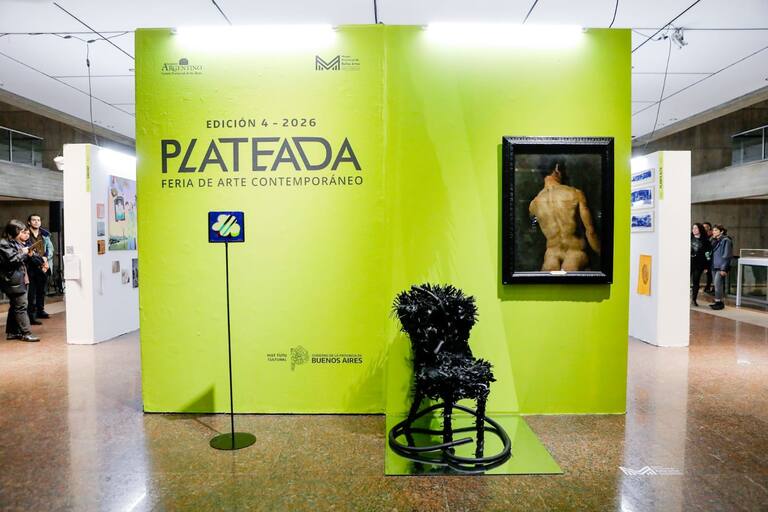
La Plata is once again bathed in silver. Until this Sunday, August 30, the Teatro Argentino Provincial Arts Center is hosting the fourth edition of Plateada , the contemporary art fair organized by the Emilio Pettoruti Provincial Museum of Fine Arts. With free admission, the event brings together 39 galleries and projects, four special guests, and, as the main novelty of this edition, a publishing area dedicated to artists' books.
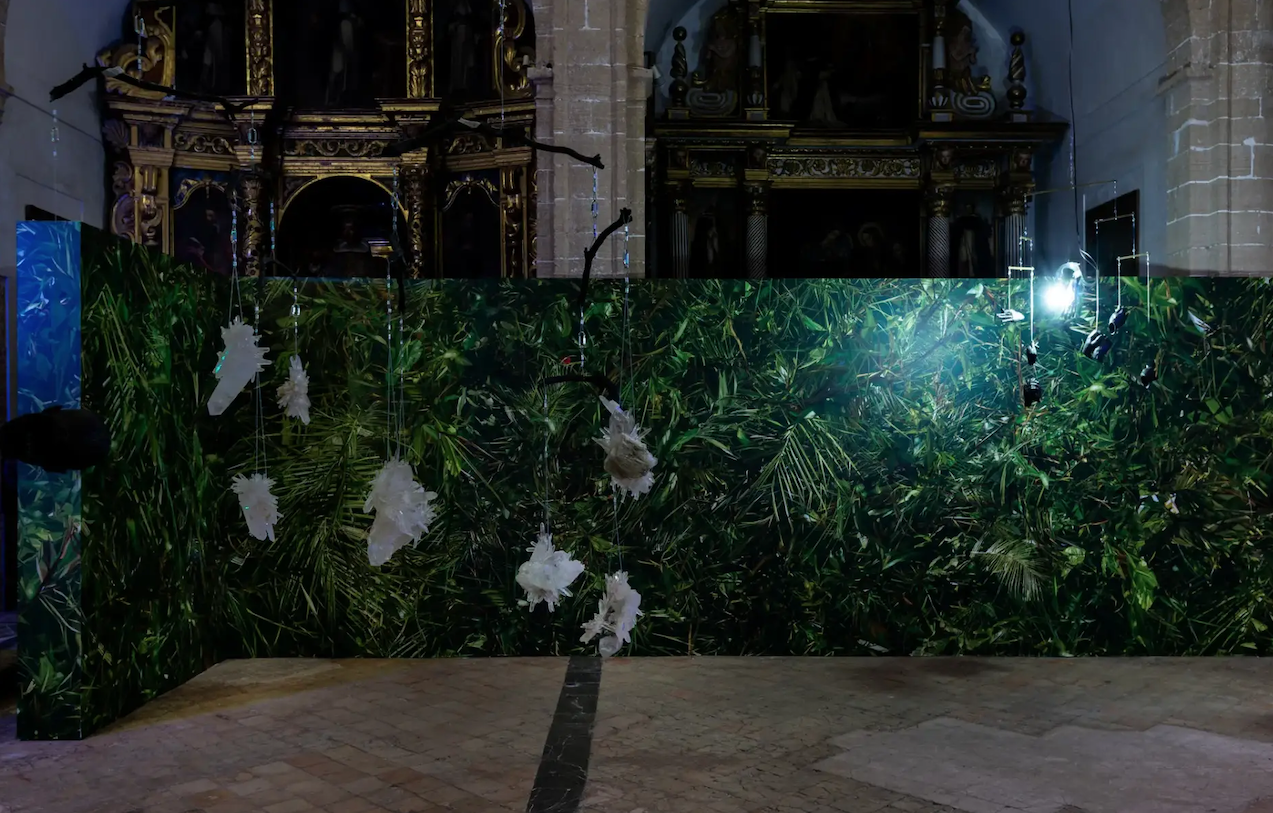
This year, the fair abandons the underground space it occupied in its early editions, expanding into the lobby and plaza of the Teatro Argentino. The change of venue also alters the visitor experience: the stands take on a more theatrical dimension, the artworks play with expectations, and the overall approach to contemporary art is less formal.
Instead of simply being a marketplace, Plateada aims to create a meeting place for artists, galleries, collectors, and the public. The initiative champions an art scene specific to La Plata and the province of Buenos Aires, while also expanding its connections to other parts of Argentina.
This fourth edition of the call for entries brings together projects from La Plata, Buenos Aires, Bahía Blanca, Mar del Plata, San Juan, Chaco, Entre Ríos, and Córdoba, among other cities. Participating spaces include galleries and projects from La Plata such as Vincent, Sur Boreal, Geómetras, Cösmiko, and Club de La Pintura, along with proposals from various parts of the country.
The territorial dimension is one of the defining elements of the fair's identity. In contrast to the traditional concentration of the Argentine art market in Buenos Aires, Plateada proposes the possibility of generating alternative circuits and strengthening the Buenos Aires cultural ecosystem. The fair thus functions not only as a showcase for artworks, but also as a tool for connecting scenes that usually remain isolated from one another.
The biggest addition to this year's fair, however, comes from the publishing sector. For the first time, the fair features an area dedicated to artists' books, bringing together eleven publishers and projects linked to independent publishing, fanzines, art history, and photography. These include Eloísa Cartonera, RIPIO, and TURMA Biblioteca.
The inclusion of books broadens the concept of the fair and shifts the focus from the artwork as a unique object to other forms of circulation of contemporary thought and creation. Independent publications, artists' books, and experimental editions thus find their own space within an event that until now had been primarily centered on the visual arts.
Plateada is not confined to the Teatro Argentino building. The fair extends its reach to various locations throughout the city with a series of events that serve as an extension of its program. The Pettoruti Museum's window display features El Traidor by Pr0testa, while the Pasaje Dardo Rocha presents Reliquia by Emilia Hendreich and 40 años de vacaciones by Andrés Compagnucci.
The Art Center of the National University of La Plata is participating with five proposals, including Zen Neoinformalism , an exhibition curated by Florencia Morel. Also joining this circuit are the University of the East, the OSDE Foundation, the Beato Angélico Museum, and the NN Gallery, which is taking advantage of the event to celebrate its tenth anniversary with a group exhibition.
The artistic direction continues to be led by Facundo Belén and Virginia Martín, who have shaped the project since its inception. Under their leadership, Plateada has developed a distinct identity based on accessibility, experimentation, and a clear commitment to expanding the audience for contemporary art.
The playful nature of this fourth edition is particularly significant. In a context where art fairs are often associated with the economic dimension and the market, Plateada seeks to reclaim other ways of engaging with the artworks. Here, visitors can be surprised, play with appearances, and discover pieces that don't necessarily conform to the conventions of a commercial booth.
The proposal doesn't reject the market, but neither does it seem to want to be subordinate to it. The works can be bought, but the fair experience is built around something more difficult to quantify: curiosity. In this sense, Plateada raises an interesting question about what a contemporary art fair can be today and what kind of relationship it wants to establish with its visitors.

You may be
interested
...