
Exhibitions
Two landscapes, the same memory
Francesc Ruiz Abad and Ivan Forcadell explore, from very different languages, the memory of the territory, the transformation of the landscape and that fragile moment in which nature ceases to be an image to become matter.
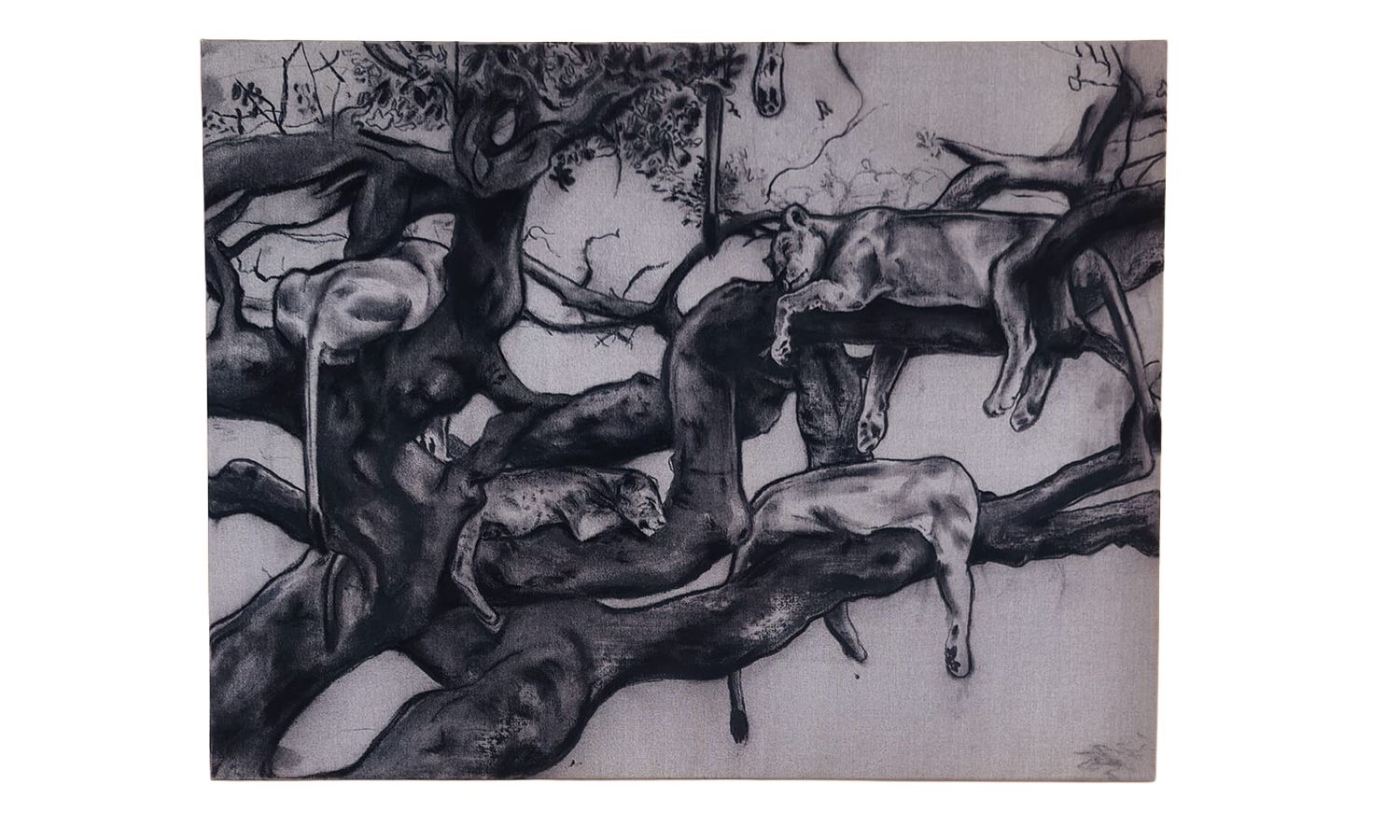
"Outside, summer is slowly ending. Inside, the shapes continue to breathe."
Tramuntana begins the new season with two proposals that share the same sensitivity towards the territory, but that approach it from radically different places. On the one hand, Mediterrani Atlàntic , by Francesc Ruiz Abad, confronts two geographies —the Brazil of São Paulo and the Atlantic Forest and the Catalan Mediterranean of origin— to turn displacement into a tool for thought. On the other, AMUNT, the gallery's monographic capsule space, presents L'última melona de l'estiu, by Ivan Forcadell, a selection of paintings, drawings and ceramics that delves into the rural landscape of southern Catalonia and that imprecise moment when summer begins to retreat.
The two exhibitions will open on Saturday, September 5, 2026, at 6 p.m., and can be visited until October 24 in the case of Mediterrani Atlàntic , while L'última melona de l'estiu will occupy the second capsule of AMUNT.
A territory that burns and transforms
In the work of Francesc Ruiz Abad, the territory is never a simple stage. It is a surface of memory, an organism subject to permanent transformations. Mediterrani Atlàntic is born from the transit between two worlds that, seen from a distance, could seem opposite: the exuberant vegetation of the Brazilian Atlantic Forest and the Catalan Mediterranean landscape, drier, more marked by fire, stone and the human footprint.
But the artist does not pose this relationship as a geographical comparison. The journey ceases to be a journey and becomes a method of observation. Ruiz Abad collects fragments, impressions and materials and subsequently subjects them to processes of decomposition and recomposition. The landscape thus ceases to be represented and becomes a physical and mental experience.
His travel notebooks function as a first intimate cartography. The paintings, on the other hand, take this experience to a more ambiguous terrain, where reality dissolves between layers, gestures and matter. Ashes and materials made by the artist himself introduce an almost archaeological dimension into the works: what we see is also what is left.
Ash acquires, in this context, a powerful ambivalence. It is residue, but also origin. It is proof of destruction and, at the same time, the possibility of a new construction. In it, the end and the beginning, disappearance and memory coexist.
Paint the night with smoke
Charcoal runs through the exhibition like an underground thread. Its presence connects the charred forests of Les Gavarres with the ritual dimension of Mediterranean fires, but also with a deeper idea of transformation. Fire can destroy, celebrate, purify and leave a trace. In Ruiz Abad, these possibilities coexist without ever resolving themselves.
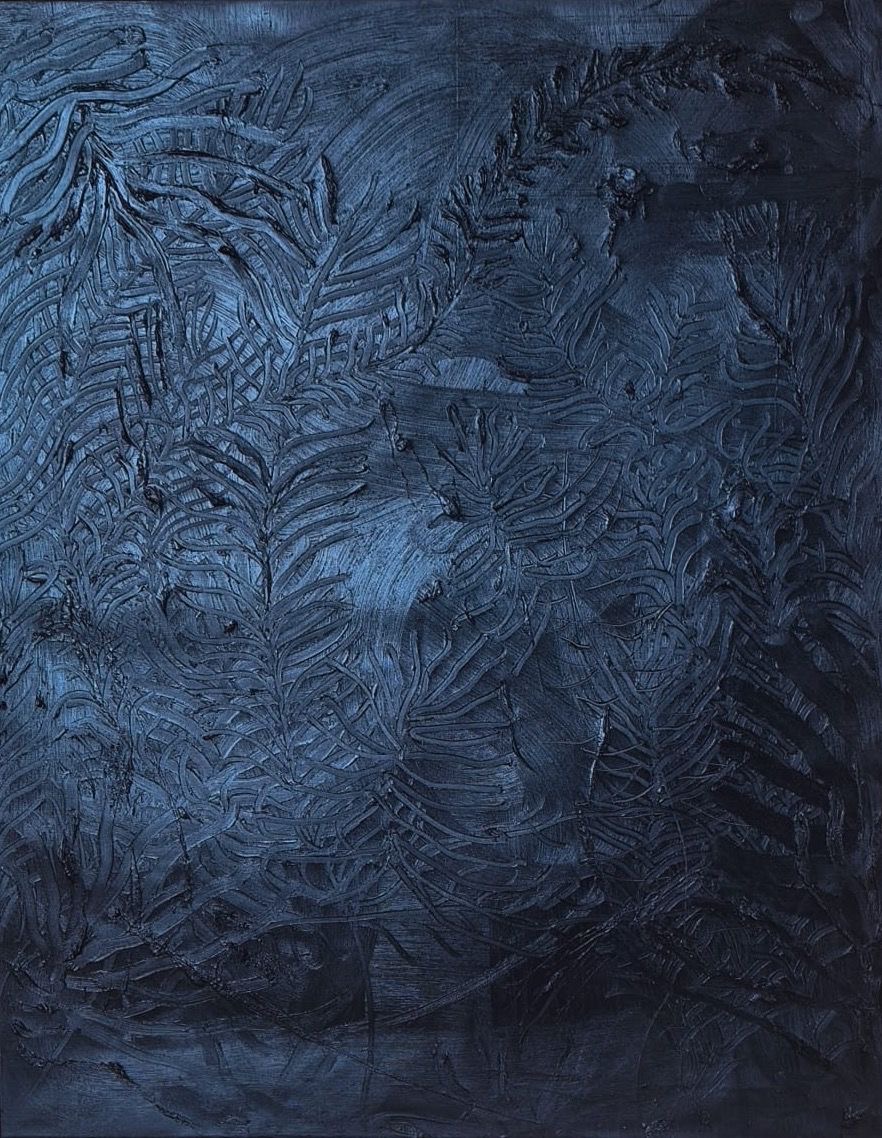
At the center of the exhibition is Mata Nocturna , a large-format monochrome painting born from the direct experience of painting the Atlantic Rainforest. Faced with the density of the vegetation, the artist finds himself in a landscape with almost no reference points. Representation then becomes insufficient and the act of painting drifts towards abstraction.
The form does not appear because the artist describes it, but because it accumulates. Layer after layer, the image is built like a sediment. Made with print smoke, a black obtained from the trail of smoke, the work starts from a particularly suggestive paradox: making light with smoke, painting the night.
Mixed with linseed oil, this black absorbs and returns the colors of the space around it. The work is therefore not a fixed surface. It changes with the light and with the position of the viewer. Darkness ceases to be absence and becomes a sensitive matter.
A site-specific installation extends this research towards architecture and the cultural imaginary. The bestiary, from medieval representations to its contemporary reformulations, is dismantled and reconstructed in dialogue with the landscape. What seemed to belong to the territory of fantasy thus returns to earth, as if imaginary monsters and animals were also ways of reading the world.
When summer begins to disappear
In parallel, AMUNT presents L'última melona de l'estiu , by Ivan Forcadell (Alcanar, 1993), with text by Pablo Pareja-Alcaraz. The proposal constitutes the second installment of this Tramuntana space dedicated to monographic presentations.
AMUNT functions as a capsule within the gallery's programming: a more concentrated space, dedicated to a single artist and designed to host specific projects, interventions and singular pieces. This structure allows the gaze to focus on a specific artistic practice and its ramifications.
Forcadell works from a sustained relationship with the territory. But the rural landscape of southern Catalonia does not appear in his works as a postcard or as a repertoire of recognizable forms. It is, above all, a way of looking at and ordering reality.
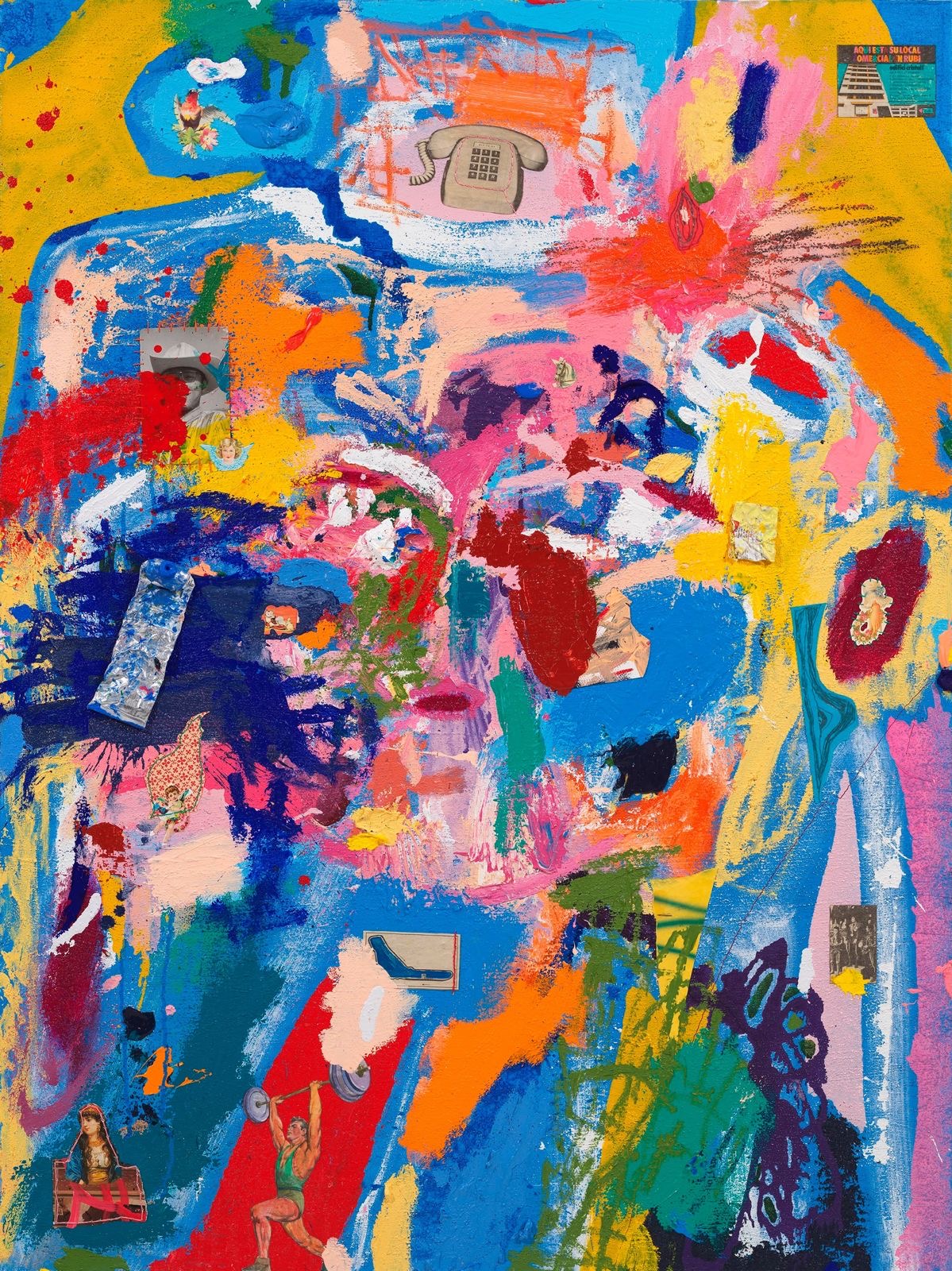
His painting starts from this experience to build an abstract language in which color, gesture and matter establish their own relationships. There are forms that recall a certain natural structure, rhythms that seem to have arisen from the earth or vegetation, but they never become a description. The landscape survives as an intuition.
Distance is also part of the work
One of the most interesting aspects of Forcadell's practice is the need to change the distance from his pieces. From a distance, the paintings can appear as compact, almost unitary structures. When the viewer approaches them, however, this apparent stability fragments.
Marks, superpositions, interruptions and small chromatic variations emerge. The surface ceases to be a totality and becomes a field of tensions.
This oscillation between the whole and the detail constitutes one of the keys to the exhibition. It also establishes a particular relationship with time: what seems obvious at first glance only reveals its complexity after a certain amount of time spent in front of the work.
Painting, drawing and ceramics participate in this same universe, but each from its own nature. The gesture of the hand is trapped in ceramics; drawing preserves the fragility of the line; painting, on the other hand, seems to stop a movement that continues to occur beneath the surface.
And it is here that the title of the exhibition takes on all its power. The Last Melon of Summer speaks of a specific time, but also of a feeling: that moment in which the heat still persists while the light already announces the change of cycle. Summer has not disappeared, but something in it is beginning to loosen.
Two ways of looking at the earth
The two Tramuntana exhibitions ultimately share the same concern: how to look at a territory without simply turning it into an image.
Ruiz Abad does it through displacement, fire, ash and memory. Forcadell, through color, gesture, matter and the subtle rhythms of nature. In one case, the landscape burns and is rebuilt; in the other, it dissolves into a slow abstraction.
These are two ways of moving the gaze. One outwards, between continents and geographies; the other inwards into the pictorial surface, until finding the small cracks that allow an image to cease to be recognizable and begin to be experienced.

You may be
interested
...