News
Robbery at the Villena Treasury in a lightning strike lasting just four minutes
A blow lasting just four minutes takes away a large part of one of the most exceptional sets of bronze age goldsmithing.
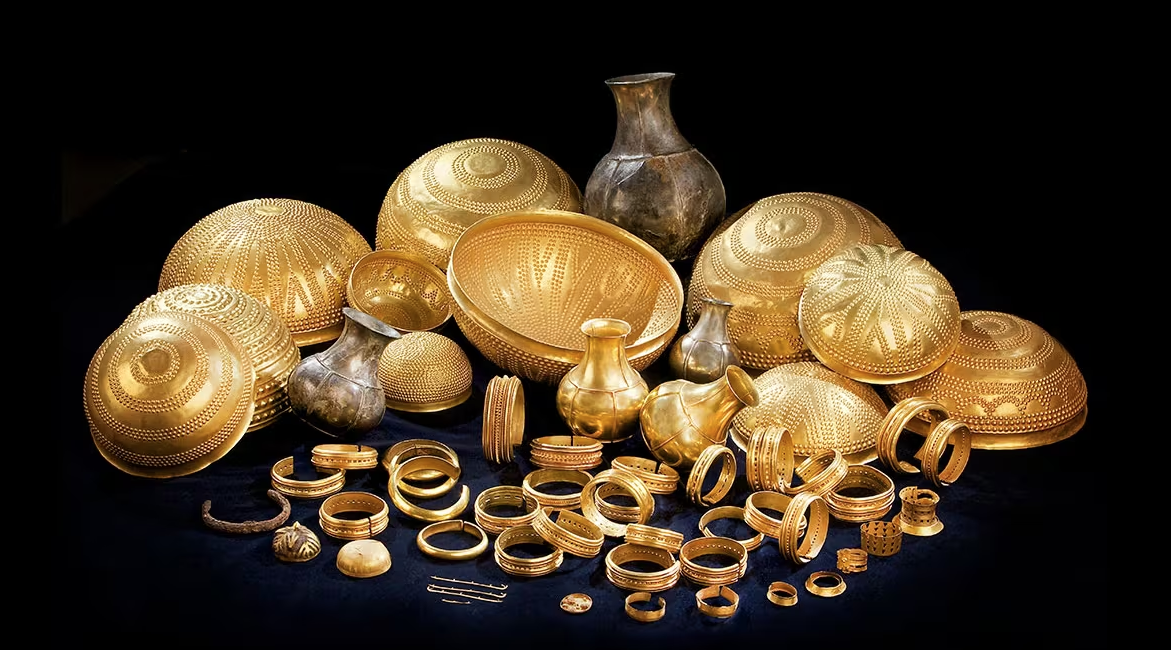
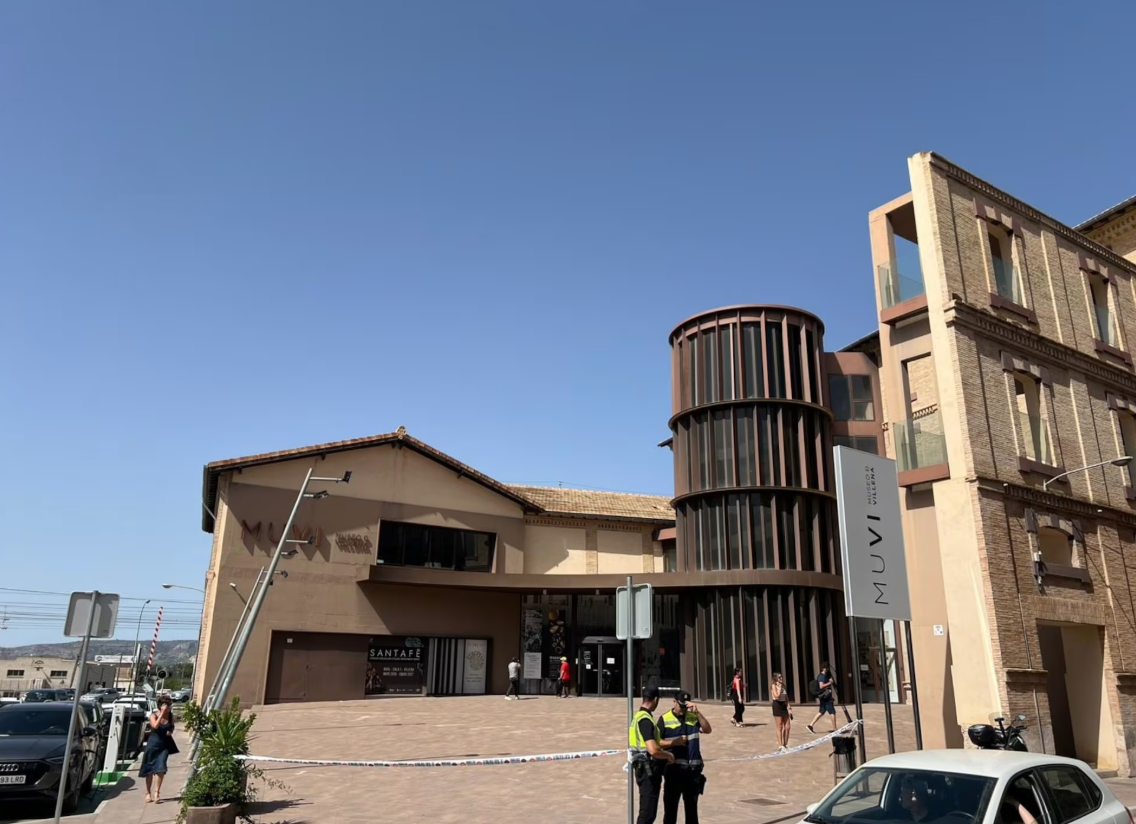
On the morning of Thursday, August 27, European archaeological heritage suffered one of the most serious blows in recent years. The Villena Museum (MUVI), in Alicante, was attacked and a large part of the historic Treasure of Villena, considered one of the most important prehistoric goldsmith's collections in Europe, was stolen. The Guardia Civil and the Judicial Police are investigating the theft while the museum remains cordoned off.
The assault took place in the early hours of the morning and those responsible acted with a speed that points to a carefully planned operation. According to initial reconstructions, the alarm in a municipal sports centre was activated at 5.16am. Just a few minutes later, at around 5.20am, the museum was broken into. The assailants entered through one of the sides of the building, after breaking a window, and left the scene before the officers arrived. The investigation points to the participation of several people and several vehicles.
The possible use of the false alarm as a distraction maneuver is now part of the hypotheses being studied by investigators. The aim would have been to move the security forces to a point far from the museum and thus have a few minutes to carry out the robbery. The sequence and precision of the assault have led the authorities to consider that behind the coup there could be a group specialized in the theft of historical heritage.
The exact extent of the looting remains under investigation, although the mayor of Villena, Fulgencio Cerdán, has confirmed that the thieves took a very important part of the Treasury, especially the gold pieces. Three of the crowns of the Virgin and Child that were kept in the museum were also stolen. Some pieces were left behind, including silver containers and other elements of the set, while the so-called Tesorillo, made up of 35 gold pieces from the same period, remains intact.
Ten kilos of historical memory
Beyond its economic value, the magnitude of the loss is understood when considering the exceptional nature of the whole. The Treasure of Villena is made up of pieces dating from approximately 1000 BC and mainly includes gold objects: 11 bowls, 28 bracelets and three bottles, as well as three silver containers, pieces made with combinations of amber and gold, iron and gold, and an iron bracelet. Together, the different elements weigh close to ten kilograms.
Its importance, however, does not lie in the quantity of precious metal. The Treasure constitutes an exceptional testimony to Bronze Age societies and the sophistication achieved by their goldsmithing techniques. The presence of iron is particularly significant because it corresponds to a time when this material was still extraordinarily scarce and could acquire the consideration of a precious metal.
The set was discovered in 1963 by archaeologist José María Soler García and his collaborators inside a container hidden in the bed of a ravine in the municipality of Villena. The find occurred in the context of aggregate extraction and came to Soler's attention after a bracelet appeared in the hands of some workers and was later taken to a jeweler to find out its possible value. The discovery allowed the recovery of a set that today forms an essential part of the archaeological history of the Iberian Peninsula.
The relevance of the Treasury led to its declaration as an Asset of Cultural Interest. The State has officially recognized the archaeological collection since 2005, while heritage documentation underlines its exceptionality and historical and artistic value.
A heritage that cannot be reduced to its price
The theft once again raises an uncomfortable question for museums: how to protect objects whose historical value is impossible to translate into an economic figure. Initial information places the patrimonial valuation of the set at around 1.7 million euros, an amount that, in any case, does not reflect its true cultural significance.
Any eventual destruction of the pieces to market their gold would represent an irreversible loss. Converting the objects into simple raw material would mean erasing the traces of a society that lived more than three thousand years ago: its techniques, its exchanges, its symbols and its conception of power and wealth.
This is precisely where the most serious dimension of the looting lies. The Treasure of Villena is not a collection of ancient jewels or a simple accumulation of gold. It is an exceptional archaeological document, a fundamental piece for understanding the Bronze Age in the western Mediterranean and one of the largest collections of prehistoric goldsmithing preserved in Europe.
The mayor of Villena has publicly expressed the city's shock at the disappearance of part of its heritage. "We are absolutely devastated," he declared through tears, stressing that the Treasury is part of the town's identity and pride.
Now a race against time begins. The Guardia Civil is analyzing security footage and evidence collected at the museum as it attempts to accurately reconstruct the operation. The hope is that the pieces can be recovered before they enter clandestine circuits or are destroyed.
In 1963, the Treasure of Villena was rescued from possible looting thanks to the intervention of neighbors and specialists. More than six decades later, it once again finds itself at the center of an episode of looting. This time, however, the threat does not come from the land where it remained hidden for centuries, but from those who have understood its economic value without understanding —or without caring— that its true value belongs to history.


You may be
interested
...