News
Yayoi Kusama, the Japanese artist who turned infinity into a work of art, has died.
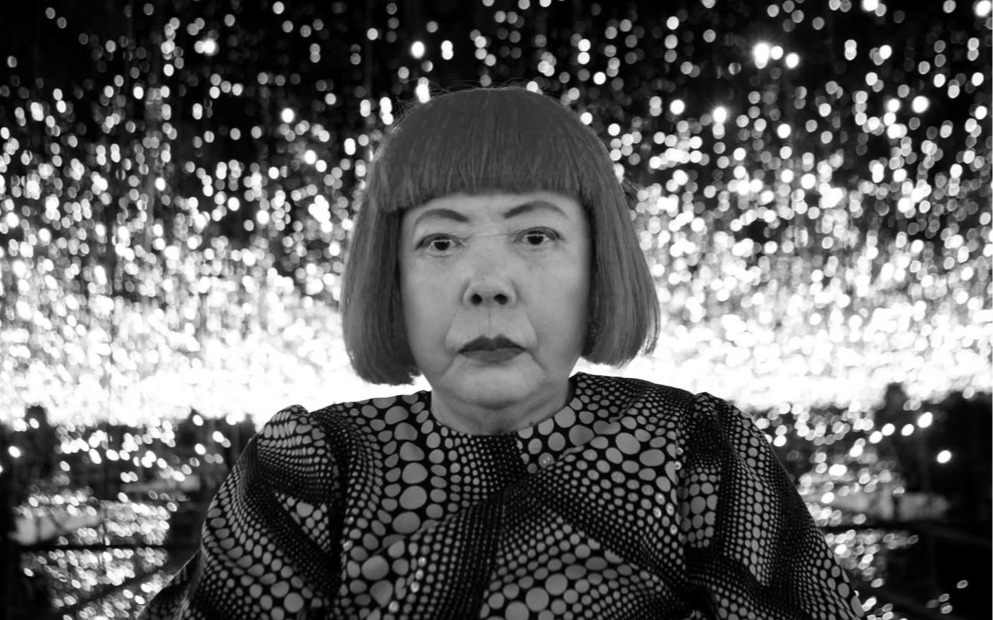
“I can’t imagine how I’ll be categorized after my death,” she once declared. “I like being an outsider.”
Yayoi Kusama, one of the most renowned and popular Japanese artists of recent history, has died at the age of 97 in a Tokyo hospital. Her death occurred on August 14 and was announced Thursday by Yayoi Kusama Inc., the artist's studio, in a statement posted on its official website.
"Throughout an extraordinary life devoted entirely to artistic creation, Kusama developed an internationally recognized career as a pioneer of the avant-garde," the statement reads. Her practice encompassed painting, sculpture, installation, performance, film, literature, and poetry. "She continued painting until her final days, never putting down her brush," the text adds.
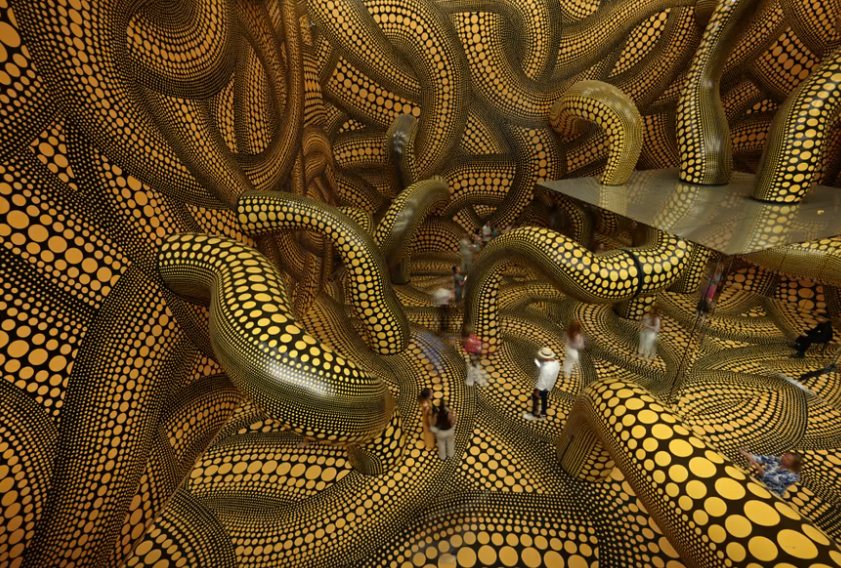
Kusama leaves behind one of the most recognizable bodies of work in contemporary art. Her signature polka dots, infinity nets, pumpkins, organic forms, and mirrored spaces transformed intimate and hallucinatory experiences into visual universes capable of captivating millions of viewers. Her celebrated Infinity Mirror Rooms , immersive installations constructed from mirrors, lights, and repetition, also became one of the major international art phenomena of the social media age.
But Kusama's extraordinary popularity over the past few decades stands in stark contrast to a career long marked by misunderstanding, precariousness, and marginalization. Her international recognition came after decades of work and a life marked by childhood traumas and mental health struggles.
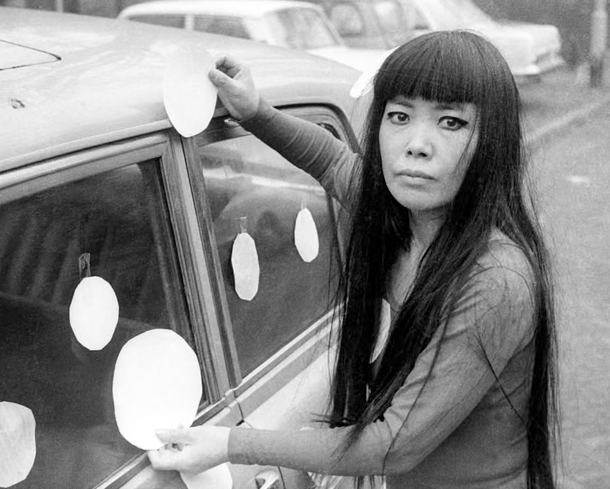
Born in Matsumoto, Japan, in 1929, Kusama grew up in a wealthy family that cultivated plants, but she described her childhood as profoundly unhappy. Her mother tried to prevent her from painting, and her parents expected a conventional future for her based on marriage and motherhood. From a young age, she began experiencing hallucinations in which flowers and other elements of her environment seemed to cover the walls, the ceiling, her body, and the space around her.
Drawing what he saw became a way of coping with those experiences. The dots and repetitive patterns that would eventually define his artistic language were born, to a large extent, from that altered perception of the world.
During World War II, at the age of 13, she was drafted to work in a Japanese military factory producing parachute fabric. She later briefly studied nihonga , traditional Japanese painting, in Kyoto, but soon felt constrained by its conventions. Her interest shifted toward abstraction and the possibilities of repetition.
In the late 1950s, she decided to leave Japan and move to the United States. Before leaving, she corresponded with Georgia O'Keeffe, who encouraged her to explore the American art scene. Kusama arrived in Seattle and later settled in New York in 1958, when the city was experiencing the effervescence of Abstract Expressionism and new art forms were beginning to emerge.
In New York, he developed his first large-scale Infinity Nets , enormous pictorial surfaces constructed through the obsessive repetition of small shapes and dots. In 1962, he sold one of these works to Frank Stella and the artist and critic Donald Judd for $75. Decades later, those paintings would fetch millions of dollars on the international market.
Kusama quickly defied established categories. Although her work maintained connections with pop art, minimalism, and the experimental avant-garde, she simultaneously developed her own language based on repetition, accumulation, and the disappearance of the individual within an infinite space.
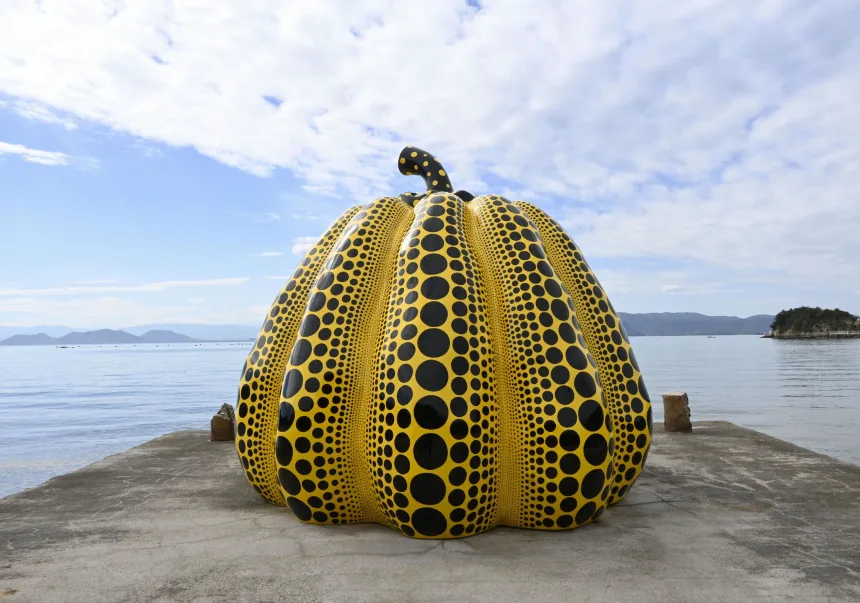
In the 1960s, he expanded his practice to include sculpture, creating his celebrated soft sculptures —objects and furniture covered in phallic forms made of fabric and stuffing. He also produced installations, films, and performances that explored the body, sex, identity, and the dissolution of the individual.
Her happenings reflected the countercultural spirit of the time. Kusama painted nude bodies with polka dots and organized anti-war actions that provoked controversy and, in some cases, arrests for obscenity. In 1968, she even wrote an open letter to US President Richard Nixon proposing a sexual relationship in exchange for him ending the Vietnam War.
In 1966, she presented Narcissus Garden at the Venice Biennale, an installation made up of 1,500 reflective spheres that created a landscape of infinite reflections. Kusama even sold the spheres for two dollars each under the slogan "Your narcissism for sale," until the Biennale organizers intervened to stop the sale.
His relationship with the New York art scene was complex. He maintained ties with figures such as Andy Warhol, Georgia O'Keeffe, Donald Judd, and Joseph Cornell, but he also denounced on several occasions that some of his ideas had been appropriated by Western male artists while his own contribution was relegated from official art history narratives.
The notion of infinity became one of the central themes of her work. Kusama spoke of "self-obliteration" to describe the disappearance of the self within a reality dominated by endlessly multiplying patterns. In an explanation of her 1954 painting Flower (DSPS) , she recounted how the designs on a tablecloth seemed to spread across the walls, windows, ceiling, her body, and ultimately throughout the entire universe.
After years of hardship and little recognition, Kusama returned to Japan. In 1977, she voluntarily admitted herself to a psychiatric hospital in Tokyo, where she found the stability she needed to continue working. From then on, she lived there permanently and went daily to her nearby studio to paint and develop new projects.
The decision did not mean the end of his career. On the contrary, during the following decades his work began to receive increasing international attention. The Museum of Modern Art in New York, the Tate Modern in London, and the Hirshhorn Museum in Washington dedicated major exhibitions to his career. His installations began to generate long lines, and his exhibitions became international cultural events.
The market also confirmed her enormous influence. In 2008, a Kusama work fetched $5.8 million at a Christie's auction. In 2014, White No. 28 sold for $7.1 million, then a record for a living artist. In 2016, she received the Order of Culture, one of Japan's highest honors.
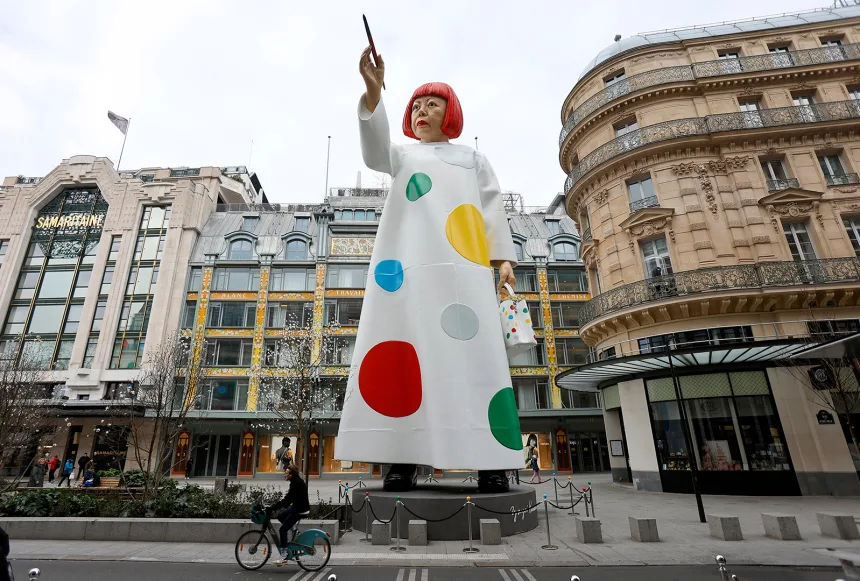
The artist also succeeded in turning her visual universe into a popular phenomenon. Her signature red or orange wig, polka-dotted dresses, and installations became instantly recognizable icons. She collaborated with international brands like Louis Vuitton, allowing her motifs to appear on products ranging from T-shirts and mugs to merchandise and reproductions of her own likeness.
Kusama's paradox lies precisely in that extraordinary popularity. The artist who for years remained on the margins ended up becoming one of the most visited and commercially successful creators in the world. Her works have been seen by millions of people, and her installations have become spaces of collective experience in which the viewer momentarily loses touch with their own body.
In 2012, Kusama summed up her relationship with what had become her trademark with a seemingly simple phrase: 'Polka dots are fabulous.' On another occasion, she explained that she wanted to continue painting thousands of pictures and would continue doing so until her death.
And so it was. The artist's studio has emphasized that Kusama continued working until her final days and that her creation remained linked to her ideas about eternal love, the soul, and infinity.
Kusama always rejected labels that tried to categorize her as a pop artist, feminist, avant-garde artist, or outsider . Her work transcended those categories and ended up occupying its own territory within contemporary culture.


You may be
interested
...