News
Sliman Mansour, giant of Palestinian resistance art, dies
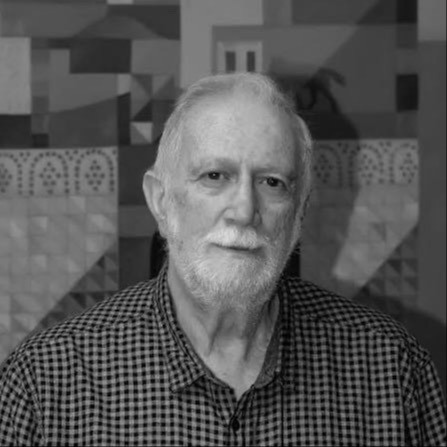
The artist Sliman Mansour, a key figure in contemporary Palestinian art, has died at the age of 79 after a long illness, his family announced. Born in 1947 in Birzeit, near Ramallah, Mansour developed a body of work deeply connected to the history, identity, and memory of Palestine over more than five decades.
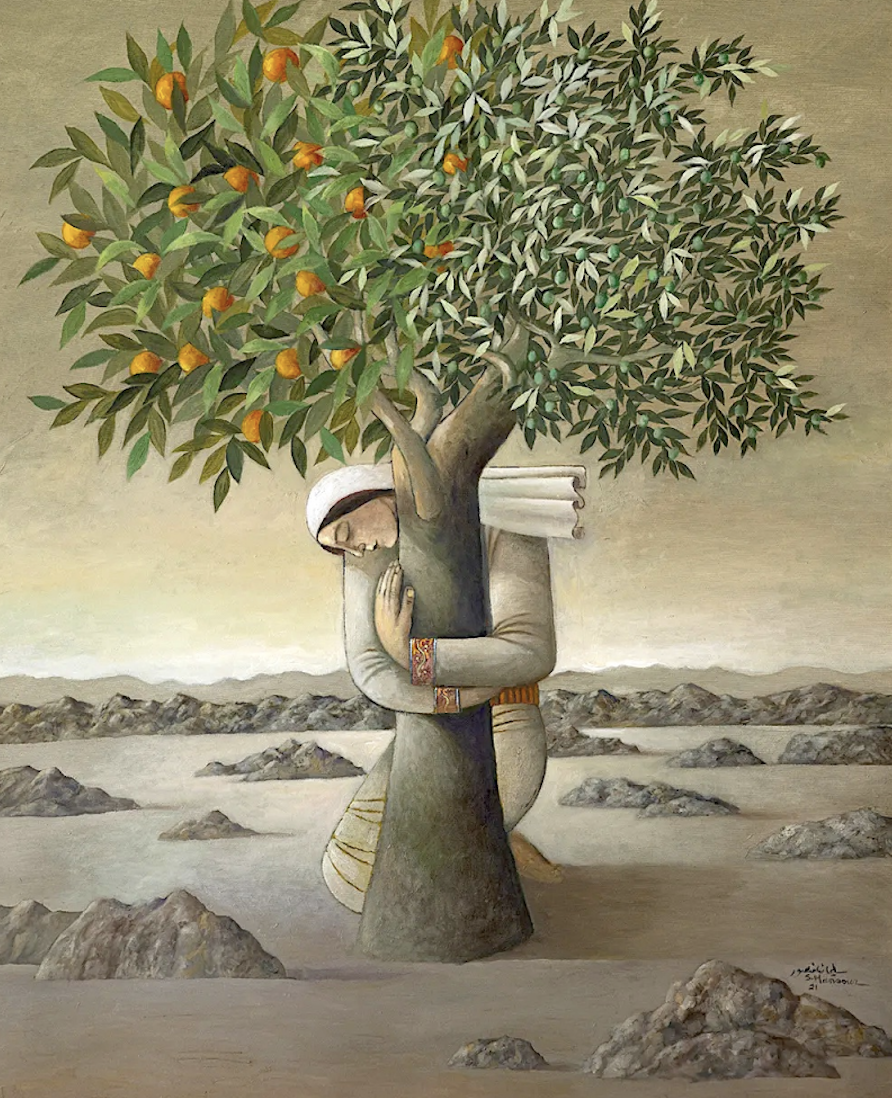
Mansour belonged to the generation of Palestinian artists, writers, and poets who, during the 1970s, sought to reconstruct a threatened cultural identity through images and symbols rooted in the land. In his paintings, the land acquired a political and emotional dimension: peasants, stone houses, olive trees, traditional embroidery, and scenes of daily life became elements of a visual language capable of speaking of belonging, displacement, and resistance.
Having received his artistic training in Beirut and later in Washington, Mansour began exhibiting regularly both in the Arab world and internationally. His work entered museums and private collections in various countries, and he received numerous awards for his contribution to Palestinian and Arab culture. In 1970, he studied at the Bezalel Academy of Arts and Design in Jerusalem, a period that coincided with the beginning of an artistic career marked by the search for his own unique expression.
His visual universe drew from diverse traditions. The ancient civilizations of the region—including the Canaanite, Egyptian, and Assyrian cultures—coexisted in his work with references to Islamic and Arabic art, especially calligraphy and geometric motifs. These influences were complemented by forms of Palestinian popular culture and the everyday experiences of the rural communities around him.
In this intersection of tradition and contemporary life, the landscape ceased to be merely a backdrop and became a protagonist. The olive tree, the cultivated land, the traditional dwelling, the farmer, and the thobe embroidery acquired a symbolic power that allowed for the representation of a culture threatened by displacement and occupation.
During the First Intifada, Mansour participated alongside other artists in the creation of the New Vision group. The collective decided to forgo materials produced in Israel and instead turned to natural elements linked to the land, such as clay, straw, wood, leather, henna, and natural dyes. The shift was not merely technical. It also involved a reflection on cultural and economic dependence and on the possibility of building an artistic practice directly connected to the land.
Mansour viewed that experience as a bridge between Palestinian art that emerged after the Nakba and subsequent generations. His work thus contributed to consolidating an artistic tradition in which creation also became a way of preserving a collective memory.
In 1994, Mansour was also one of the founders of the Al-Wasiti Art Center in East Jerusalem, conceived as a space dedicated to the preservation of Palestinian art and to fostering encounters between artists living in Palestine and those in exile. The institution reflected another of the central concerns of his career: to unite, through art, territories and communities separated by history.
Her work repeatedly addressed land, exile, and occupation, but avoided being reduced to a mere documentary representation of the conflict. Her figures and landscapes constructed a recognizable iconography of Palestine, where the everyday could acquire a universal dimension. In her images, resistance did not always appear as direct confrontation; it could also be expressed through the enduring presence of a house, a tree, an embroidered dress, or the gaze of a child.
In an interview with Al Jazeera in 2021, Mansour clearly explained the role he attributed to art in a context of denial of Palestinian identity: "I think that art, in our situation, when you don't have a homeland, when you don't have a country, something political, and when people deny your existence, is a way of saying that we are here."
That statement encapsulates much of his legacy. For Mansour, painting Palestine meant making an existence visible, preserving a memory, and reclaiming a connection to the land. His work transformed seemingly simple symbols into a powerful visual grammar of belonging.
Sliman Mansour's career is thus closely linked to the history of contemporary Palestinian art. His legacy lies not only in the works he left behind, but also in his contribution to building a language through which several generations could represent their identity, their memory, and their relationship with a territory marked by conflict.

You may be
interested
...