Exhibitions
Architecture in fragments on the journey of Jaume Maymó
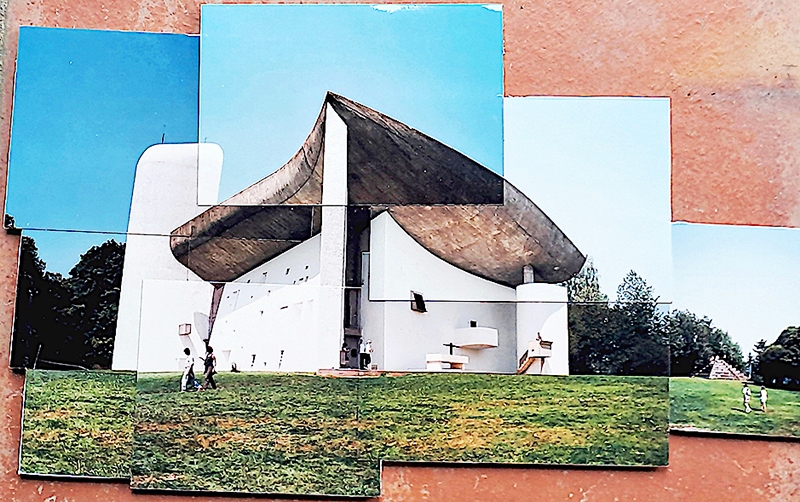
The Buitrago del Lozoya Municipal Exhibition Hall is hosting "From the Prado to Ronchamp: New Architectures ," an exhibition of photographic montages by Jaume Maymó that offers a unique perspective on contemporary architecture. The exhibition opened on Saturday, August 1st, and will run until August 30th, 2026.
More than a conventional tour of buildings and cities, From the Prado to Ronchamp functions as a travelogue constructed from fragments. Maymó observes architecture through small photographs that, tile by tile, reconstruct buildings and spaces from a personal, spontaneous, and conceptual perspective.
His gaze lingers on some of the most recognizable architectures of the 20th and 21st centuries, signed by names such as Rafael Moneo, Antonio Fernández Alba, Santiago Calatrava, Emilio Giménez, Carles Salvadores, Álvaro Siza, Arata Isozaki, Norman Foster, Richard Meier, Frank Gehry, Oscar Niemeyer, Barozzi i Veiga, Herzog & de Meuron, Josep Lluís Sert or Le Corbusier.
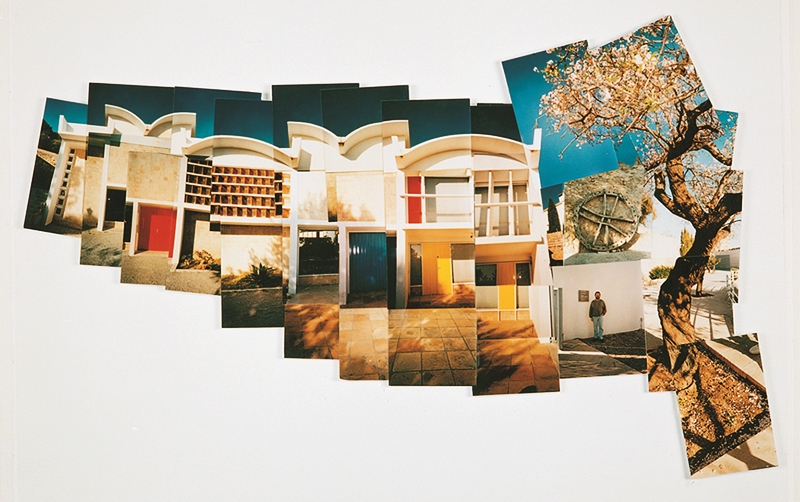
Joan Miró Studio.
A significant portion of the tour is dedicated to buildings directly linked to art and culture. These include the Prado Museum and the Reina Sofía Museum in Madrid, the Galician Center for Contemporary Art in Santiago de Compostela, the Domus in A Coruña, the IVAM and the City of Arts and Sciences in Valencia, Joan Miró's studio in Palma, the Joan Miró Foundation and the MACBA in Barcelona, the Niemeyer Center in Avilés, the Guggenheim Museums in Bilbao and Venice, the Maeght Foundation in Saint-Paul-de-Vence, and the Carré d'Art in Nîmes.
The photographic journey also includes architectural landmarks connected to other cultural spheres, such as music and books. These include the Águilas Auditorium and the García Márquez Library in Barcelona. The route also incorporates buildings whose function lies outside the artistic world, such as Atocha Station and the Kio Towers in Madrid, before arriving at one of the great icons of modern architecture: the Ronchamp Chapel, designed by Le Corbusier in France.
The unique aspect of the proposal lies in the way Maymó constructs his images. These are not conventional photographs intended to fully capture a building, but rather a fragmented reality in which multiple shots are superimposed to reconstruct the entirety of the architecture and its surroundings.
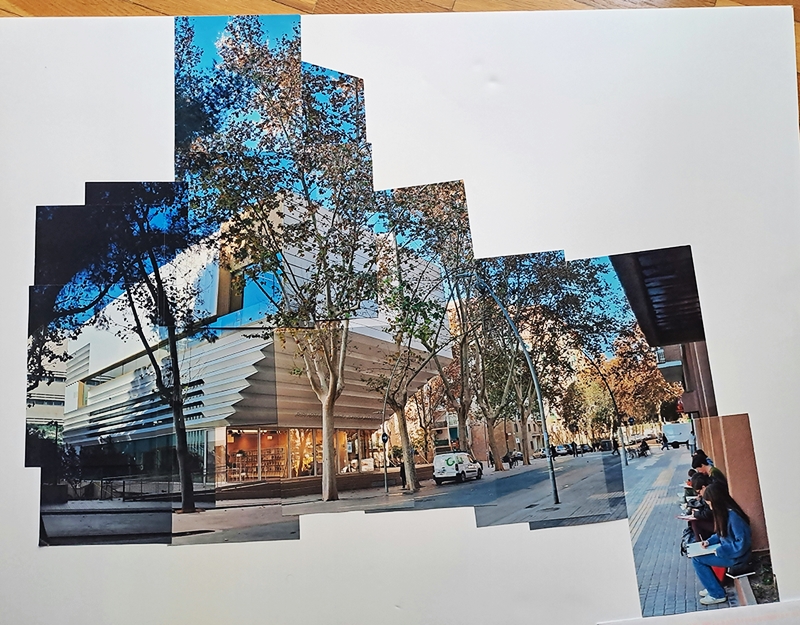
Gabriel García Márquez Library.
The result lies somewhere between photography, collage, and drawing. Each fragment provides different information while simultaneously preserving a sense of visual movement. The building ceases to be a static structure and becomes a visual experience constructed from the movement of both the viewer and the photographer.
This concept connects with a contemporary photographic sensibility based on immediacy and fragmentation. Maymó works with a gaze that could be defined as modern, spontaneous, and close to the Polaroid spirit, where the instant and the accumulation of images acquire as much importance as the final result.
This approach also shows echoes of the visual research of Jan Dibbets and David Hockney, especially in the breaking of traditional perspective and in the construction of an image from multiple points of view.


You may be
interested
...