Exhibitions
Righteous anger, art as a driving force for transformation
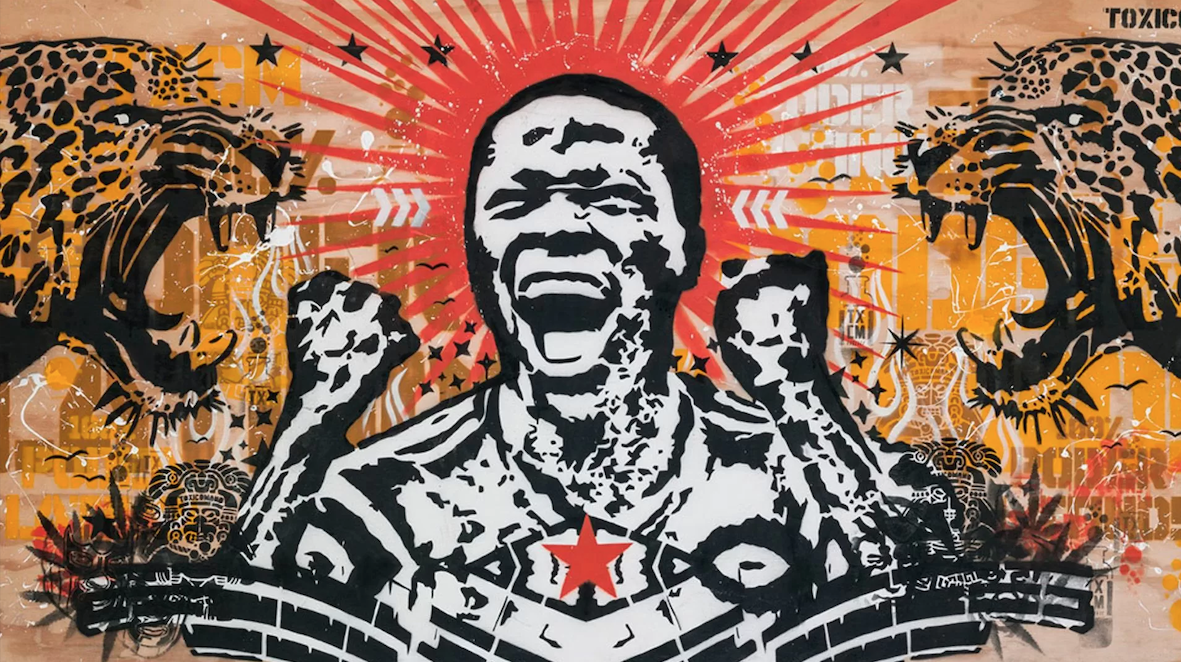
The Miguel Urrutia Art Museum (MAMU) in Bogotá presents Dignified Rage , an exhibition that proposes viewing rage from a perspective far removed from violence or destruction. The exhibition presents this feeling as a universal and timeless force capable of becoming a driving force for creation, thought, and the transformation of reality.
Drawing on works and documents from the heritage collections of the Bank of the Republic, the exhibition champions both individual experience and collective emotion as legitimate territories for artistic creation. Anger appears here as a response to what is perceived as hostile, unjust, or painful, but also as an energy that allows one to act upon those realities.
The exhibition does not aim to explore the political or social conflicts that have led to certain adverse situations, but rather to focus on the responses that artists have developed in the face of them. Gestures, images, symbols, actions, chromatic contrasts, and various forms of representation allow us to approach feelings such as discontent, resentment, anguish, and dissatisfaction.
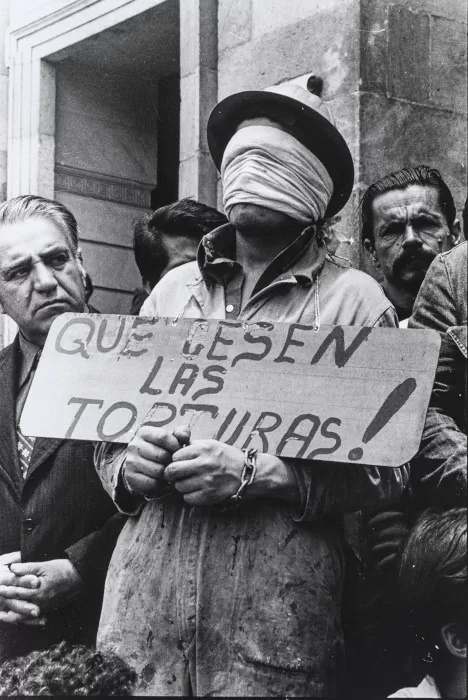
Stop the torture. From the series Social Movements by Viki Ospina, 1973.
The exhibition is structured around three main themes. The first focuses on the subjective dimension of rage and how it can be inscribed within the artistic language itself. The gestural quality of the brushstrokes, the intensity of the colors, the compositions, and the symbolic resources transform the artwork into a space where that which is difficult to express in words finds a visual form.
The second focus broadens the perspective to include the collective dimension. Art and reportage emerge as tools capable of recording and representing the expression of the masses, protests, and various manifestations of discontent in the face of situations considered unjust. Images thus cease to be merely documents and become testimonies of a shared emotion.
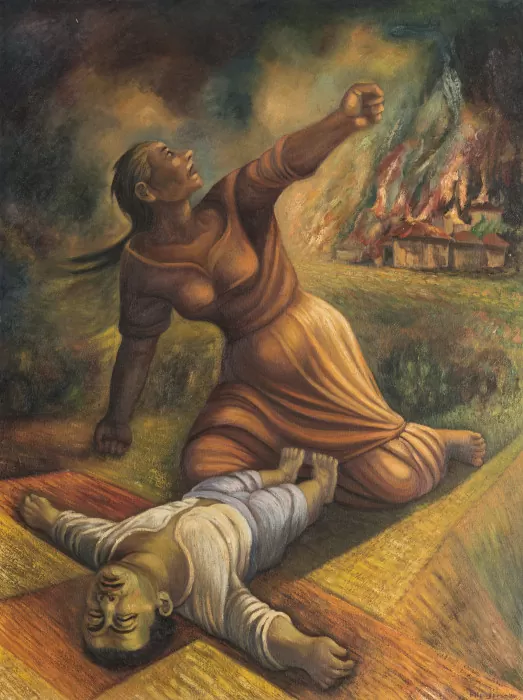
Violence in the countryside. Alipio Jaramillo 1957.
The third part focuses on urban communities and youth groups that express their rejection of certain social models and question the spaces that society offers them. In this context, anger is linked to identity, belonging, and uncertainty about a future perceived as bleak, becoming a way of expressing that which cannot be accommodated within existing structures.
Among the voices featured in the exhibition are key figures in Latin American and Colombian art, alongside more recent generations and proposals linked to photography, printmaking, performance, and urban practices. Artists such as Alejandro Obregón, Feliza Bursztyn, Cecilia Vicuña, Oswaldo Guayasamín, Luis Caballero, Jesús Abad Colorado, María Evelia Marmolejo, Leonel Castañeda, and Taller 4 Rojo are part of a broad group of creators who allow us to observe the many forms that anger can take when transformed into artistic language.
Curated by Sigrid Castañeda Galeano, Nicolás Gómez Echeverri, and Luis Fernando Ramírez Celis, with curatorial coordination by Catalina Junca, Digna Rabia ultimately poses a question about the role of art in the face of that which provokes unease. More than representing rage, the exhibition explores what happens when that feeling is transformed into gesture, image, word, action, or symbol.
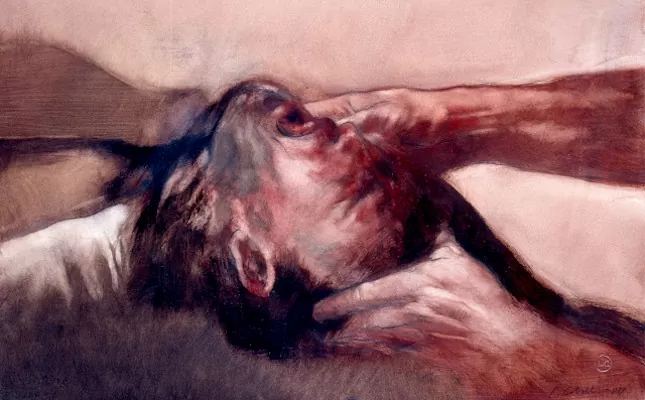
Untitled. Luis Caballero 1987.
This shift is one of the exhibition's main ideas: anger doesn't have to lead to destruction. It can also open a space for imagining, questioning, and transforming. Art thus presents itself as a territory where the most uncomfortable emotions can acquire a creative dimension and become a form of resistance.
Digna Rabia can be visited at the Miguel Urrutia Art Museum (MAMU), in Bogotá, until March 29, 2027.

You may be
interested
...