News
Arenys de Mar celebrates Sant Roc with a focus on its history
The Heritage Festival of National Interest once again fills the village with popular culture from 14 to 16 August with the Nocturna de Gegants, La Pesta, the macips and macipes, the Vot de Vila and the Dansa d'Arenys.
Arenys de Mar is once again becoming a great stage for popular culture these days with the celebration of Sant Roc, a festival that every August recovers rituals, dances, music and traditions rooted in the town's history. From August 14 to 16, the streets will be filled with giants, macips, macipes and macipets, while different events will vindicate a celebration that in 2021 was recognized as a Heritage Festival of National Interest.
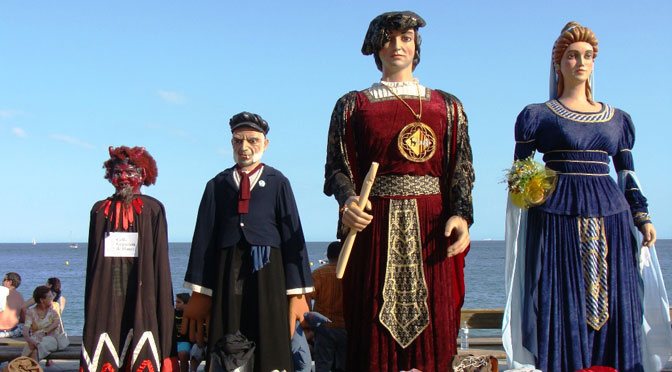
The program will start with the Nocturna de Gegants, which this year takes on a special meaning because it commemorates its 30th anniversary. The presence of the giants is one of the most recognizable elements of the festival and contributes to transforming the public space into a meeting point between heritage, citizen participation and popular culture.
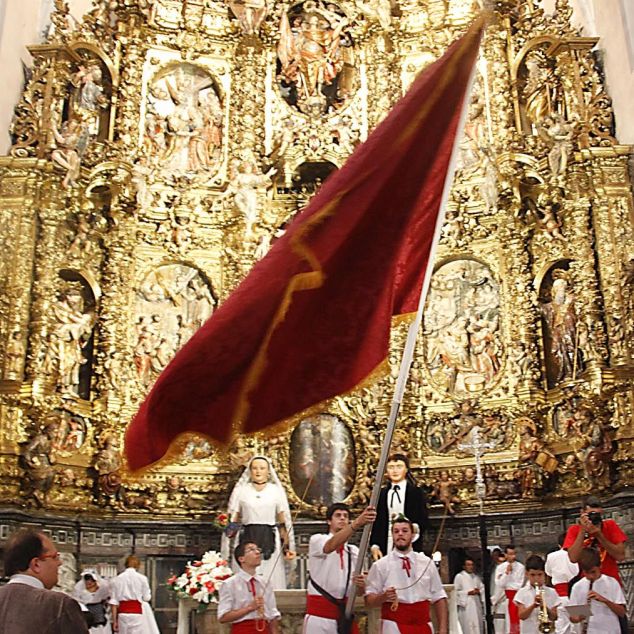
The celebration is closely linked to the Town Vow to Sant Roc, a tradition that dates back to the end of the 16th century. According to tradition, during the plague episodes that affected the town, the people of Arenys de Mar promised to honor Sant Roc if the population was freed from the epidemic. From that commitment was born a celebration that, centuries later, continues to mark the festive calendar of Arenys de Mar and that has its central moment on August 16.
The Plague returns in the 16th century
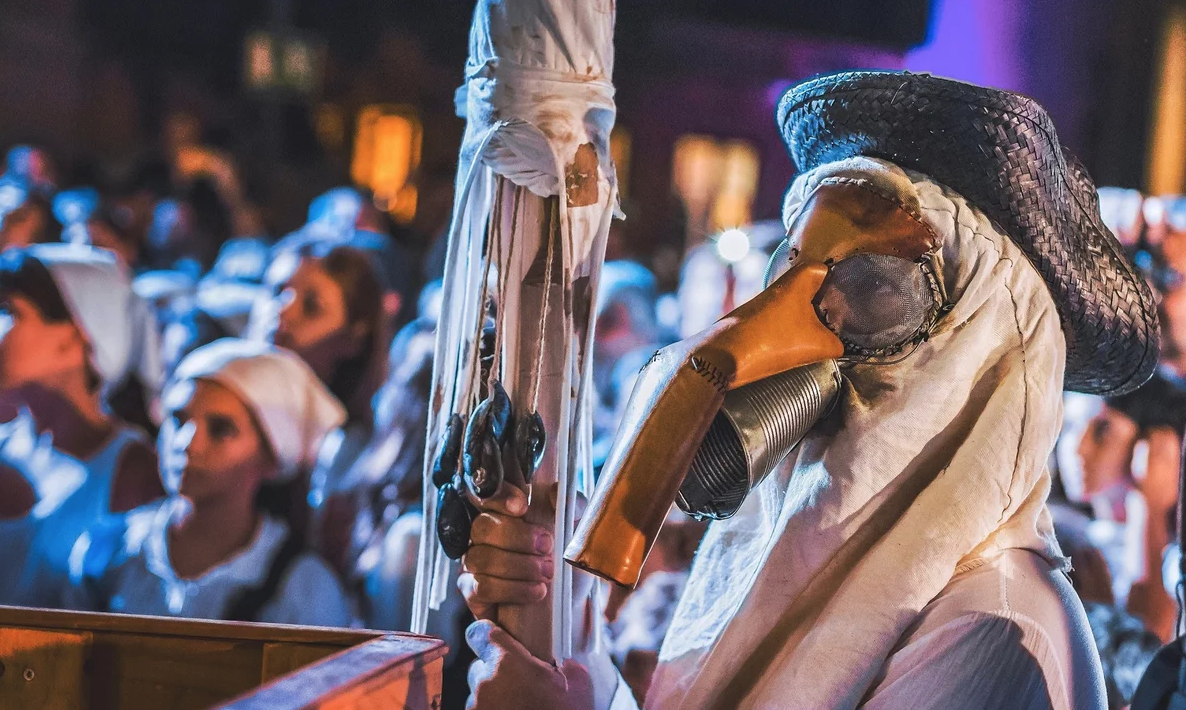
The night of August 15 will be one of the most theatrical moments of the celebration with La Pesta, a show incorporated into the Sant Roc Festival in 2010 with the aim of recovering and explaining the historical origins of the Vot de Vila.
The performance takes the audience back to the 16th century, when the fear of the spread of the plague deeply marked the life of the population. Through the theater, the festival recovers that atmosphere of anguish, but also the spiritual and community dimension that ended up linking the protection of Sant Roc with the collective promise of the people of Areny.
Since its incorporation into the program, La Pesta has become one of Sant Roc's emblematic shows and a way of giving scenic form to an essential part of the town's memory.
A dance that is also heritage
On August 16, coinciding with the feast of Sant Roc, another of the most significant moments will arrive: the Arenys Dance. This year, this tradition also has a new tool to delve deeper into its history and meaning with the publication of a monograph by the Arenys de Mar Museum dedicated to this expression of popular culture.
The publication, coordinated by the Cultural Association of Arenys de Mar (BAR), features texts by Bernat Salbanyà, documentation and revision by Roser Maresma and design by Aitor Sampere. The volume allows us to get closer to the history of a dance that, beyond its festive dimension, is part of the town's intangible heritage.
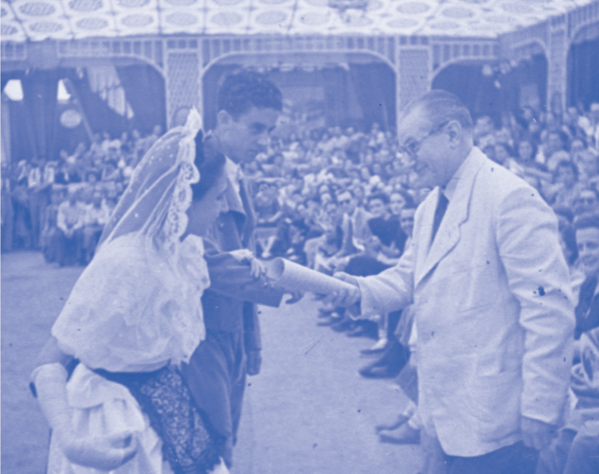
Photography: Fidel Fita Historical Archive, unidentified author.
The Dansa d'Arenys was revived in 1949 and, from 1953, it was fixed for the afternoon of Sant Roc on the initiative of the senior administrator of the Sant Roc Board, Josep Maria Nogueras. Since then, his presence in the festival has contributed to keeping alive a ritual that is passed down from generation to generation.
Understood as intangible cultural heritage, the Dance of Arenys is not preserved in a specific object, but in a practice that needs to be performed and shared to continue to exist. Music, gestures, knowledge, movements and forms of social relationship come together to build a collective language.
In this sense, the dance is part of the tradition of square dancing, a form of social dance linked to community celebrations, especially festive and religious ones. It is therefore not only a choreography intended to be contemplated: historically, square dancing implied the direct participation of the community and blurred the boundary between the performer and the observer.


You may be
interested
...