Exhibitions
From the Renaissance to Kara Walker: five centuries of art on paper
The Grunwald Center celebrates its 70th anniversary at the Hammer Museum in Los Angeles with an exhibition that traces the evolution of drawing, printmaking, photography, and the artist's book.
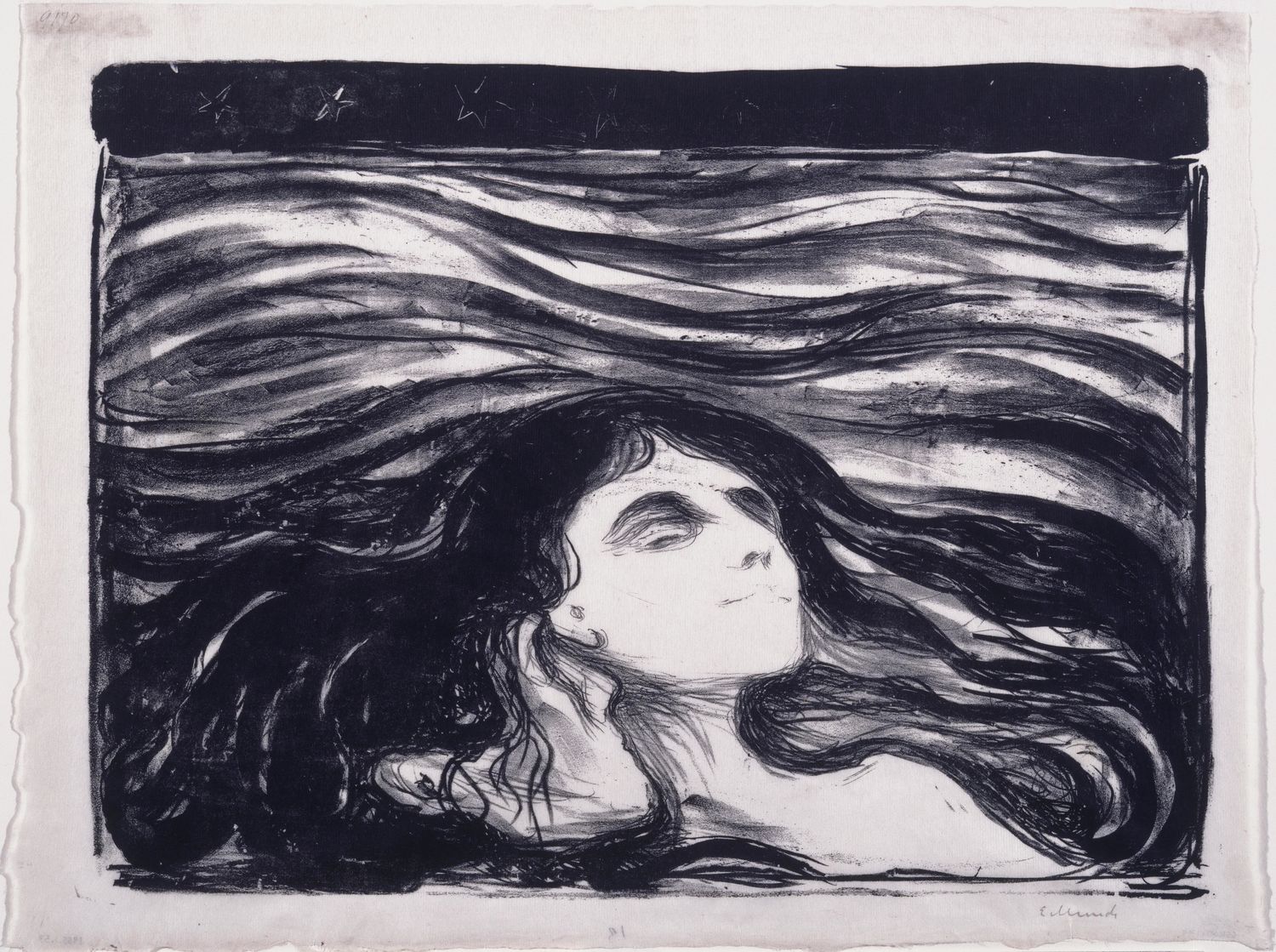
Paper may seem like a fragile medium, but its capacity to preserve ideas, gestures, and ways of seeing has made it one of the great witnesses of art history. From the Renaissance to contemporary practices, drawing, printmaking, photography, and the artist's book have served both to experiment and to record the world. This breadth is precisely what Five Centuries of Works on Paper: The Grunwald Center at 70, Part II , an exhibition on view from June 7 to October 25, 2026, at the Hammer Museum in Los Angeles, celebrates.
The exhibition commemorates the 70th anniversary of the UCLA Grunwald Center for the Graphic Arts, a collection that began in 1956 with a donation of prints from Los Angeles collector Fred Grunwald. What was then a developing collection has become, seven decades later, one of the most important holdings of works on paper in the United States.
Its growth has been gradual, fueled by both new acquisitions and donations, and now exceeds 45,000 pieces, including prints, drawings, photographs, and artists' books. The collection allows for a particularly extensive mapping of the transformations in Western artistic creation and, at the same time, of the different ways in which artists have understood paper as a space for exploration.
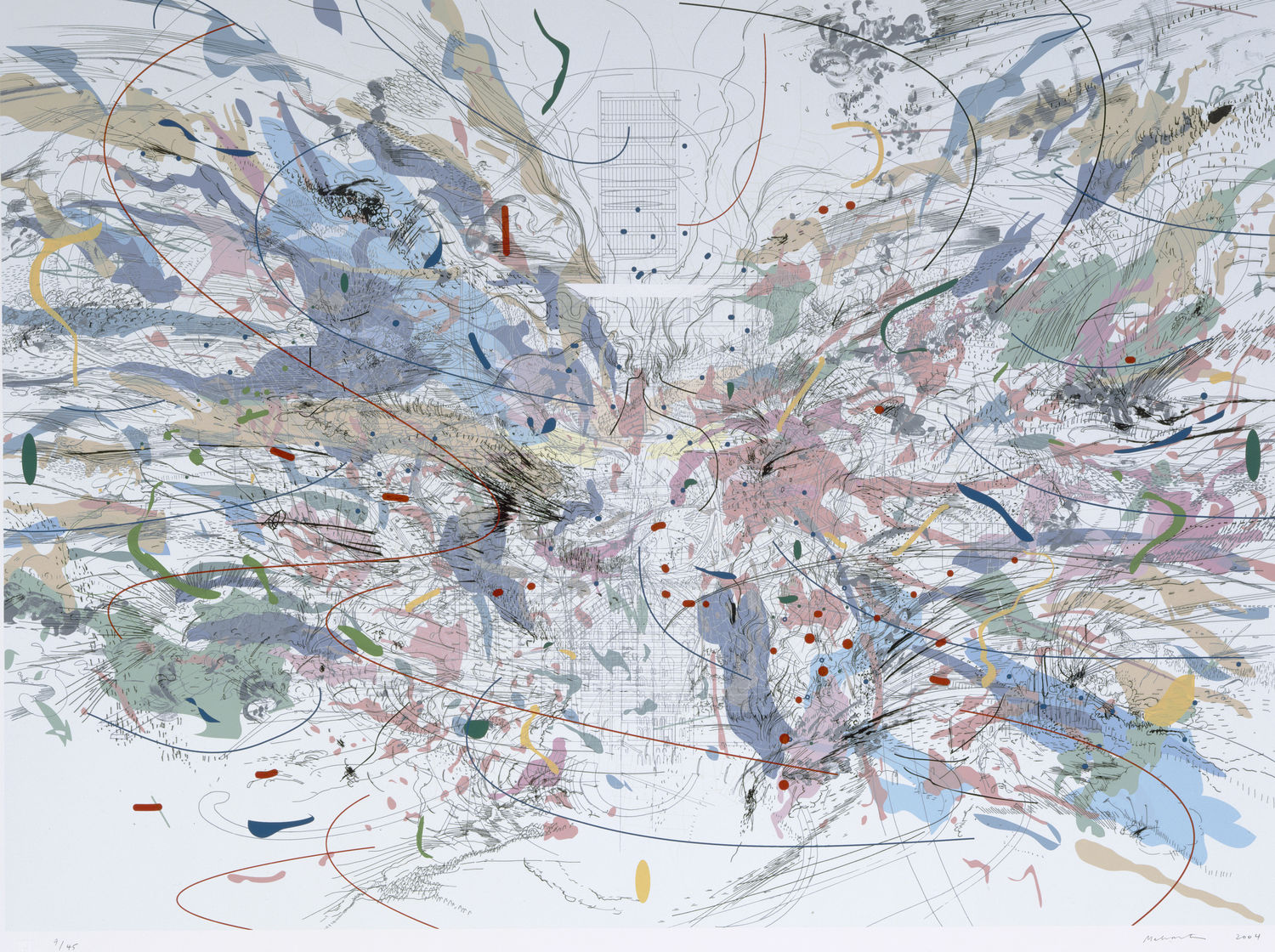
Julie Mehretu, Entropia (review), 2004, UCLA Grunwald Center for the Graphic Arts, Hammer Museum. Purchased with funds provided by the Lloyd E. Rigler-Lawrence E. Deutsch Acquisition Endowment Fund, 2005. © 2004 Julie Mehretu. Courtesy of the artist.
From Albrecht Dürer and Daniel Hopfer to Kara Walker, the exhibition presents a dialogue across eras that goes beyond simply showcasing the richness of a collection. Its true interest lies in observing how certain concerns—representation, the body, landscape, memory, identity, and formal experimentation—traverse centuries and reappear in entirely different languages.
The presence of Giovanni Battista Piranesi, Edgar Degas, Édouard Manet, and Utagawa Hiroshige allows us to explore moments when printmaking and drawing were essential tools for multiplying images and exploring new forms of perception. Alongside them appear names like Winslow Homer, Käthe Kollwitz, Gustav Klimt, and Egon Schiele, whose works demonstrate how paper can become a particularly intimate space, where line acquires an intensity that is often diluted on other media.
The 20th century further expanded this field of possibilities. Pablo Picasso, Henri Matisse, and Sonia Delaunay demonstrated paper's capacity to accompany the great ruptures of modernity, while artists like Ansel Adams and Imogen Cunningham shifted the debate to photography and its potential for constructing a perspective on landscape, the body, and reality.
The exhibition becomes particularly interesting when this historical journey leads to contemporary practices. Judy Fiskin, Robert Heinecken, James Welling, Catherine Opie, Jasper Johns, Helen Frankenthaler, Julie Mehretu, James Turrell, Alison Saar, and Kara Walker demonstrate that works on paper are far from belonging solely to the history of printmaking or drawing. In their hands, the support becomes a conceptual laboratory, a photographic space, a field of color, a construction of identity, or a stage for addressing social and political issues.
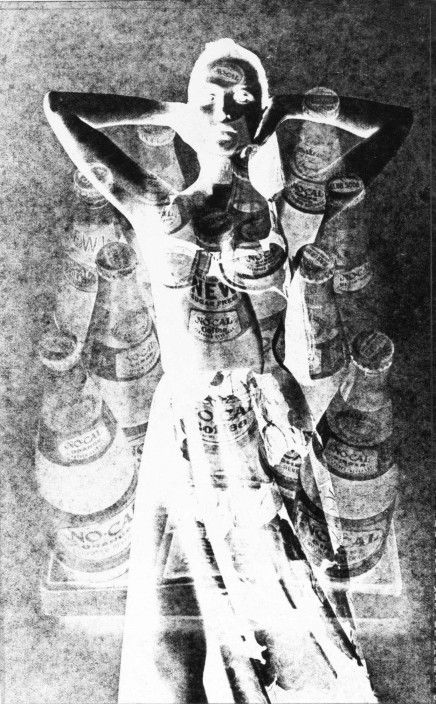
Robert Heinecken, untitled from Are You Rea, 1967, UCLA Grunwald Center for the Graphic Arts, Hammer Museum. Gift of Mr. Alan Stamm, 1983. © 2025 The Robert Heinecken Trust. Courtesy of the artist and Petzel, New York.
With over 70 works, the selection offers a cross-sectional view of the Grunwald Center's holdings. The approach doesn't seem to aim for a closed chronological narrative, but rather to reveal the connections that can be established between works separated by centuries. It is precisely here that the exhibition finds its greatest critical potential: paper ceases to be understood as a secondary medium compared to painting or sculpture and recovers its status as an autonomous territory for creation.
The history of the Grunwald Center itself reinforces this idea. Since 1994, the collection has been housed at the Hammer Museum, where it carries out work that extends far beyond conservation. Its holdings are regularly included in exhibitions and remain available to researchers and visitors through a study room specifically dedicated to the collection.
Celebrating seven decades therefore involves looking back, but also asking what it means to preserve and display a collection of works on paper in the present. The exhibition offers an answer based on diversity: five centuries of images that allow us to see how a seemingly modest material has accompanied some of the decisive transformations in the history of art.
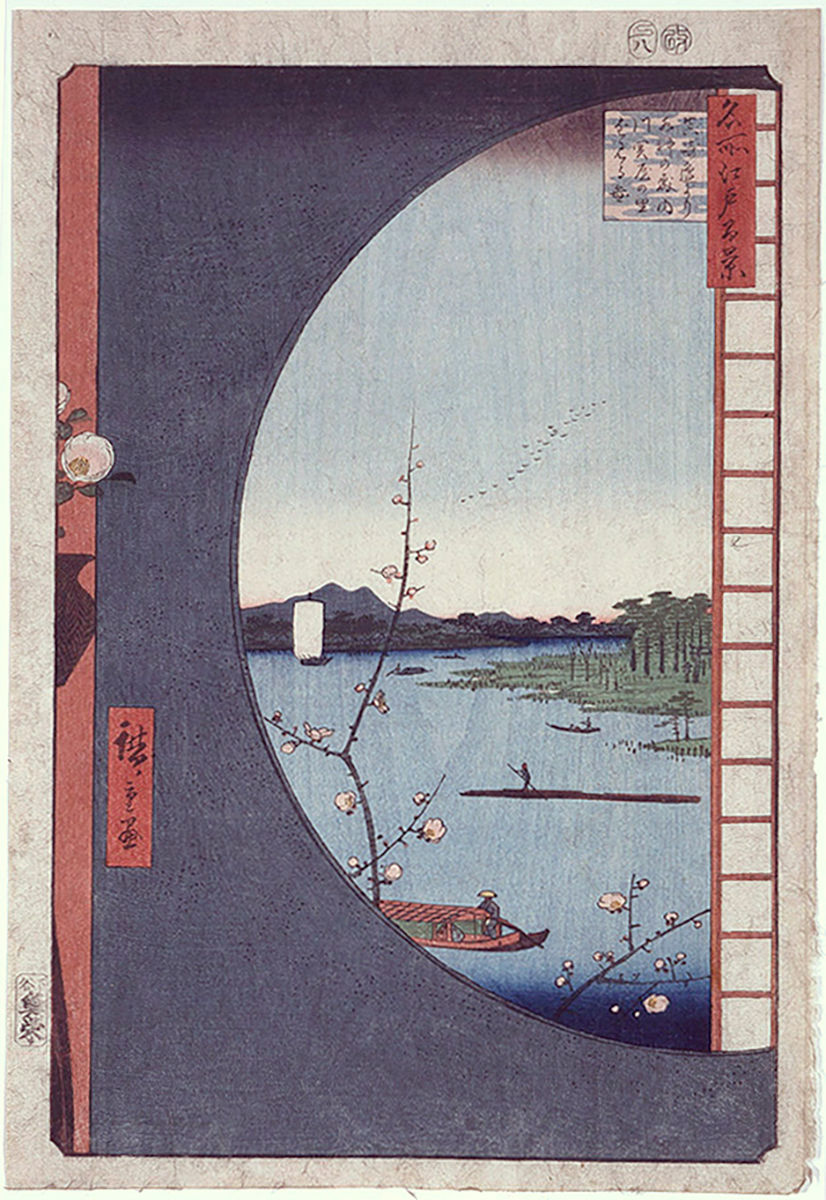
Utagawa Hiroshige, View from Massaki of Suijin Shrine, Uchigawa Inlet, and Sekiya, from the series One Hundred Famous Views of Edo, no. 36, 1857, 4th month UCLA Grunwald Center for the Graphic Arts, Hammer Museum, Gift of Mrs. Fred Grunwald, 1965.
You may be
interested
...