Exhibitions
Luis Gabú portrays the silent memory of Havana through absence
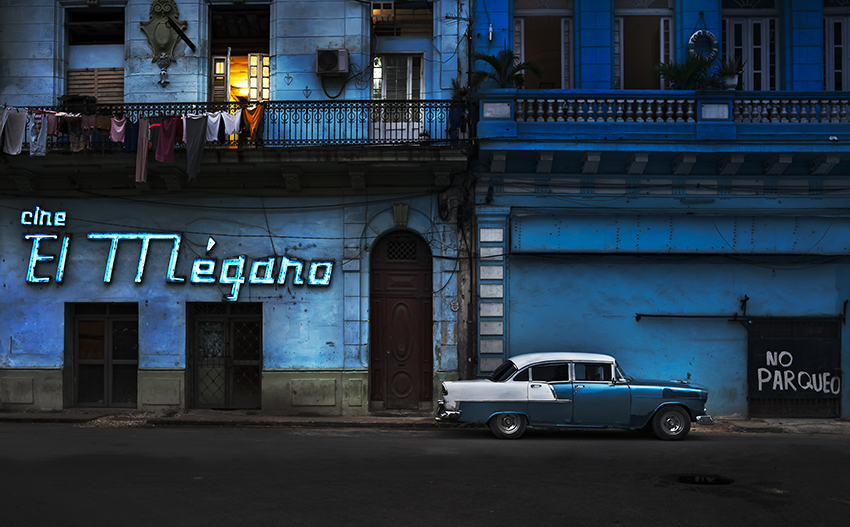
The Museum of Fine Arts of A Coruña presents from May 15 to October 31, 2026 Habana Mater. 2003-2023 , an exhibition that compiles the photographic project developed by the artist from A Coruña, Luis Gabú, during his continuous trips to Cuba over two decades.
The exhibition brings together 50 photographs in which Gabú constructs a personal vision of Havana and, especially, of the city's historic Galician Center. His images explore the relationship between architecture, memory, and the passage of time, positioning silence as the central element of a visual narrative where absence becomes the protagonist.
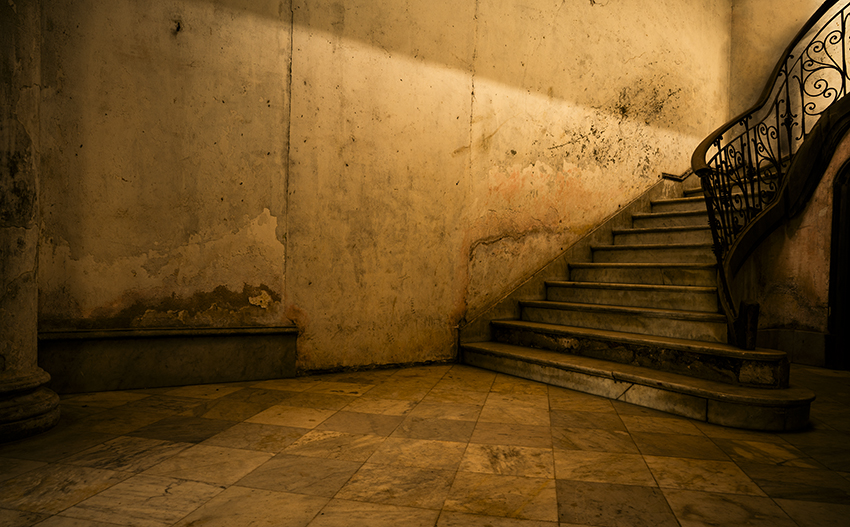
Portal in solitude (2017) Luis Gabú.
During his stays in Cuba, the artist documented at different times the evolution of the Galician Center of Havana, an emblematic building erected thanks to the contributions of the members of the Galician diaspora and which was the headquarters of this institution since 1914. Through his camera, Gabú records the architectural transformations of the building, its spaces and its appearance before and after the restoration carried out between 2013 and 2015.
The photographs also capture details that keep the connection between Galicia and Cuba alive, such as the coat of arms of A Coruña, which is still displayed on one of the building's facades. These elements serve as traces of a shared history marked by emigration, identity, and cultural ties between both sides of the Atlantic.
Influenced by the emotional and contemplative atmosphere of Edward Hopper's paintings, Luis Gabú presents a Havana far removed from grand urban narratives and tourist representations. His images show a practically empty city, captured at night, where light and architecture acquire a poetic dimension.
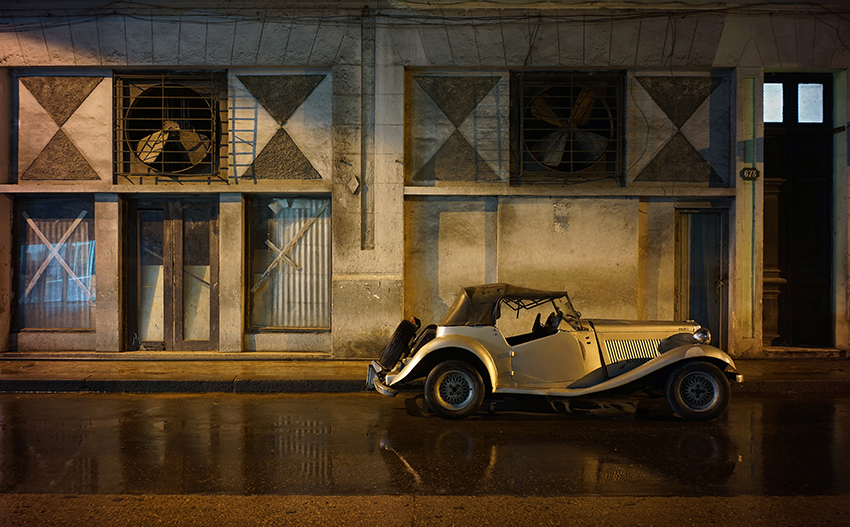
Neptune Street 673 Amber (2017) Luis Gabú.
In this nighttime vision, the buildings become silent witnesses to a bygone era when Havana was a capital city linked to progress, modernity, and cultural exchange. The absence of people doesn't imply emptiness, but rather memory: each space preserves the traces of those who occupied it and the stories that unfolded there.
The exhibition's title, Habana Mater , highlights the fundamental role the Cuban city played in shaping Galician identity during the diaspora. Havana was not only an economic destination for thousands of emigrants, but also a place of collective creation where social, cultural, and intellectual projects linked to Galicia flourished.
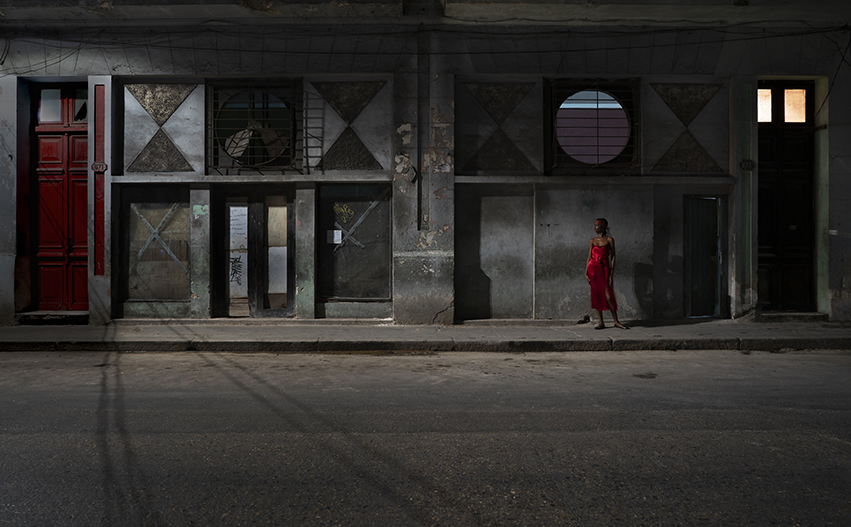
Neptune Street 673 Gelida (2019) Luis Gabú.
During the first decades of the 20th century, the Cuban capital became a true focal point for the Galician community abroad. The inauguration of the Palace of the Galician Center in 1915 solidified this institution as one of the great symbols of a modern Havana, transformed into an important intellectual, economic, and cultural hub for transatlantic Galicia.
Luis Gabú's career is marked by a constant search for places where memory remains hidden. Born in A Coruña, the artist has developed a body of work since 1988 linked to travel and the exploration of territories in Africa, Asia, America, and Europe. His experiences in these places have defined an artistic production focused on capturing the most intimate essence of spaces, both in photography and painting, also including more abstract periods.
You may be
interested
...