Exhibitions
The memory of sexual dissidence takes the floor in Girona
The Girona History Museum traces centuries of persecution, resistance and LGTBIQA+ activism in an exhibition that vindicates the fight for rights and diversity.
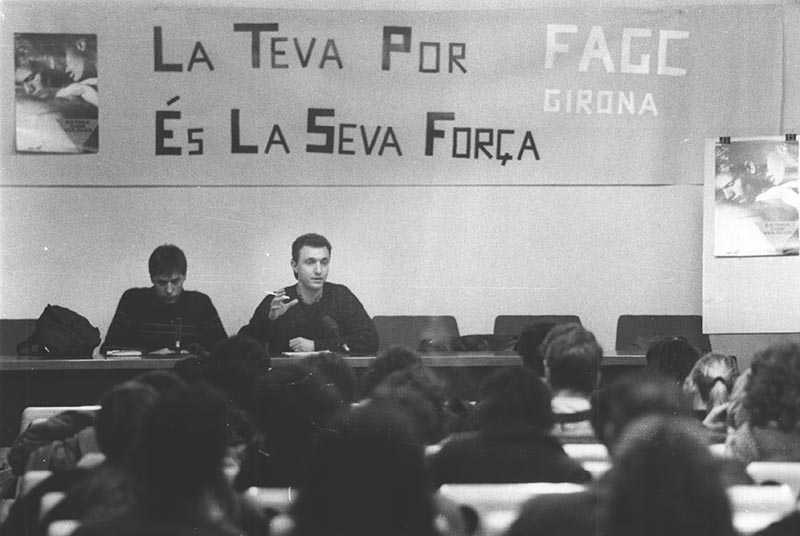
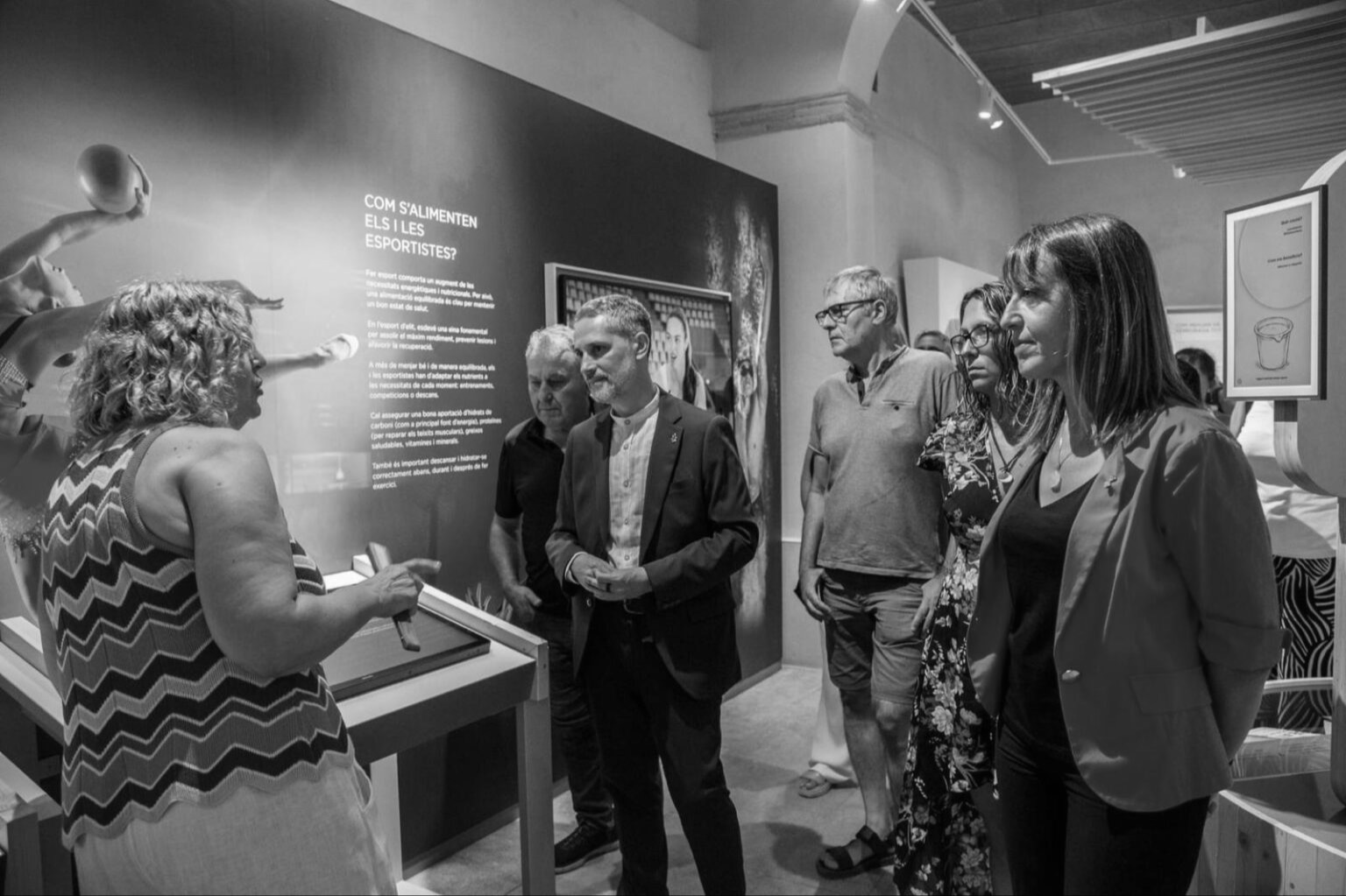
The history of sexual and gender identities is also the history of the forms of control exercised over bodies, desire and individual freedom. With this idea as a guiding principle, the Girona History Museum, in collaboration with the Espai LGTBI+ Mar C. Llop, presents Repression, pleasure and freedom , an exhibition curated by Lyhdyr Esquerdo Teixidó, Pau Gàlvez Lot and Sílvia Planas Marcé that can be visited from June 28 to September 13, 2026.
The proposal offers a long-term look at the evolution of sexual and gender dissidence in Catalonia, showing how the construction of identities has always been linked to mechanisms of power, social prejudices and the fight for equality. Far from being limited to a chronology of LGTBIQA+ rights, the exhibition reflects on sexuality as a space of political and cultural dispute, where the limits between what is accepted and what is persecuted have been defined.
The tour begins with an approach to the concepts that today define sexual and gender diversity. The exhibition defends the importance of language as a tool for recognition and visibility, recalling that naming a reality is also a way of making it exist. As identities have become visible, so have new words and new nuances that allow for the expression of increasingly diverse experiences.
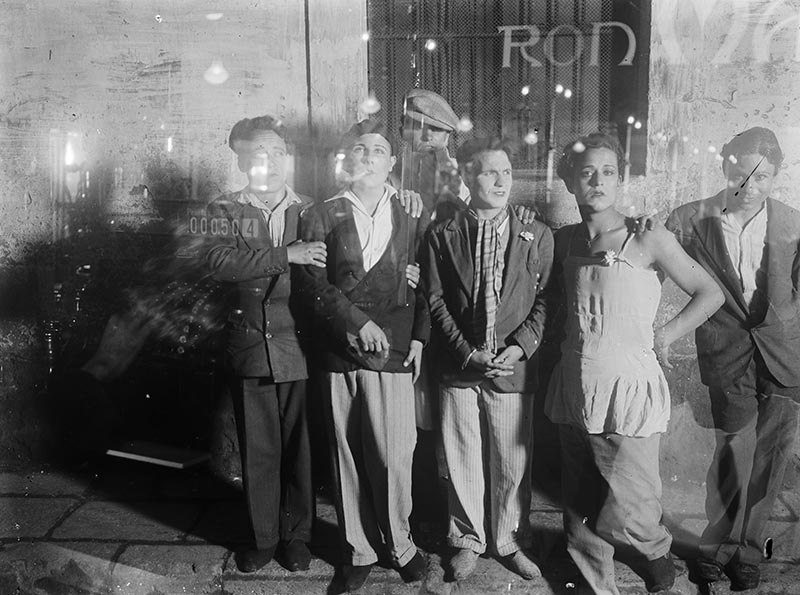
Gabriel Casas Galobardes. transvestites 1925-1935. ANC/5/Gabriel Casas and Galobardes Fund.
The exhibition then goes back to the Middle Ages, when any sexual practice that was far from the heterosexual and reproductive model was persecuted under the accusation of "sodomy", considered one of the most serious crimes against the moral and religious order. Men who had relationships with other men or questioned established gender roles were severely punished, while relationships between women were often made invisible or ridiculed within a deeply patriarchal society. This historical perspective shows how repression not only affected sexual practices, but also any expression that challenged social norms about masculinity and femininity.
One of the main axes of the exhibition is dedicated to the birth of the LGTBIQA+ liberation movement during the last years of the Franco regime. Despite legal and police persecution, in the early 1970s a small group of activists, led by Francesc Francino and Armand de Fluvià, under the pseudonyms Mir Bellgai and Roger de Gaimon, began to organize clandestine meetings that would give rise to the Spanish Homosexual Liberation Movement (MELH). Those meetings, influenced by the revolutionary currents of May 68 and the American Gay Liberation Front, would end up leading in 1975 to the creation of the Front d'Alliberament Gai de Catalunya (FAGC), the first major organization of the movement in the country.
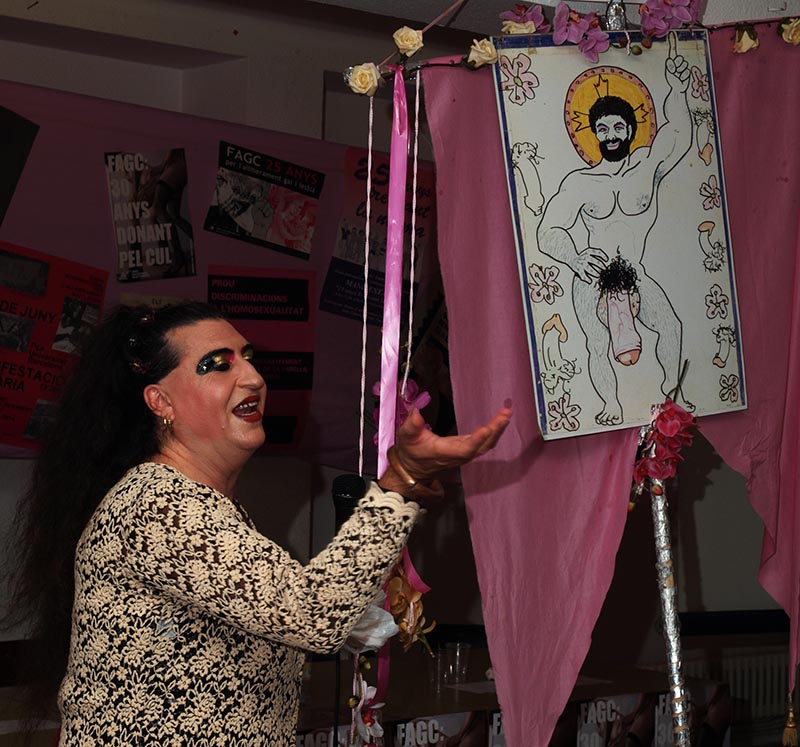
Unknown authorship. Fernanda carrying the Nazario poster. Documentation Espai LGTBI+ Mar C. Llop.
The exhibition also recalls the significance of the first demonstration for sexual and gender liberation held in Barcelona on June 26, 1977, called by the FAGC under the slogan "We are not afraid, we are." Despite the heavy police charge that put an end to the mobilization, that day would become a decisive milestone for the visibility of the group and the beginning of a new stage in the demand for civil rights.
A prominent part of the tour focuses on the history of the LGTBIQA+ movement in the Girona region, recovering little-known but fundamental episodes to understand the evolution of activism outside Barcelona. Among these, the meeting of the International Lesbian and Gay Association (ILGA) held in 1980 in Santa Cristina d'Aro, the first attempt to present the FAGC in Girona in 1981 or the official constitution of the Girona collective in 1988, with Xavier Parnau i Pagès as one of the driving figures.
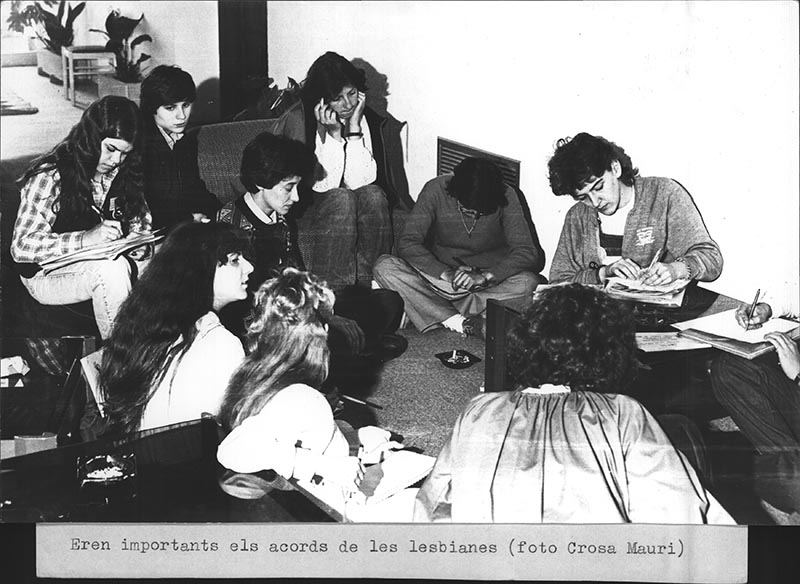
Antoni Crosa Mauri. Agreement of the lesbians of Santa Cristina. 1980. Girona City Council. CRDI (El Punt Fund - Antoni Crosa).
The exhibition also vindicates the role of the media created from the movement itself. The magazine Girona Gai, which would later become Girona Gai i Lesbià and finally Matisos, contributed to creating a network of information and support in the Girona regions, while Ràdio Guirigai, born from Ràdio Salt, continues to be on the air today after almost four decades, becoming one of the longest-running LGTBIQA+ radio initiatives in Catalonia.
Beyond the historical narrative, Repression, Pleasure and Freedom invites us to reflect on collective memory and the need to preserve the stories of the people and groups who challenged discrimination to expand rights and freedoms. The exhibition reminds us that the progress achieved is the result of decades of resistance and mobilization, but also that the defense of diversity remains a fully valid challenge.


You may be
interested
...