Exhibitions
From Cerdà to Brasília: the ten ideal cities that imagined the future of urban planning
The COAC hosts an exhibition that covers a century of visionary projects and vindicates the international legacy of Ildefons Cerdà within the framework of the World Capital of Architecture and the Cerdà Year.
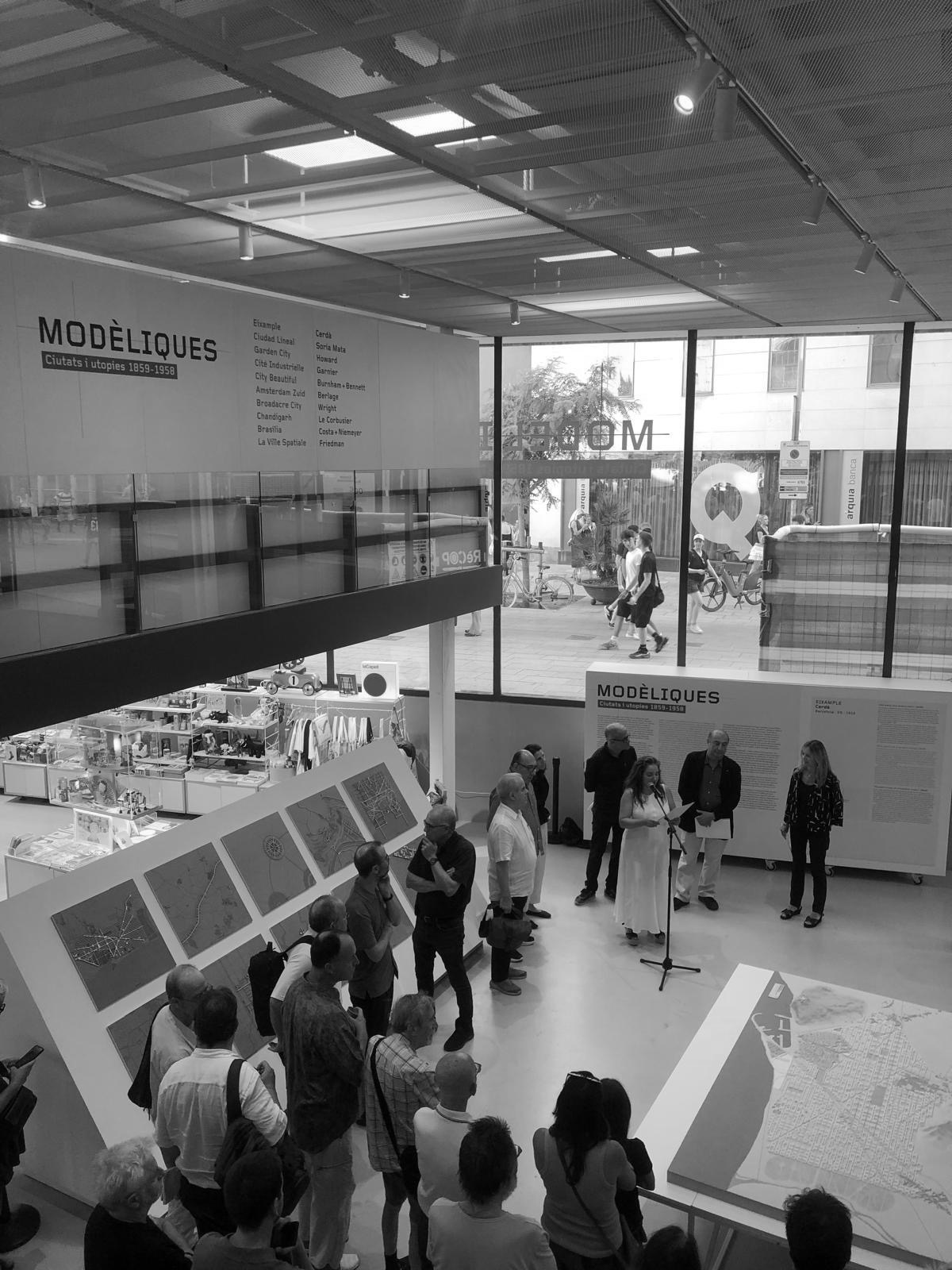
Urban planning is much more than a technical discipline. It is a way of imagining how we want to live, coexist and build the cities of the future. With this premise, the Department of Territory, the College of Architects of Catalonia (COAC) and the Polytechnic University of Catalonia (UPC) present Models, cities and utopias 1859-1958 , an exhibition that invites us to explore a century of ideas that have marked the history of modern urban planning.
Included in the programming of the World Capital of Architecture and the Cerdà Year, the exhibition brings together ten projects that, from theory or from their materialization, have decisively influenced the way of thinking and planning contemporary cities. Some went so far as to transform the territory; others remained in the realm of utopia. All, however, share the same ambition: to respond to the great challenges of their time and imagine a new way of inhabiting the world.
The exhibition presents a chronological journey between 1859 and 1958, a period in which architects, engineers and urban planners formulated some of the most revolutionary proposals in the history of the discipline. Those visions, often radical or controversial at the time of their appearance, continue to fuel the debate today on sustainability, mobility, public space and the relationship between city and landscape.
From Cerdà's Eixample to spatial utopia
The starting point is the Eixample of Barcelona, designed by Ildefons Cerdà in 1859, which became one of the most influential contributions to modern urbanism. Defined by Manuel de Solà-Morales as "the practical success of a theoretical project", Cerdà's proposal continues to be an international benchmark thanks to a conception of the city based on equal access, hygiene, mobility and quality of life.
Based on this founding model, the tour presents other great urban visions that redefined the discipline. It includes Arturo Soria i Mata's Ciudad Lineal, which turned the railway into the structuring axis of urban growth; Ebenezer Howard's Garden City, a pioneer in the integration between city and nature; and Tony Garnier's Cité Industrielle, which proposed a new urban organization based on productive functions.
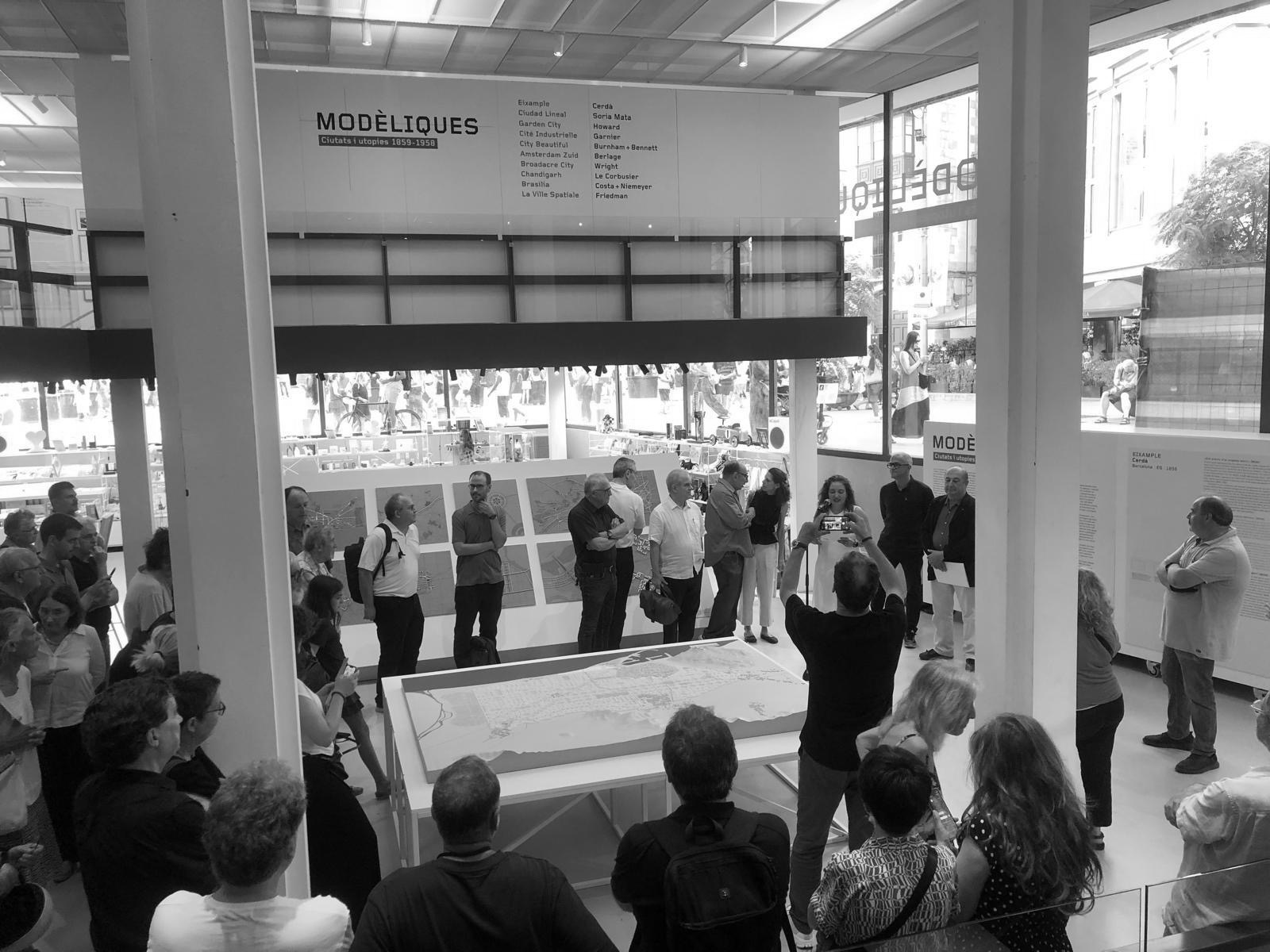
Also present are movements that transformed 20th-century planning, such as Daniel Burnham and Edward H. Bennett's City Beautiful, with its urban monumentality; Petrus Berlage's Amsterdam Zuid plan, a paradigm of quality social housing; or Frank Lloyd Wright's Broadacre City, a decentralized city in close relationship with the territory.
The tour culminates with three of the most emblematic projects of modernity: Chandigarh, conceived by Le Corbusier as a new capital for independent India; Brasília, designed by Lúcio Costa and Oscar Niemeyer as a symbol of modern Brazil; and La Ville Spatiale, by Yona Friedman, a visionary proposal that took architecture towards an almost utopian dimension, imagining tall structures capable of adapting to the changing needs of society.
Documents, models and a comparative reading
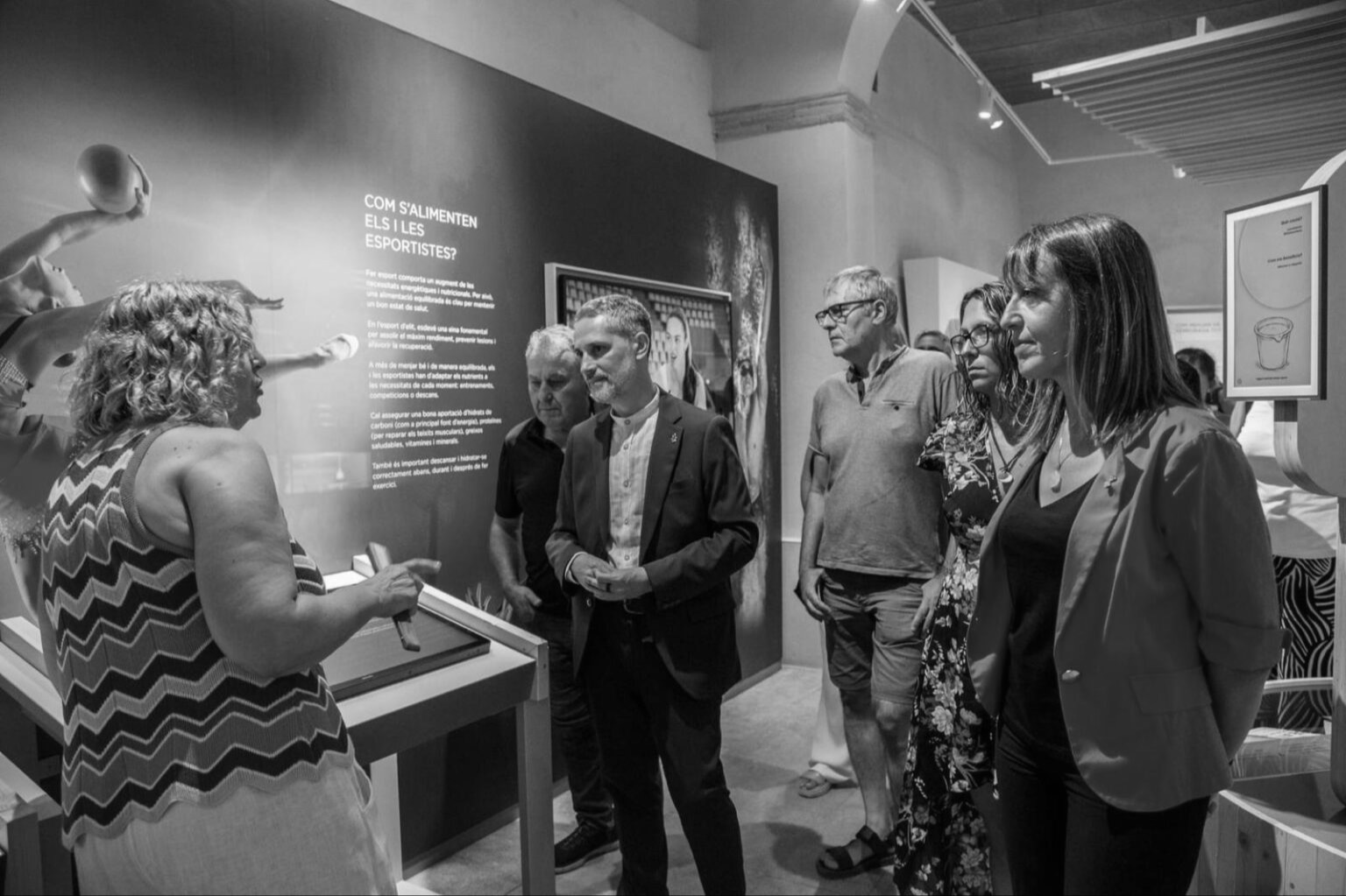
Curated by Carles Crosas, Fernando Marzá and Beth Tuà, the exhibition offers a didactic and comparative approach to these ten urban models. The visitor will find replicas of historical documents, current photographs of the built spaces and scale reliefs that allow the different proposals to be analyzed from a transversal perspective.
The selection is based on reference works of urban theory, such as Utopies et réalités (1965), by Françoise Choay, or Cities of Tomorrow (1987), by Peter Hall, and highlights how many of the issues raised more than a century ago are still fully valid: urban density, mobility, the relationship with the natural environment, housing or the construction of collective spaces.
Beyond the historical value of the projects, the exhibition vindicates the capacity of urban planning to anticipate social transformations and imagine possible futures. Ideal cities do not appear here as simple exercises in fantasy, but as laboratories of ideas that have conditioned the way we understand contemporary metropolises today.
Claiming Cerdà's legacy
One of the central objectives of the exhibition is to restore Ildefons Cerdà to his place in the international history of urban planning. His general theory of urbanization and the project for the Eixample of Barcelona are presented as a fundamental milestone that influenced numerous subsequent experiences and that still inspires researchers and urban planners around the world today.
In the context of the World Capital of Architecture and the Cerdà Year, the exhibition thus becomes an opportunity to understand how Barcelona is not only the object of architectural reflection, but also the origin of an innovative way of thinking about the city.
The exhibition can be visited until October 18 at the COAC headquarters, distributed between the Àgora and the Altell of the building. Admission is free and offers an essential tour for both architecture specialists and anyone interested in discovering how the great urban utopias of the past continue to inspire the cities of the future.
You may be
interested
...