Exhibitions
Cabosanroque gives voice to the silences of the war by Mercè Rodoreda
'Flowers and Travels', the new immersive installation by the artistic duo, reinterpreted from Viatges i flors by Mercè Rodoreda, reflects on the consequences of war conflicts from the perspective of women and children.
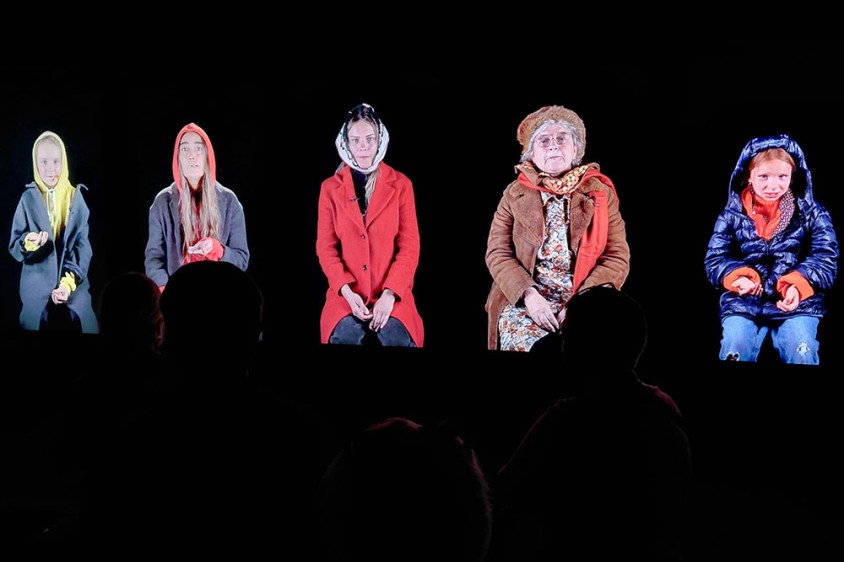
With Flors i viatges , Cabosanroque culminates the trilogy of immersive installations that the collective has dedicated to freely reinterpreting great figures of Catalan literature. After delving into the universes of Joan Brossa and Jacint Verdaguer, Roger Aixut and Laia Torrents now take Mercè Rodoreda as their starting point to build a sound art experience that transcends the literary event and poses a profound reflection on war, memory and the human condition.
Presented at the Granollers Museum, the work draws on Viatges i flors (1980), one of the most important books of Rodoreda's creative maturity. Far from a conventional adaptation, the proposal transforms the writer's stories into a fantastic forest where sound, light and image dialogue to reveal the background of the texts: the devastation caused by war conflicts and their consequences on women and children.
The project is the result of a long artistic research. "We worked on it for ten years. We went through it many times and we realized that all those stories were about war," explains Roger Aixut. For Laia Torrents, the very titles of the stories evoke "lost women, hunger or fear", turning the book into an extraordinarily precise synthesis of the effects of any armed conflict.
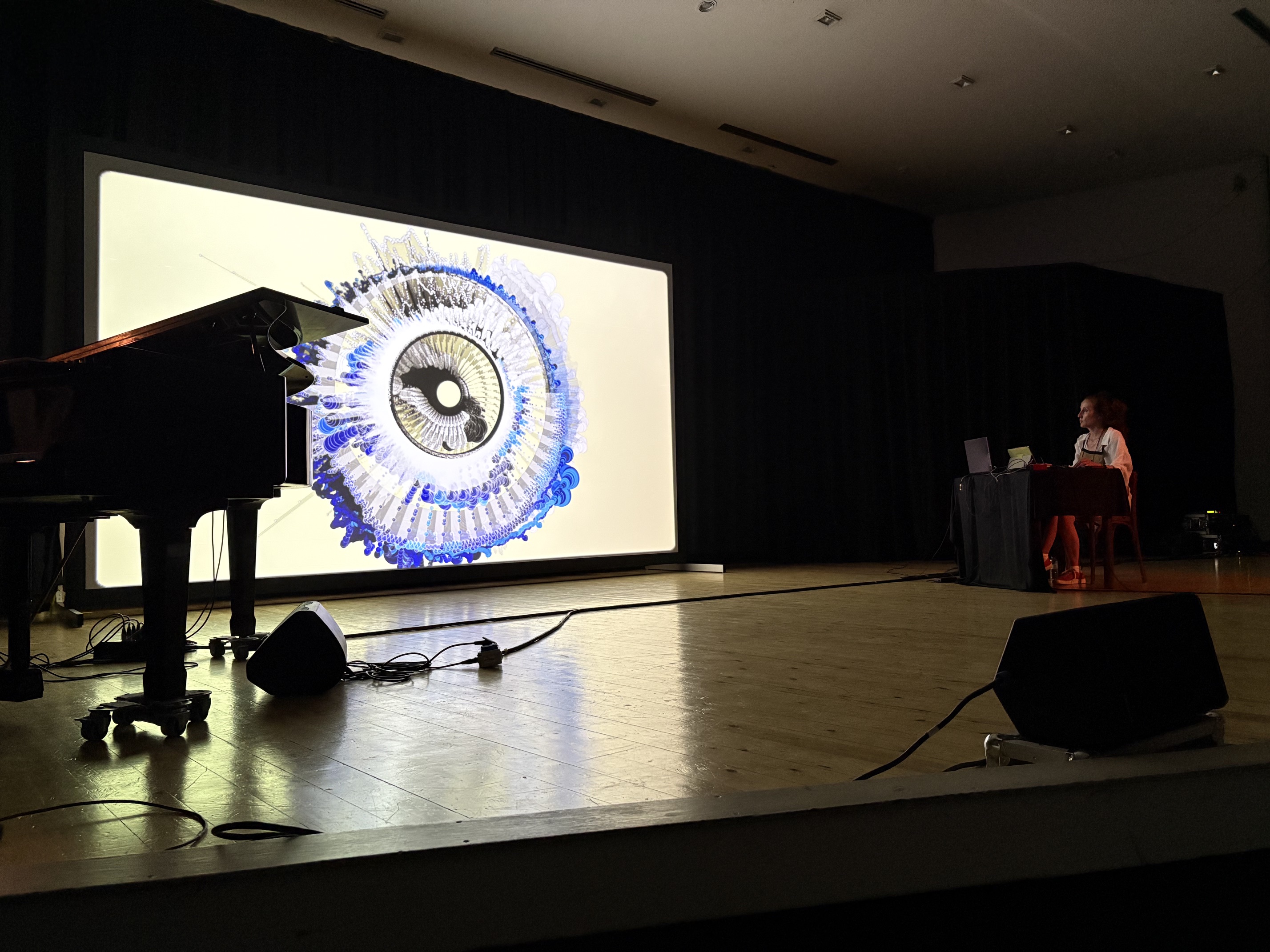
The installation is activated every forty-five minutes and unfolds a repetitive sequence of soundscapes, projections and light effects that surround the viewer. This immersive journey proposes a contemporary reading of Rodoreda's universe, emphasizing those voices that are often silenced by official history.
According to Aixut, Rodoreda's strength lies in his ability to turn poetry into a tool of denunciation. "He used poetic language, but through this language he spoke of torture, mass graves and executions. He used poetry to explain the most terrible things that men can do." This tension between beauty and horror is precisely the common thread of Flors i viatges, which transforms visual and sound delicacy into an experience of great emotional intensity.
The proposal also stands out for the participation of several creators linked to Granollers. The ceramist Toni Cumella has created a unique ceramic organ integrated into the installation, while the Frau Recerques Visuals studio, formed by Vicenç Viaplana Ventura and Helena Pielias, is responsible for the audiovisual projections that complete the tour.
The exhibition can be visited at the Granollers Museum until October 25. Conceived as an itinerant production, Flowers and Travels has already toured several Catalan municipalities and, after its stay in Granollers, will continue its itinerary with new presentations in Vilafranca del Penedès, Reus and Santa Perpètua de Mogoda, thus expanding the journey of a work that turns Mercè Rodoreda's literature into a powerful sensorial experience about memory, violence and resistance.
You may be
interested
...