Exhibitions
Argentina and Spain meet at the Fine Arts Museum through art
In the lead-up to the Women's World Cup final between Argentina and Spain, another kind of encounter between the two countries takes center stage in Buenos Aires. The National Museum of Fine Arts presents the exhibition "Artistic Itineraries between Argentina and Spain (1880-1930)," a show that traces half a century of cultural exchanges and reveals how travel, friendships, and mutual influences shaped the artistic production of two shores united by history.
The exhibition, curated by researchers Florencia Galesio, Paola Melgarejo, and Patricia Corsani, brings together more than sixty paintings, sculptures, prints, and historical documents from the museum's collection and other institutions. The project is part of an academic exchange initiative promoted by the Department of Fine Arts at the Faculty of Philosophy and Letters of the University of Granada.
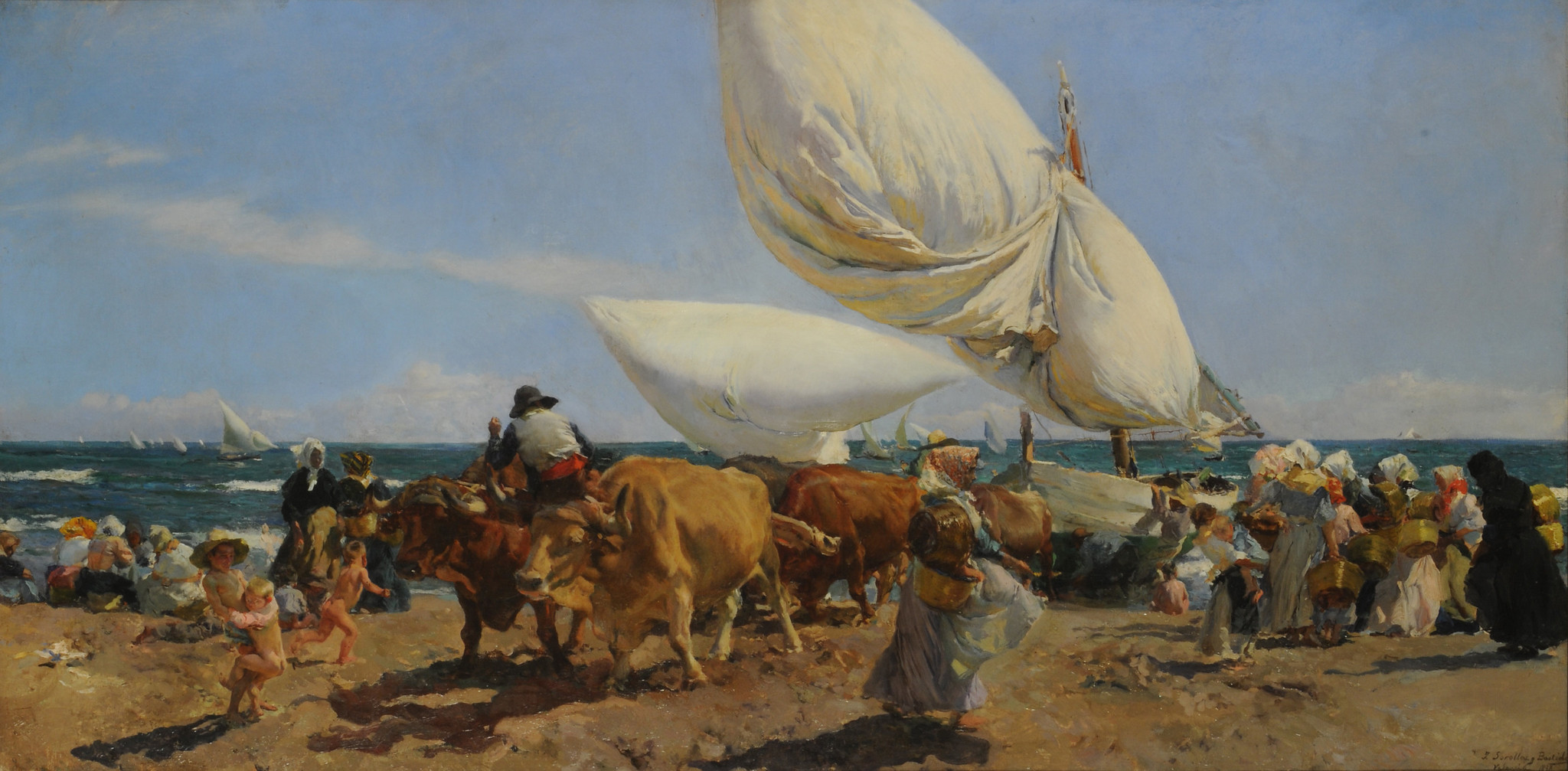
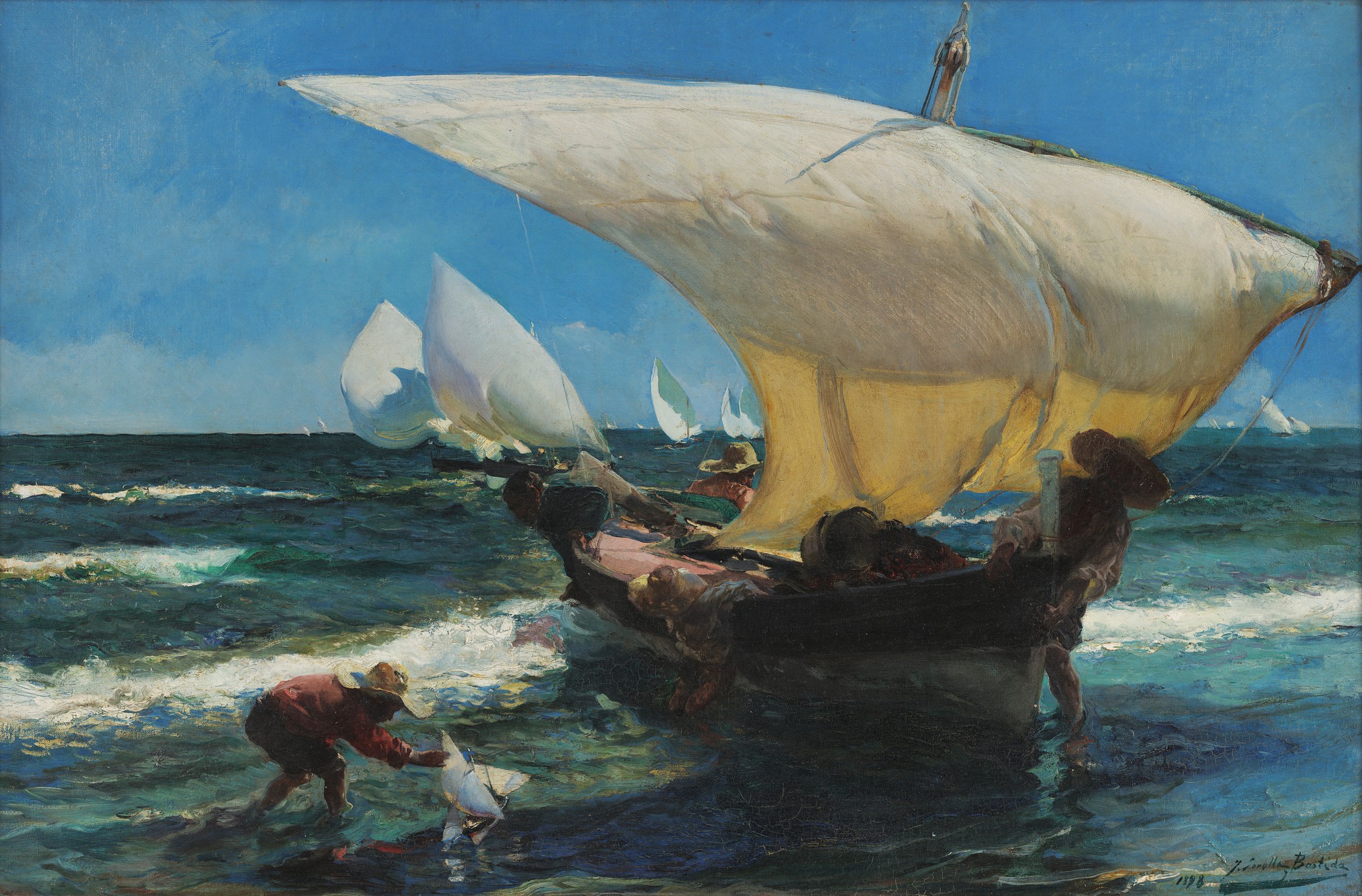
Joaquín Sorolla y Bastida (Spain, Valencia, 1863 - Spain, Cercedilla, Madrid, 1923), “The Return from Fishing”, 1898. Collection of the National Museum of Fine Arts.
Travel to Spain to learn to paint
Far from the traditional route that led Argentine artists to Paris or Rome, many creators at the end of the 19th century chose to train in cities such as Madrid, Granada, Seville, Barcelona, Toledo, or Mallorca. Under the guidance of masters like Ignacio Zuloaga, Hermenegildo Anglada Camarasa, and Eduardo Chicharro, these travelers discovered a distinct artistic tradition and transferred Spanish landscapes, scenes of everyday life, and motifs to their canvases.
The curators emphasize that these trips not only broadened the technical training of the Argentine painters, but also allowed them to recognize Spain as a center of learning of enormous cultural prestige. Upon returning to Argentina, artists such as Jorge Bermúdez and Cesáreo Bernaldo de Quirós began to depict the Argentine interior with a renewed perspective, combining the experience acquired in Castile, Andalusia, and Catalonia with the search for their own visual identity.
Buenos Aires, capital of Spanish art
One of the most revealing aspects of the exhibition is the transformation of Buenos Aires into a key market for Spanish art between 1880 and 1930. The city's economic growth and the activity of art dealers like the Catalan José Artalim boosted an intense commercial circuit that oriented the taste of the Buenos Aires bourgeoisie towards naturalism and preciosity.
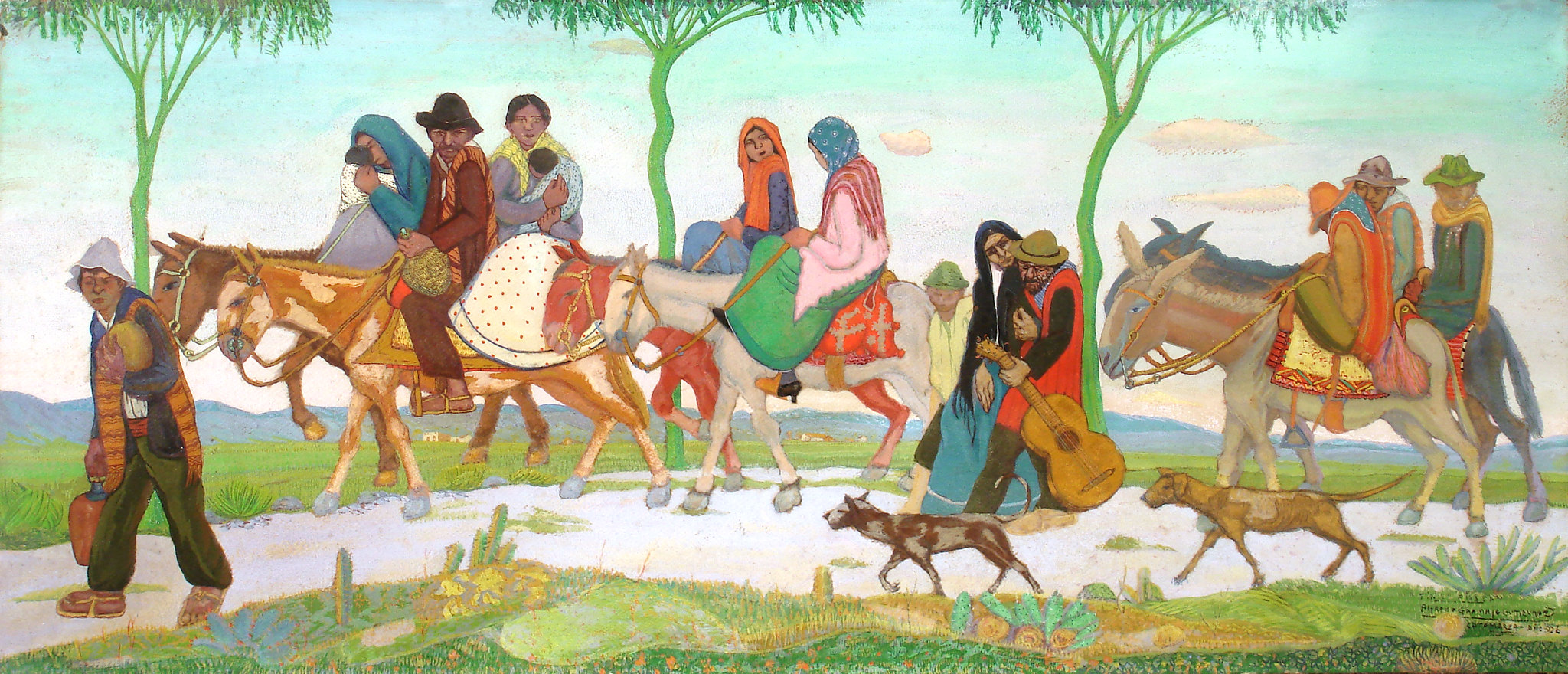
Alfredo Gramajo Gutiérrez (Tucumán, 1893 – Buenos Aires, 1961), “End of the Party”, 1926. Collection of the National Museum of Fine Arts.
The famous “Artal Salons”, organized at the Witcomb gallery, promoted the work of artists such as Joaquín Sorolla and Fernando Álvarez de Sotomayor, while the newly founded National Museum of Fine Arts incorporated Spanish pieces thanks to acquisitions and the bequests of collectors such as Parmenio Piñero and Ángel Roverano.
The exhibition also recalls the impact of the Spanish section of the Centennial International Art Exhibition. The works of Zuloaga and Anglada Camarasa won top awards and introduced stylistic innovations that captivated critics and the Buenos Aires public. Many of those works later became part of the museum's collection, solidifying the presence of Spanish art in the local art scene.
From the avant-garde to Seville 1929
The journey concludes in the 1920s, when Argentine artists achieved considerable recognition in Spain and new generations began engaging with the European avant-garde. Figures such as Antonio Berni and Norah Borges revitalized their visual language through contact with modern trends.
A special section is dedicated to Argentina's participation in the Ibero-American Exposition of Seville in 1929, where the national pavilion proposed a synthesis between European heritage and American roots, reflecting the debate on cultural identity that permeated Argentine society at the time.
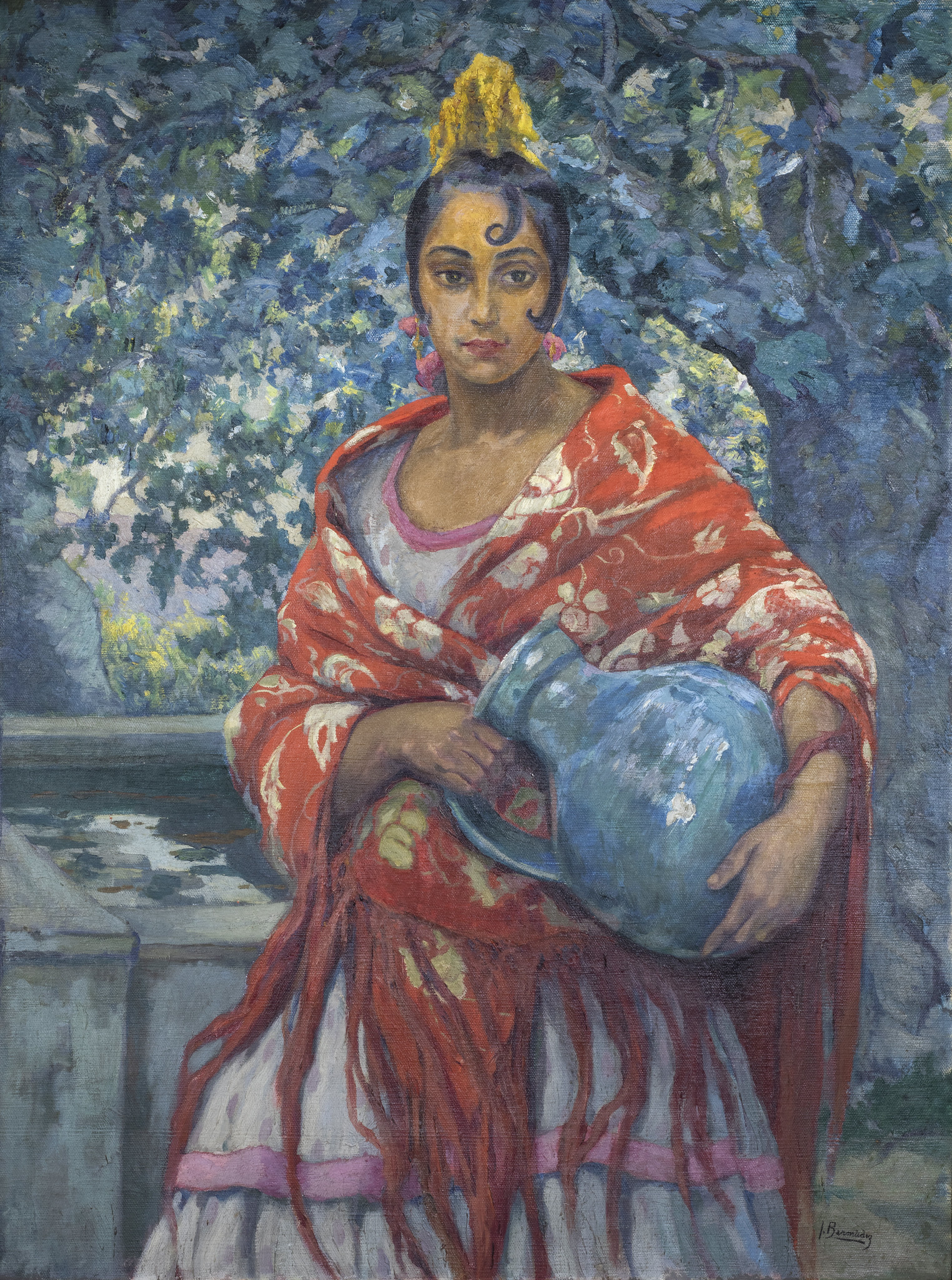
Jorge Bermúdez (Buenos Aires, 1883 – Granada, 1926) "Gitana Granada" [The Gypsy Maria], 1925. Myrian Gallo Bermúdez Collection, Buenos Aires.
An artistic dialogue spanning half a century
The exhibition brings together works by Argentine artists such as Emilio Caraffa, Alfredo Gramajo Gutiérrez, José Antonio Terry, Tito Cittadini, Léonie Matthis and Francisco Bernareggi, along with prominent Spanish artists such as Julio Romero de Torres, Darío de Regoyos, Mariano Fortuny and Ramón de Zubiaurre.
“Artistic Itineraries between Argentina and Spain (1880-1930)” can be visited until August 2nd on the first floor of the National Museum of Fine Arts. More than a historical exhibition, the show proposes a journey through the cultural connections that, for half a century, made art a permanent bridge between Argentina and Spain.
You may be
interested
...