
Exhibitions
The spiritual strength of Josefa Tolrà reaches the Vayreda Foundation
Curated by Natàlia Chocarro, the exhibition vindicates the visionary strength of a creator who turned drawing, writing and embroidery into tools to explore the spiritual dimension of existence. It can be visited from July 18 to September 27.
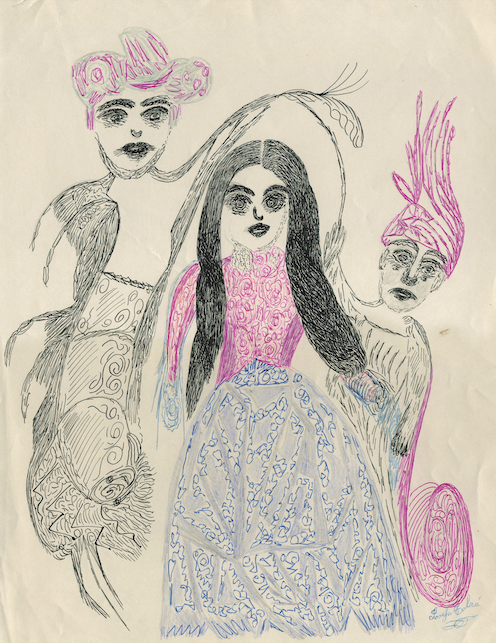
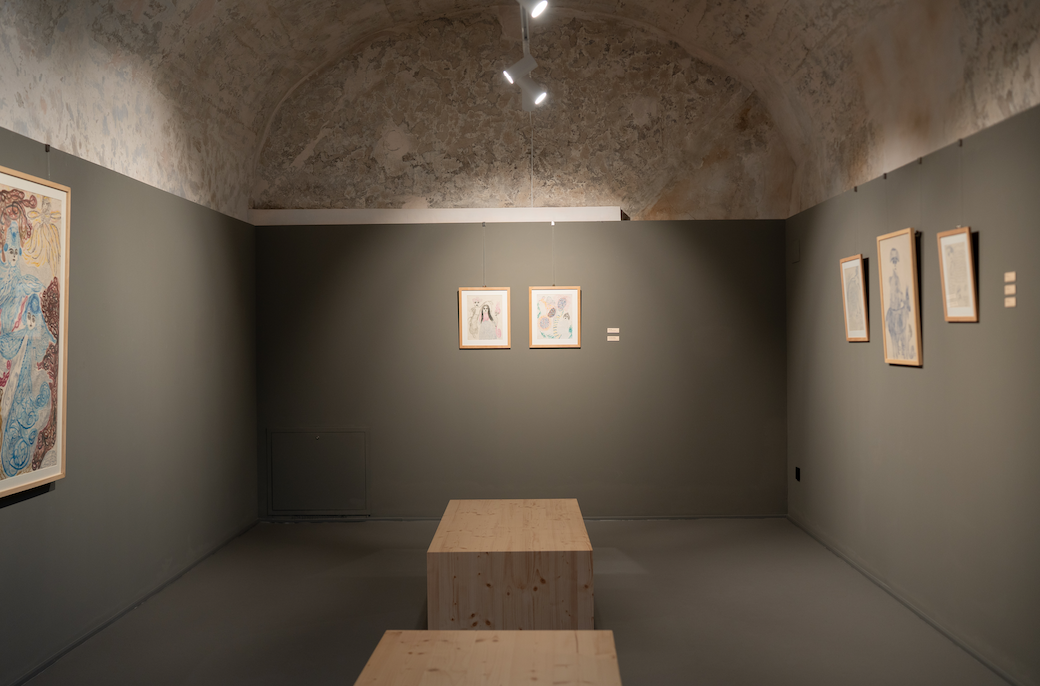
The Vayreda Foundation presents a new chapter in the cycle 'Verònica. Visionary Women', a proposal dedicated to recovering and valuing female figures who have developed singular artistic languages outside the conventional narratives of art history. On this occasion, the protagonist is Josefa Tolrà, one of the most fascinating and enigmatic creators of 20th-century Catalan art, in an exhibition curated by Natàlia Chocarro that can be visited from July 18 to September 27.
Born in Cabrils on January 6, 1880, Josefa Tolrà led a seemingly ordinary life as a textile worker until the death of two of her children marked an irreversible turning point. The deep pain caused by these losses led her towards spirituality and an intense inner experience. Following the advice of a spiritualist friend, she began to hear the voices she claimed to perceive and to be guided by an energy that she identified with a cosmic force. That revelation would become the origin of an artistic production that she would never abandon.
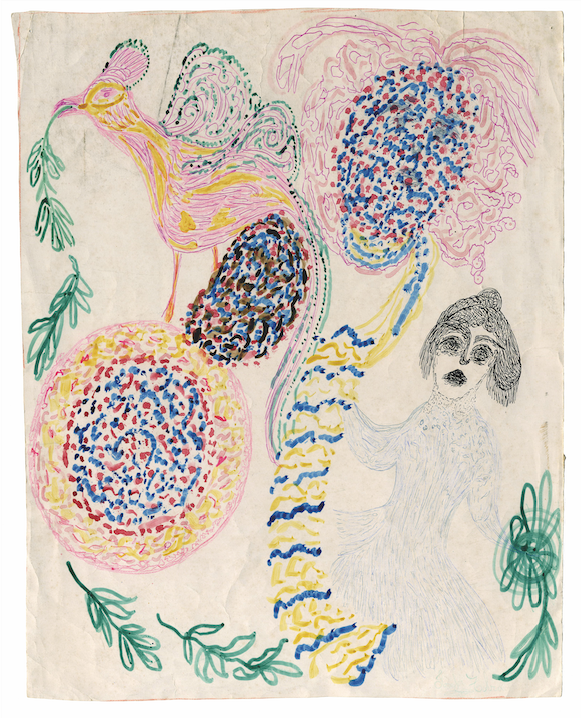
Josefa Tolrà (Cabrils, 1880-1959), Figure and peacock, s/d, © Foundation Collection, Josefa Tolrà-Visionary Art.
For Tolrà, creating did not mean inventing, but transmitting. She did not consider herself the author of her work, but rather an intermediary between the visible world and a deeper spiritual reality. This conviction permeates all of her production, conceived as the result of an extrasensory transmission that guided her hand as she drew, wrote or embroidered.
The exhibition allows us to delve into this creative universe, built through drawings, notebooks, sheets of different formats, embroidery and texts where word and image form the same breath. With pens, pencils and markers, Tolrà deploys a plastic language of extraordinary formal richness, populated with spirals, circles, meticulous plots and signs that evoke both biblical scenes and everyday episodes, historical characters or female figures linked to esotericism.
The compositions are inhabited by frontal faces with large almond-shaped eyes, surrounded by hair that unfolds like infinite vegetation or by clothing that recalls gardens, tapestries and imaginary architectures. The serenity of these figures refers both to the stillness of Byzantine icons and to the expressive intensity of Catalan Romanesque mural paintings, establishing an unexpected dialogue between tradition, spirituality and imagination.
In this symbolic cosmos, the so-called beings of light occupy a central place: spiritual guides, protectors and transmitters of wisdom who appear repeatedly in both his drawings and his writings. Far from offering an escape from reality, these presences expand the limits of what is visible and propose a different way of understanding the world, where memory, intuition and what Tolrà defined as fluidic force are part of the same vital experience.
This perspective is also manifested in her texts and poems, inseparable from her visual production. In Josefa Tolrà's work, writing and drawing share the same creative impulse and reveal a way of inhabiting the world based on listening, intuition and the preservation of forms of knowledge often excluded from dominant discourses.
Her activity transcended the strictly artistic sphere. Received as a medium by many people who came to her house seeking advice or relief from various ailments, Tolrà claimed to see the aura of those who visited her and to act as a bridge between "those above" and the earthly world. True to this spiritual conception, her creations were not marketable objects: she considered that they could neither be sold nor bought, but only given to those people who, according to her criteria, were prepared to receive them.


You may be
interested
...