Opinion
Is architecture eating into the museum?
There's an increasingly common scene in 21st-century museums: the visitor arrives, stops in front of the building, picks up their phone, takes several photos of the facade, walks through the lobby, admires the staircase, the ceiling, the light, the shop, the café, and only then—if there's still time—does the museum go inside to see the collection. This sequence is not accidental. For decades, the museum has ceased to be a mere container for artworks and has become a cultural object in itself, a work of art, a habitable sculpture, an urban landmark. The 21st century has only accelerated this transformation into a global phenomenon: the museum-as-icon, a building designed to attract attention, tourism, investment, and prestige even before the visitor asks what's on display inside.
Museum architecture is no longer limited to housing art: it competes with it, influences it, and, on more than one occasion, devours it. The phenomenon has clear antecedents, but also a recognizable turning point. If one were to trace a genealogy of this contemporary idolatry of the museum-building, the story should begin in New York, in 1959, with Frank Lloyd Wright's Guggenheim Museum. That white spiral that broke with the classical logic of the rectangular museum was much more than a home for modern art: it was a declaration of principles. Wright understood before anyone else that the route, the form, and the spatial experience could be as decisive as the works hanging on the walls. However, that visionary intuition would take decades to become a global trend.
The real explosion came with another Guggenheim, this time in Bilbao. When Frank Gehry covered the Basque city in titanium and erected one of the most captivating architectural works of the turn of the century, the museum ceased to be merely a cultural institution, becoming instead a tool for urban regeneration, a city logo, and a global tourist destination. The so-called “Bilbao effect” established a powerful—and also problematic—idea: that a museum could justify its existence not so much by what it preserved or researched, but by its capacity to transform the symbolic economy of a city. Since then, half the world has wanted its own icon.
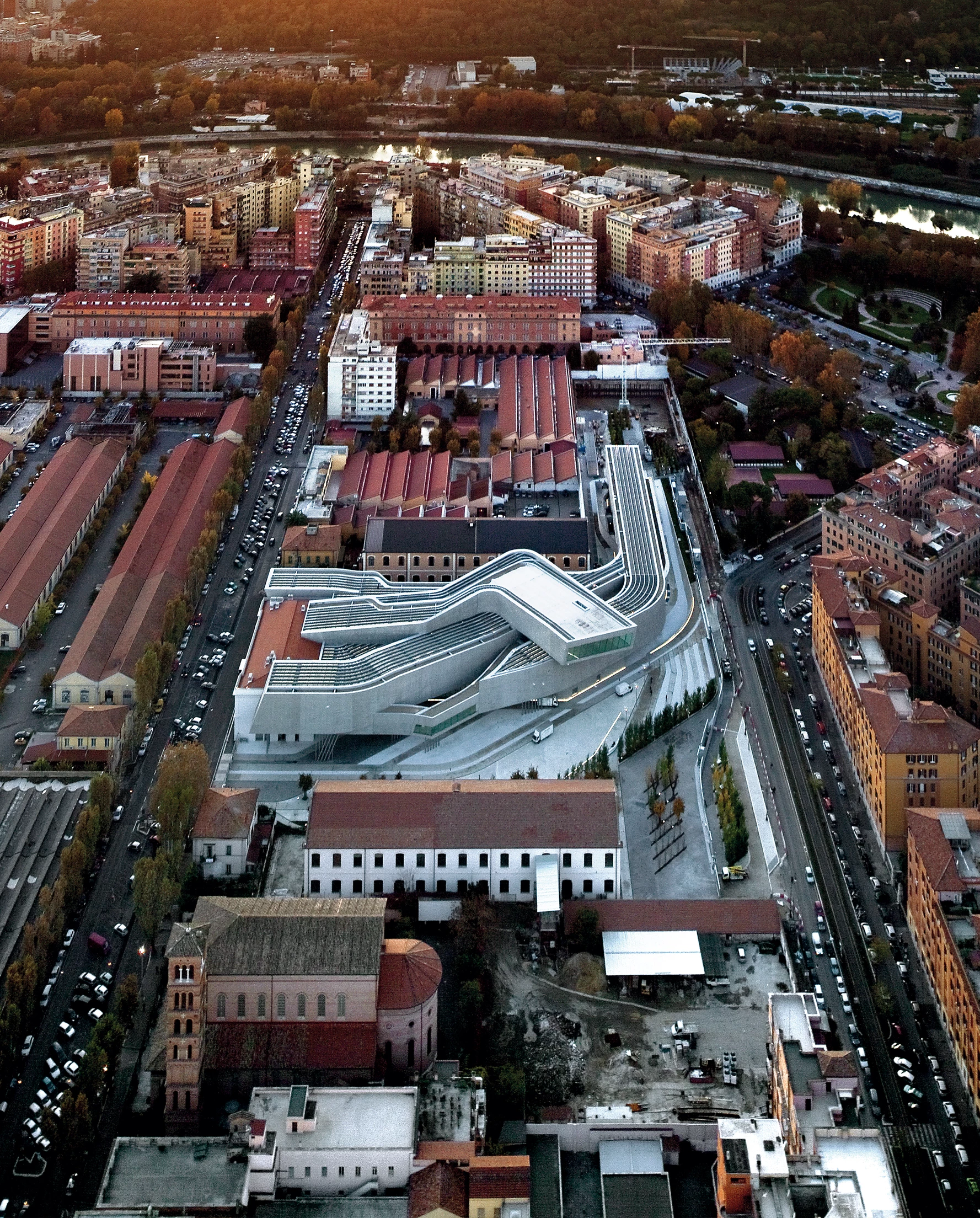
Few works embody this logic better than Rome's MAXXI, the National Museum of 21st Century Arts, designed by Zaha Hadid. In its first months, around 2009, the building became a perfect paradox of our time: the museum's main attraction was the museum itself. Visitors flocked to it even though the institution had hardly any artwork on display, as if simply walking along its taut lines, its voids, its walkways, and that gigantic organism of concrete and glass were enough to justify the visit. The scene is revealing: the museum no longer needs a collection to generate fascination; its own staging is sufficient. Hadid's building, with its colossal scale and almost submarine appearance, functions as a manifesto of contemporary architecture rather than as a discreet support for the avant-garde movements of the second half of the 20th century that it houses within its walls.
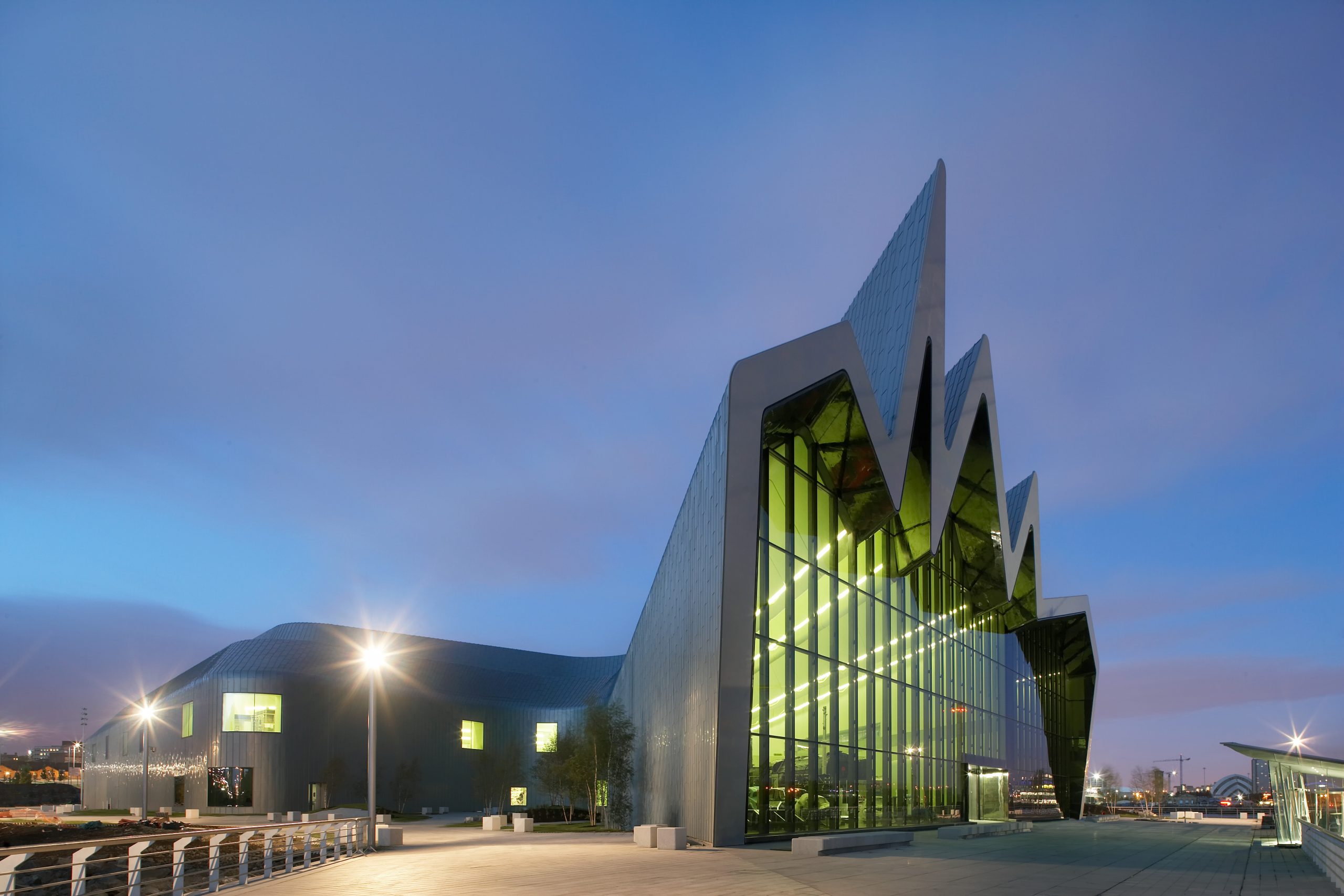
Zaha Hadid herself demonstrated once again the extent to which a contemporary museum can become a self-contained spectacle with the Glasgow Transport Museum. There, the building seems to trace a kind of metallic cardiogram on the harbor skyline, a large, undulating V that captures the eye before allowing any approach to the collection. The enormous windows at its ends and the formal vibrancy of the roof transform the museum into an architectural gesture of immense visual power. Once inside, the experience doesn't subside: curved walls, enveloping surfaces, and a highly theatrical interior accompany the narrative of the history of transport. But the question arises naturally: what does the visitor remember most upon leaving, the exhibited objects or the scenographic effect of the building?
In New York, the New Museum of Contemporary Art, designed by Kazuyo Sejima and Ryue Nishizawa of SANAA, offers a different take on that same fascination. Here there is no titanium or sculptural drama, but rather a deceptive austerity. The tower is organized like a stack of displaced volumes, off-center cubes that seem to pile up with the freedom of a child's game. This apparent simplicity is precisely its strength: the building alters the neighborhood's skyline, captures the light, generates visual tension, and transforms a corner of Soho into a small manifesto of precarious equilibrium. At night, illuminated from within, the museum becomes an urban lantern, almost a public installation. Once again, the building emancipates itself from its function and begins to act on its own.
Quite different, though equally revealing, is the strategy of the Modern Art Museum of Fort Worth, Texas, designed by Tadao Ando. Here, the architecture doesn't seek to impose itself through formal ostentation, but rather through extreme refinement. The museum is reflected in the surrounding lakes and doubles its presence in a composition of glass, water, and silence. Ando constructs a building of almost meditative lightness, perfectly integrated into a landscape of gardens and reflecting pools, where the boundary between exterior and interior dissolves thanks to enormous glazed surfaces. However, even in this case of apparent modesty, the architecture takes center stage. The museum doesn't shout, but seduces; it doesn't impose itself, but absorbs. And this elegant absorption is also a form of protagonism.
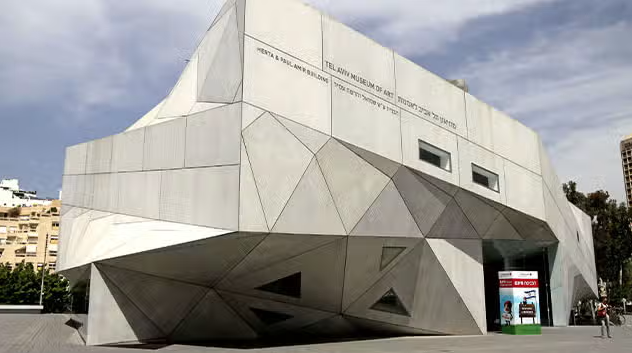
The case of the Tel Aviv Museum of Art is particularly interesting because it reveals the extent to which a museum expansion can become more talked about than the collection itself. The institution, with one of the most important collections of paintings and sculptures in the region—particularly its 20th-century art collection and its holdings of Israeli art—decided to expand to address a common problem in many contemporary museums: the amount of artwork stored and not on display. Significantly, the expansion, commissioned to the American architect Preston Scott Cohen, attracted disproportionate public attention. It was the museum's first public building, and interest in the new construction seemed, at times, to overshadow interest in the pieces the museum already housed. Spectacular architecture, once again, imposed its rules with a mixture of fascination and cruelty.
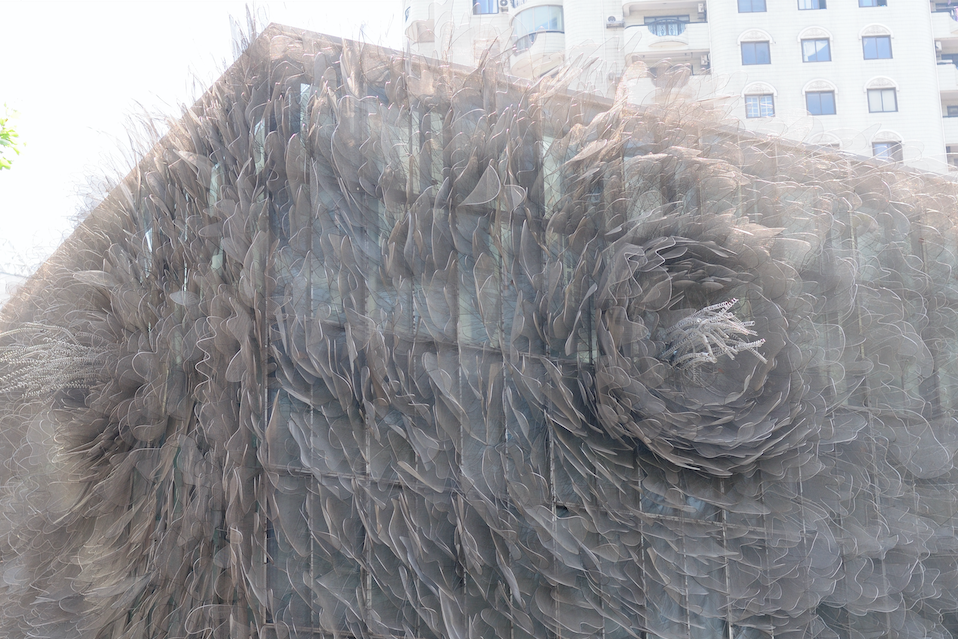
In Asia, the Liuli China Museum in Shanghai offers another chapter in this story, albeit with a more explicit rhetoric. Specializing in contemporary glass art, the museum itself embodies the material that gives meaning to its collection. The façade combines glass and steel, and a large, flowering metal peony becomes its visual emblem. The building also fits into the landscape of a city that, after the 2010 Expo, made avant-garde architecture one of its hallmarks of modernization and international projection. As evening falls, when the lighting transforms the museum's surface into a shimmering, theatrical object, the building seems to perfectly fulfill the mandate of our time: it is not enough to house art; it must be performed from the façade itself.
In all these cases, the same underlying tension emerges. On the one hand, it would be absurd to deny that these museums have broadened the cultural experience, revitalized cities, attracted new audiences, and transformed museum visits into a more complex, immersive, and memorable experience. The building itself also communicates, also creates meaning, also educates the eye. No one could seriously argue that architecture should revert to being a neutral and silent box. But, on the other hand, it is worth asking what happens when the museum begins to function as a vast machine of visual seduction where the collection is subordinated to the impact of the building's exterior.
The promise of the contemporary museum was to democratize access to art, to open it up to new audiences, to integrate it into urban life. However, in its most spectacular evolution, that promise risks being reversed: the museum is no longer the place to look at artworks, but the place to look at a building. The cultural institution becomes an architectural experience, a wallpaper, a shareable postcard, an international brand. Art, meanwhile, is sometimes caught in an uncomfortable paradox: being exhibited in spaces so powerful that they end up competing with it for the viewer's attention.
Perhaps that is the great contradiction of the new art venues. They were born to safeguard and exalt contemporary creation, but in many cases, they have ended up becoming the main attraction. The 21st-century museum is no longer just a place where art is exhibited: it is, increasingly, the artifact that demands to be contemplated before anything else.

You may be
interested
...