Exhibitions
Jujuy inaugurates the Lola Mora Cultural Center, a monumental work by César Pelli
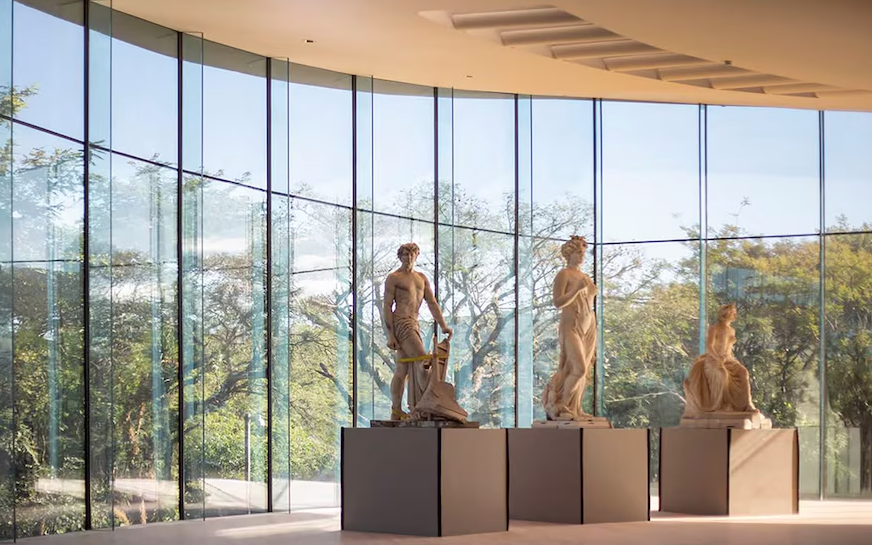
Since July 2nd, Jujuy has added one of Argentina's most unique architectural works to its cultural landscape: the Lola Mora Cultural Center, a space designed by César Pelli that combines heritage, contemporary art, sustainability, and a strong commitment to promoting tourism in the province. The new complex, located in a privileged setting in the Jujuy Yungas, houses six restored sculptures by Lola Mora and serves as a dynamic center for exhibitions, live events, and educational programs.
The official opening was led by Governor Carlos Sadir, who presented the building as a new hub for cultural programming, conceived not only as a museum but also as a platform for the convergence of the arts, education, and the landscape. The center features exhibition halls, auditoriums, and educational spaces, and its program will combine exhibitions, artistic activities, and training opportunities. As a gesture of openness to the community, admission was free for residents of Jujuy until July 9.
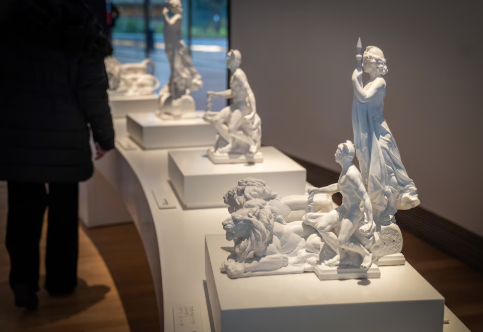
But the Lola Mora Cultural Center is not only remarkable for its function. Its architecture already makes it an icon. The project was conceived by César Pelli based on a powerful symbolic idea: to recreate the shape of the sculptor's chisel. The tour begins at what would be the 'handle' of that tool, a long access bridge that leads to a structure that unfolds like a fan over the vegetation and seems to float above the Yungas cloud forest. The sensation of suspension is reinforced by a striking 1,565-square-meter glass facade, composed of panels up to nine meters high made of iron-free glass, guaranteeing absolute transparency. According to those involved in the project, this decision stemmed from an explicit wish of Pelli's: that nothing should interfere with the view of the Jujuy sky.
The technical aspects of the project are also remarkable. The difficulties in importing and transporting these large-scale materials are now part of the building's history. However, the final result coherently upholds the original concept: a light, airy volume, open to the landscape and deeply connected to the natural environment.
Adding to this distinctive character is an environmental ambition rarely seen in cultural buildings of this scale. The center was conceived as a Net Zero center, meaning it has the potential to operate off the electrical grid. Both the roof and the exterior floor incorporate walkable solar panels, while a structure that at first glance might be mistaken for a bell tower is, in fact, a 30-meter-high wind turbine. The choice of materials also reinforces the connection with the surrounding landscape: the interior floor of palo blanco wood, the exterior cladding in hand-chiseled stone, and the acoustic treatment in recycled PET and dark Pacará wood create an atmosphere where design, sustainability, and landscape are organically integrated.
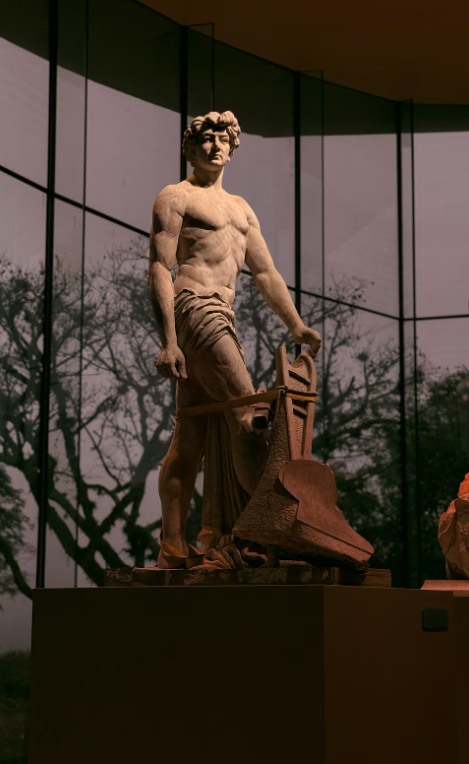
The figure for whom the center is named is, of course, one of the most extraordinary artists in Argentine history. Lola Mora was born in 1866 in Trancas, on the border between Salta and Tucumán. She initially trained in San Miguel de Tucumán, where she studied drawing and painting, and very soon began to stand out for her talent. This early recognition led to a significant official commission: the province purchased a series of twenty-one portraits of governors from her, a first achievement that allowed her to gain recognition in Buenos Aires.
There she made a bold decision for her time: to abandon painting and dedicate herself to sculpture, a discipline practically forbidden to women at the end of the 19th century. Thanks to a scholarship, she traveled to Rome, where she was admitted, albeit somewhat reluctantly, to the studio of Paolo Michetti. In Italy, she came into contact with the man who would become her true mentor, the sculptor Giulio Monteverde, a central figure in her training and in the development of a body of work that defied the limits imposed by her era.
The connection between Lola Mora and Jujuy is not merely coincidental. The artist worked in the province as a public official in the urban design department, and her sculptures were installed in the Government House. Since then, these pieces have become part of Jujuy's heritage. Today, restored and reunited in this new cultural center, they find a space specially designed for their preservation and exhibition, in a building that not only protects them but also engages with their legacy through scale, materials, and creative expression.
You may be
interested
...