Exhibitions
Gaudí, Miró and Gomis in conversation
Casa Batlló Contemporary and the Fundació Joan Miró present 'Gaudí-Miró-Gomis: Deconstructed', an exhibition that activates the dialogue between three key figures of Catalan culture and puts technology at the service of a new aesthetic experience.
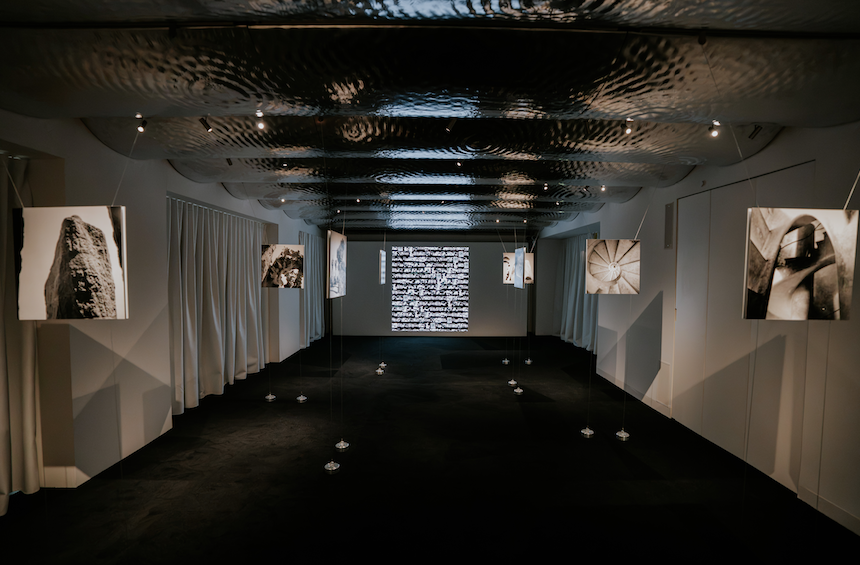
At a time when many immersive exhibitions run the risk of becoming mere spectacular devices, Gaudí-Miró-Gomis: Deconstructed arrives with a different ambition: not so much to impress the viewer as to open a new field of reading on three fundamental names of 20th-century Catalan culture. The exhibition, co-organised by the Fundació Joan Miró and Casa Batlló Contemporary, opened on 8 July at Casa Batlló and becomes the second major exhibition in the building's artistic programme , within the framework of the Gaudí Year 2026.
Curated by Joana Seguro, from Casa Batlló Contemporary, and Ester Ramos, from the Fundació Joan Miró, and developed by the creative studio Tomorrow Bureau, the exhibition proposes an exercise in dismantling —and, therefore, also reconstructing— the relationships between Antoni Gaudí, Joan Miró and Joaquim Gomis. The word deconstructed is not here a simple aesthetic or terminological resource: it defines a methodology. The exhibition takes the forms, gestures and imaginaries of the three creators, fragments them, observes them with contemporary tools and restores them in a new regime of perception.
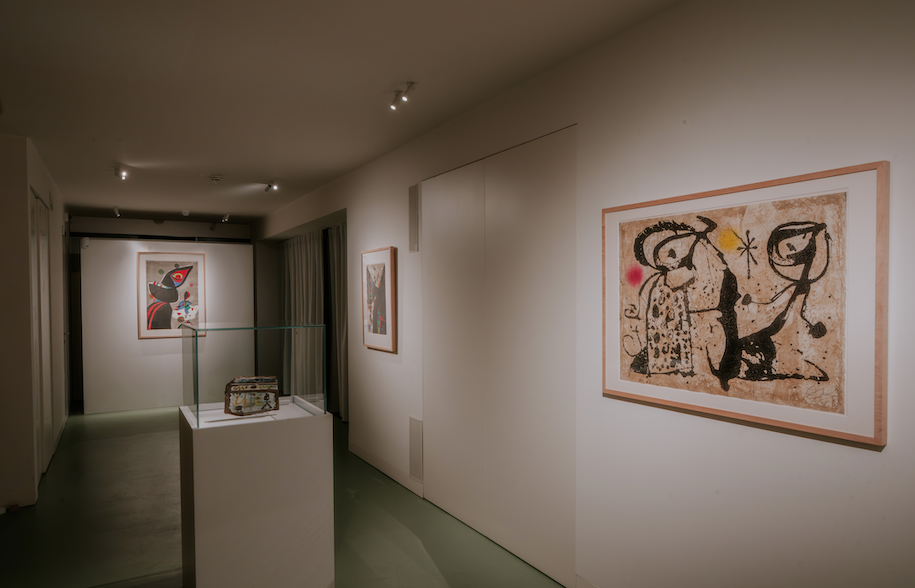
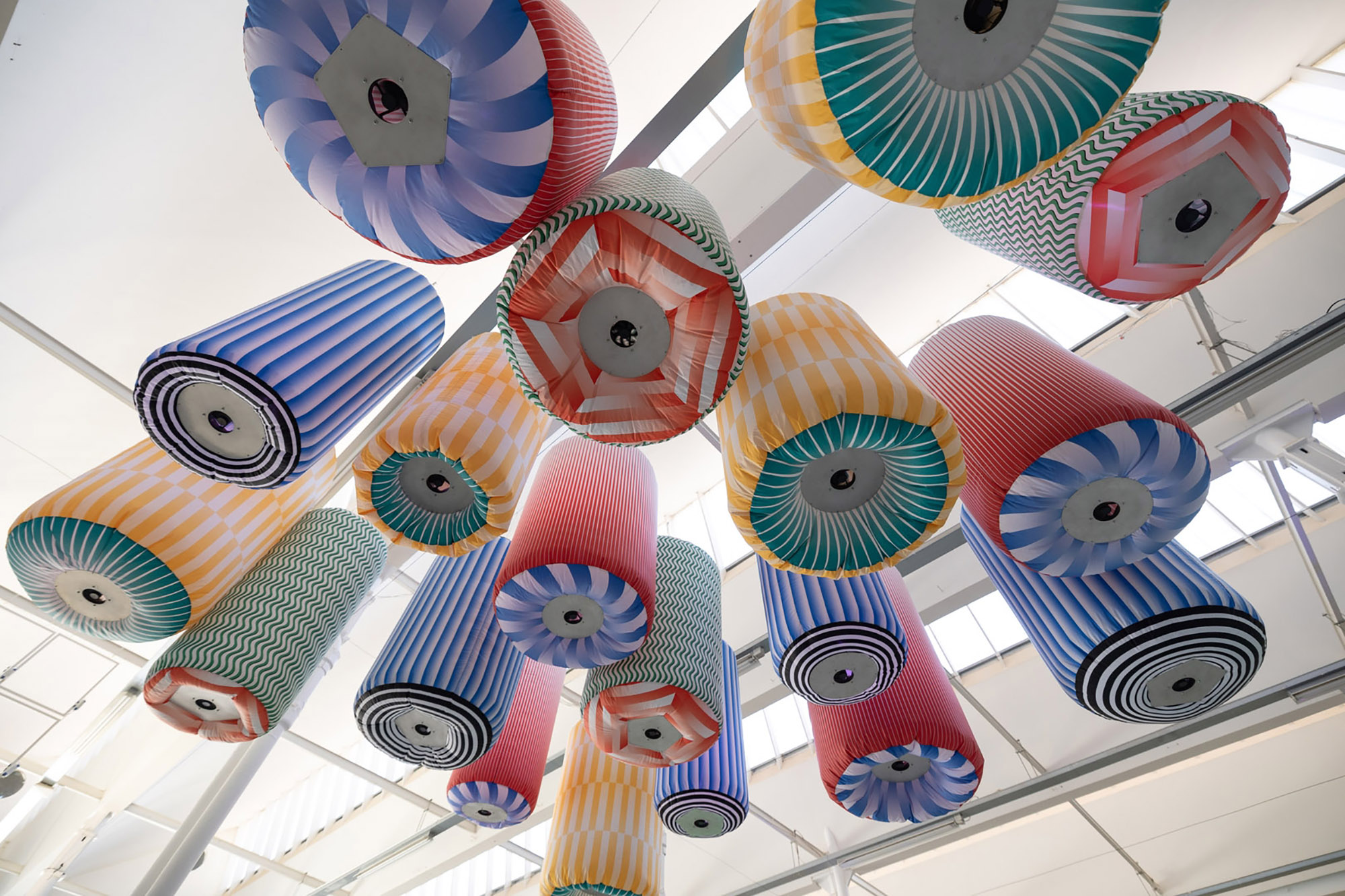
Tomorrow Bureau, 2026 © Miró Estate, 2026.
The proposal brings together sculptures and graphic work by Joan Miró, photographs by Joaquim Gomis and a series of audiovisual, sound and digital installations that act as a layer of contemporary reading on this legacy. But the most relevant thing is not so much the coexistence of historical work and technology as the way in which this coexistence is resolved. Instead of subjecting the work to a decorative or illustrative device, Tomorrow Bureau uses resources such as photogrammetry, 3D scanning, animation and generative artificial intelligence to explore the pieces from their materiality, their volume, their structure and their visual memory.
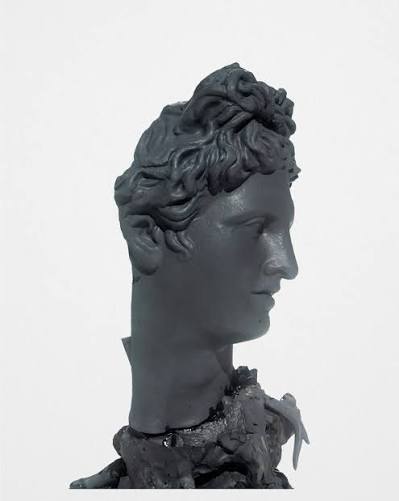
This point is especially visible in the treatment of Miró's sculptural work. For the first time, a selection of his sculptures has been digitized, which not only expands the possibilities of preserving and disseminating his legacy, but also radically modifies its reception. The sculptures appear almost like recently exhumed archaeological bodies: the surfaces are mapped, the textures amplified, the volumes subjected to an analysis that reveals a latent dimension. What at first glance might seem like a compact form now unfolds as a geography of folds, roughness, tensions and voids. Technology, in this case, does not supplant the gaze, but rather forces it to refine itself.
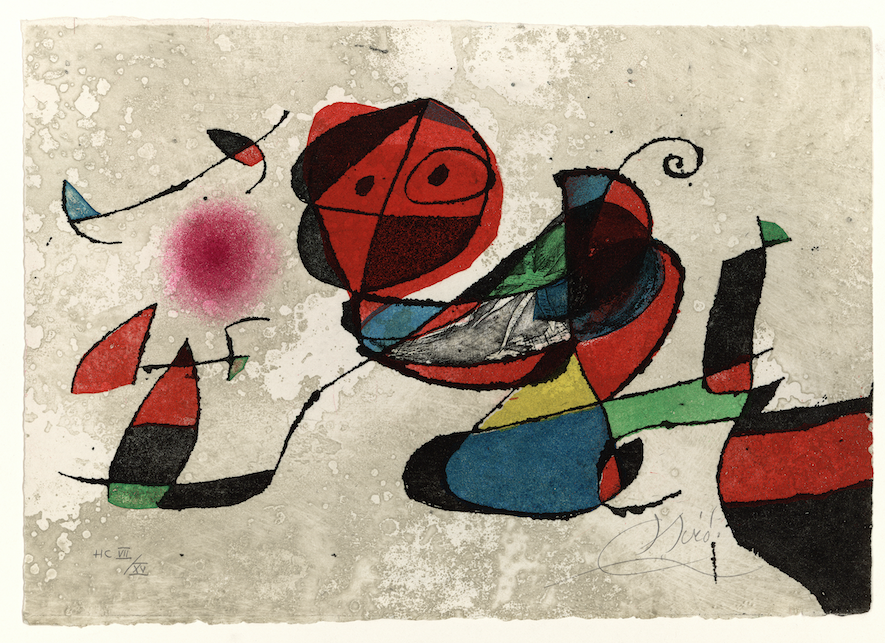
Gaudí XIII, Joan Miró, 1979. Foundation, Joan Miró, Barcelona © Successió Miró, 2026.
This operation, however, does not focus exclusively on Miró. The exhibition functions above all as a constellation of correspondences. Gaudí, Miró and Gomis are not presented as three isolated geniuses, but as figures who share the same sensitive ecosystem: a Barcelona, a landscape, a visual culture and a certain relationship with nature and matter. In this sense, one of the successes of the exhibition is to avoid the rigidity of chronology or the temptation of a purely historiographical reading. The story does not only ask what each of them did, but also how their practices touch, contaminate and reflect each other.
The presence of Joaquim Gomis is key in this articulation. His photography, often placed in a subsidiary place within the narrative of the Catalan avant-garde, emerges here as a fundamental piece for understanding the country's visual modernity. Gomis's gaze was decisive in the dissemination of Gaudí's work, but also in the construction of a sensitivity that allowed architecture, sculpture and landscape to be read as languages in transformation. His images are not just documents: they are devices of thought, frames that reorder the world and that, in this exhibition, dialogue with Miró's formal freedom and Gaudí's organic drive.
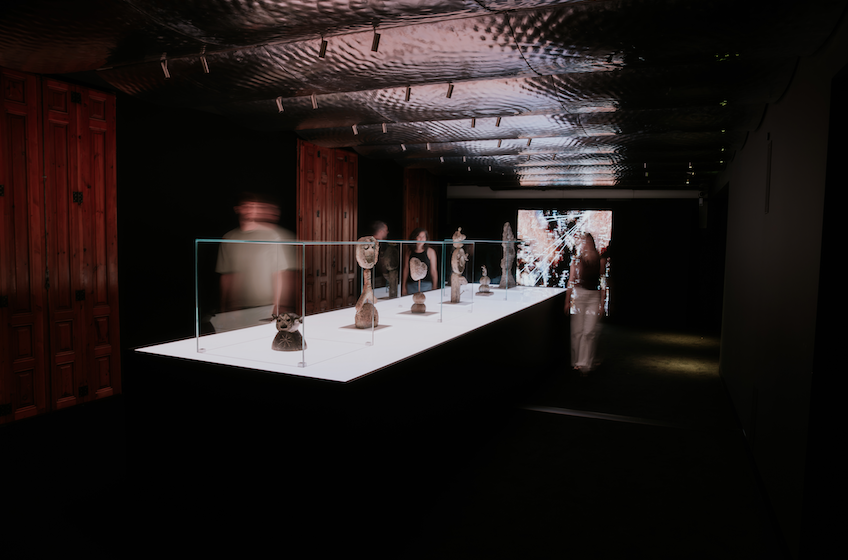
Tomorrow Bureau, 2026 © Miró Estate, 2026.
The exhibition is structured around concepts such as nature, matter, life, instinct or spirit. It might seem like a semantic field that is too broad or too abstract, but the installation avoids empty rhetoric and works on these axes from a physical proximity to the works and their digital reverberations. Nature, for example, does not appear only as an iconographic theme, but as a constructive principle: in Gaudí, as living architecture; in Miró, as telluric energy and metamorphic sign; in Gomis, as a gaze that detects rhythms and structures within the visible.
In this sense, Gaudí-Miró-Gomis: Deconstructed is not an exhibition about influences in the conventional sense of the term, but about deep affinities. There is a desire to show that the work of the three creators does not develop in parallel, but in a state of permanent conversation, even if this conversation is sometimes subterranean, intuitive or deferred in time. The Tomorrow Bureau project translates this intuition into an immersive space that does not seek to enclose meanings, but to multiply them.
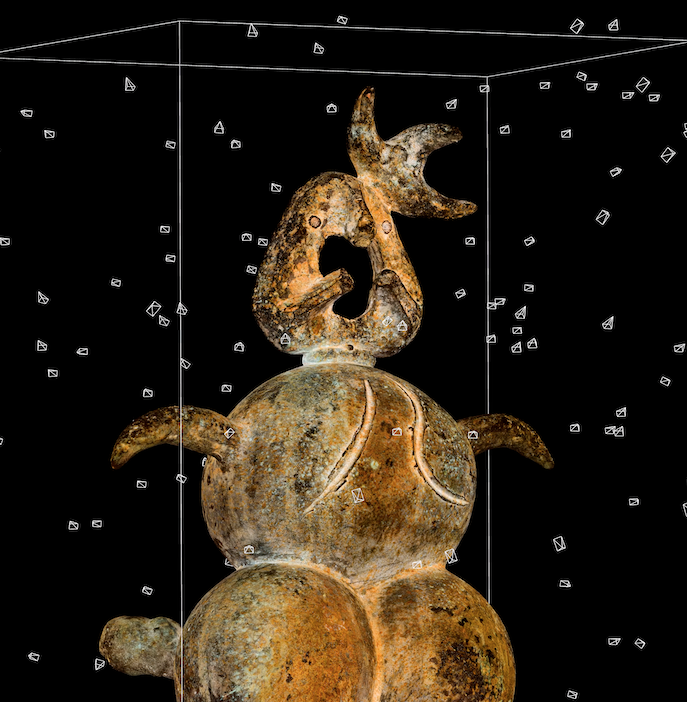
Tomorrow Bureau, 2026 © Miró Estate, 2026.
The question, of course, is to what extent technological mediation manages to sustain this complexity without trivializing it. And it is here that the exhibition finds its main critical value. Far from an uncritical fascination with innovation, technology is used as an instrument of analysis and not as an end in itself. There is no empty aestheticization of the digital resource, but a desire to investigate what happens when a work is translated, scanned, expanded or reanimated by other languages. The result is not a replacement of the original, but a friction between presences: that of the material work and that of its contemporary projection.
This friction is probably the most fruitful space in the exhibition. Because it is there that the visitor ceases to be a simple spectator of effects to become a reader of layers, an observer of a work that is shown and at the same time questioned. Gaudí-Miró-Gomis: Deconstructed not only puts three essential names of Catalan culture in relation; it also tries out a fundamental question about how to look at artistic heritage today without turning it into a museum piece or a spectacle of fast consumption.

You may be
interested
...