Exhibitions
Luca Freschi, archeologies of time in Sine Die
The Catalonia Crafts Centre is hosting an exhibition until September 13 that turns ceramics and terracotta into vestiges of an imagined memory, between classical tradition, the fragility of time and the poetics of the object.
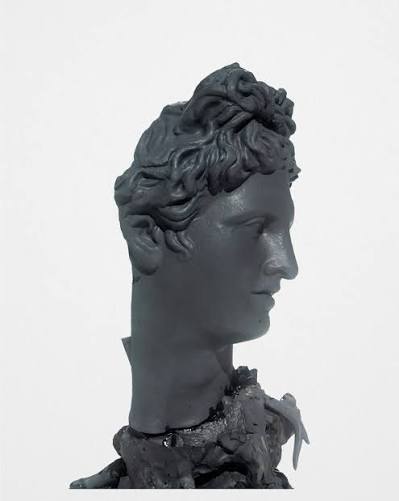
The Centre d'Artesania Catalunya hosts until September 13 the exhibition Sine Die , dedicated to the work of Luca Freschi (Forlimpopoli, Italy, 1982), one of the most unique voices in contemporary sculpture linked to ceramics and terracotta. Curated by Isaac Candelario, the exhibition proposes an immersion in an artistic universe where time, memory and the persistence of objects become central axes of a practice that oscillates between archaeology, fiction and remembrance.
The title of the exhibition, Sine Die —a Latin expression meaning 'without a specific date'— already points to an open, indefinite and suspended temporality, an idea that runs through Freschi's production from head to toe. Through terracotta and glazed ceramics, the artist constructs sculptures, assemblages and large pavements that seem to emerge from an imprecise time, as if they were vestiges of a lost civilization or fragments of a collective memory still in the process of sedimentation.
Freschi's work often starts from perfectly recognizable elements - jars, anatomical fragments, fruits, tools or architectural remains - which he reproduces using molds and then reorganizes into dense, stratified and symbolic compositions. His gesture is not, however, that of an archaeologist who documents the past with a desire for fidelity, but that of a creator who reinvents it. In this process, the objects cease to be simple material remains and become traces of possible experiences, imagined cultures and latent memories.
This dimension turns Freschi into a kind of 'time collector'. His pieces function as memory capsules capable of retaining the ephemeral before it disappears, preserving its fragility and emotional charge. In this sense, his practice dialogues with the Proustian conception of memory: just as in Marcel Proust's In Search of Lost Time , everyday objects become triggers for evocations, emotions and dormant memories.
Between the reference to the classical tradition, the echo of the baroque vanitas and a fully contemporary sensibility, Luca Freschi constructs a visual universe where past and present constantly coexist. His works appeal not so much to nostalgia as to the need to retain fragments of memory in the face of the inevitable erosion of time. Sine Die is thus presented as a poetic reflection on what endures, on what remains when everything seems destined to disappear.
The exhibition can be visited at the Catalonia Crafts Centre until September 13.
You may be
interested
...