Exhibitions
Picabia and the Mediterranean of the avant-gardes
The Ceret Museum of Modern Art revisits the creative exile that transformed 20th century art.
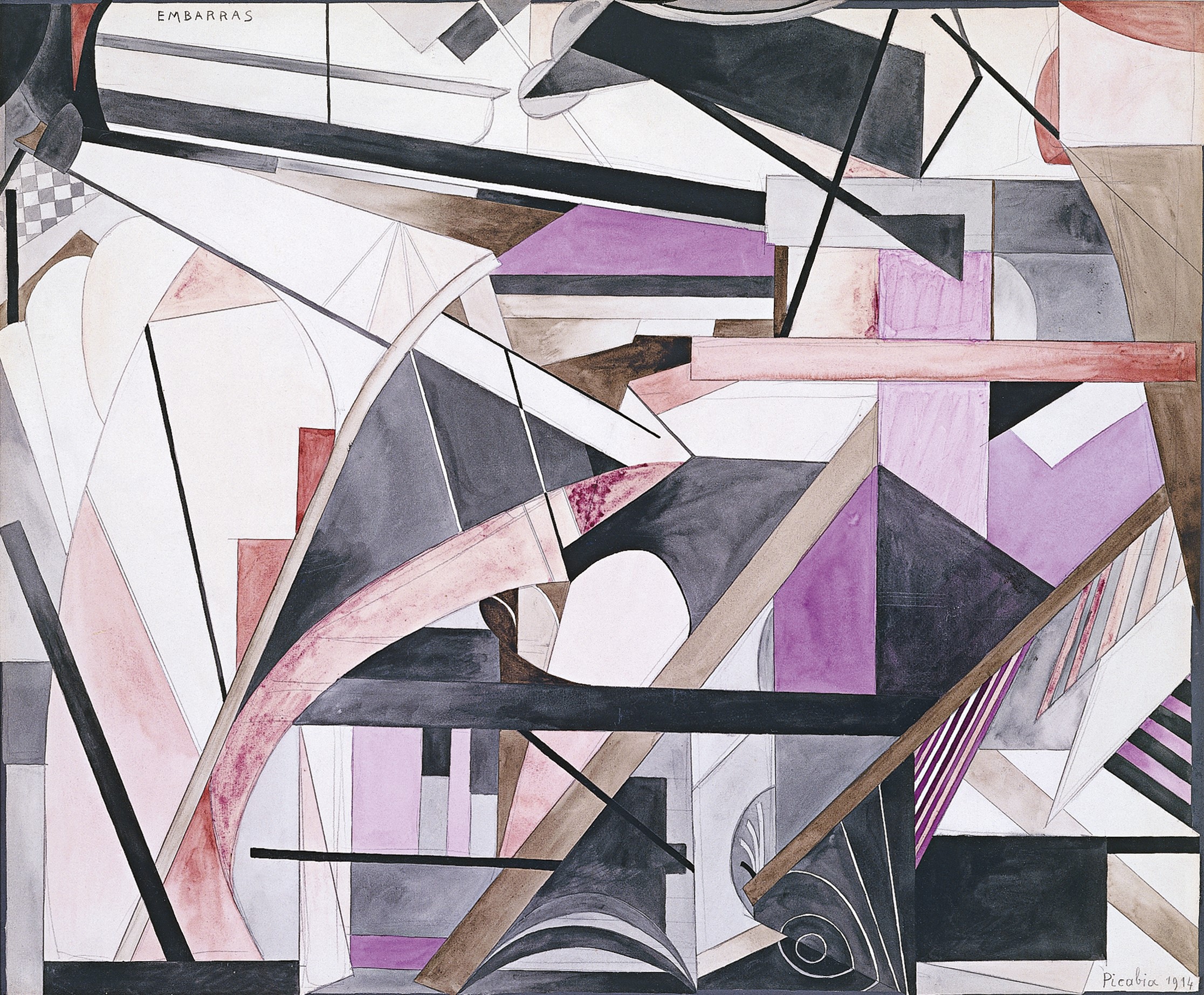
The Musée d'Art Moderne de Ceret presents Picabia, Méditerranée , an ambitious exhibition that places Francis Picabia (1879-1953) at the center of a transnational artistic network that redefined the languages of modernity. Far from being limited to a conventional retrospective, the exhibition proposes a renewed reading of his career based on the relationship with Catalonia and the Mediterranean space, a territory that proves to be decisive in the configuration of historical avant-gardes.
Picabia is often remembered as a protean figure, difficult to categorize, capable of moving between cubism, abstraction, machinism and the iconoclastic spirit of Dadaism. The exhibition focuses on the period between 1913 and 1924, years of constant travel between New York and Barcelona that coincide with some of the most fruitful episodes of his production. It is in this context that his famous mechanomorphic works were born, as well as his collaborations with the New York magazine 291 and the creation of 391 , a publication published in Barcelona that would become one of the most radical intellectual laboratories of the moment.
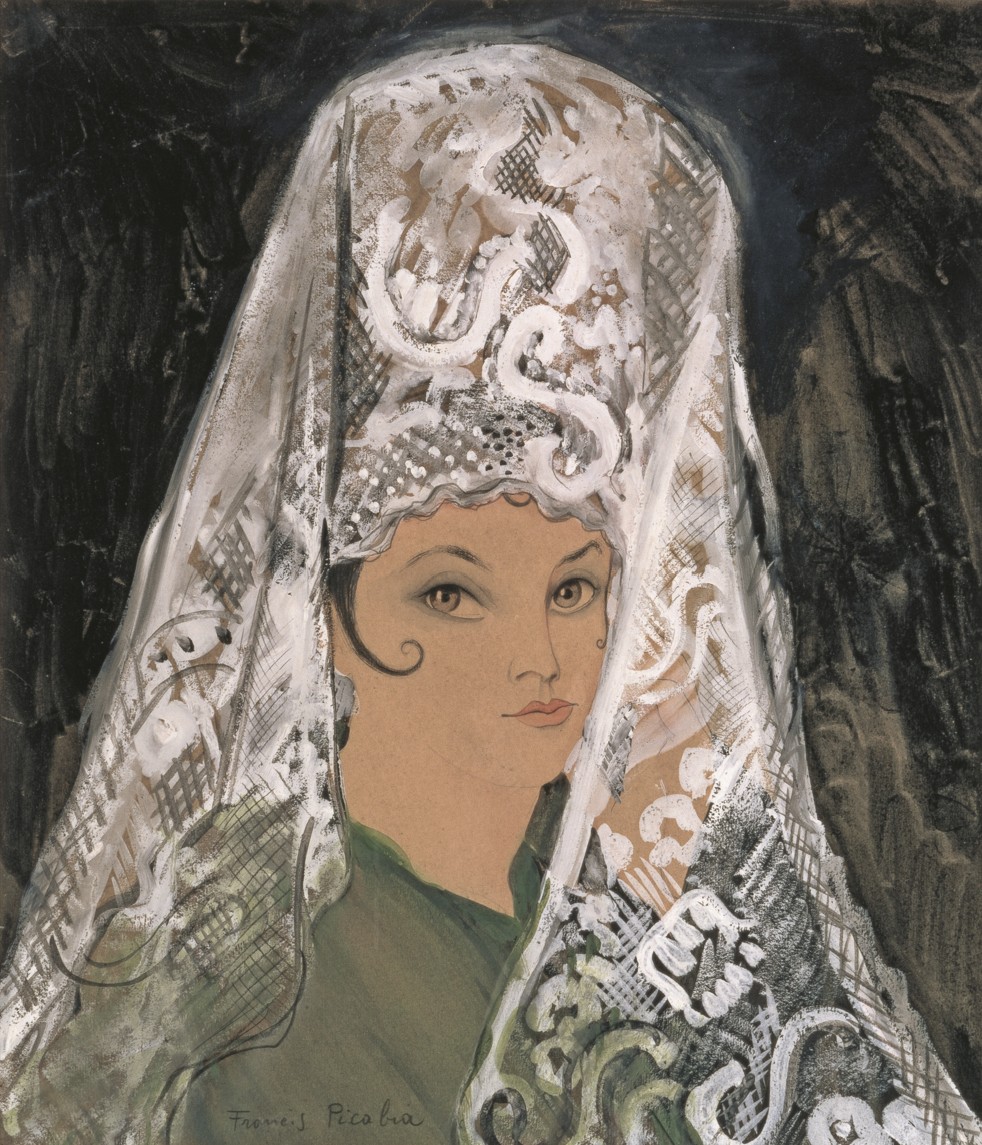
Francis Picabia, Española (Espagnole), circa 1926-1927, private collection. Photo credit: Archives Comité Picabia.
The great virtue of the Ceret proposal, curated by Jean-Roch Dumont Saint Priest and Gwendoline Corthier-Hardoin, is to avoid a heroic reading of the isolated artist to show him as part of a creative ecosystem in constant effervescence. The almost one hundred works brought together allow us to reconstruct the links between Picabia and artists such as Marcel Duchamp, Man Ray, Albert Gleizes, Pablo Picasso, Robert and Sonia Delaunay, Joan Miró or Kees van Dongen. Equally relevant is the incorporation of female figures who for decades have occupied a secondary place in the canonical stories of the avant-garde, such as Marie Laurencin, Juliette Roche, Olga Sacharoff, Hélène Grünhoff or Natalia Gonxàrova.
The tour shows how New York and Barcelona acted as complementary poles of innovation. If the North American metropolis stimulated a fascination with the machine, speed and industrial modernity, the Catalan capital became, in the midst of the First World War, a refuge for European artists and intellectuals. In this setting of exile and encounter, Picabia promoted a discourse deeply critical of artistic conventions, synthesized in the “anti-painting” attitude that characterizes the pages of 391 .
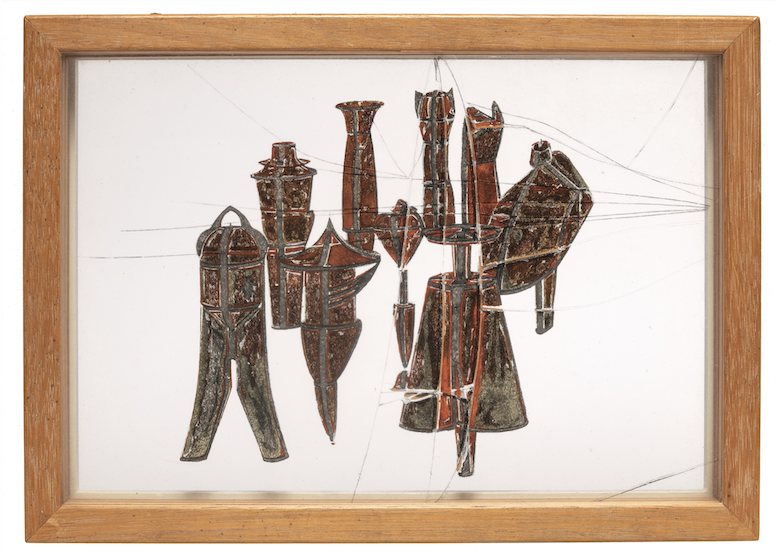
Marcel Duchamp, Nine Mâlic Molds (Neuf Moules Mâlic), 1914-15 / 1938-39, courtesy Galerie Dina Vierny. Photo credit: Galerie Dina Vierny.
But the exhibition, open from June 27 to November 29, also highlights another dimension that is often less explored: the influence of Iberian culture on these cosmopolitan creators. Dancers, musicians, bullfighters and female figures in mantillas appear as recurring motifs that demonstrate an appropriation —sometimes fascinated, sometimes idealized— of the Spanish imaginary. More than a simple exoticism, these representations reveal the capacity of peripheral cultures to nurture new forms of visual experimentation in a moment of accelerated transformation.
Among paintings, drawings, sculptures, photographs, magazines and archival documents, some of which are being shown for the first time in France, Picabia, Méditerranée offers an exceptional panorama of the tensions, contradictions and exchanges that shaped the art of the first third of the 20th century. The exhibition not only vindicates the figure of Picabia, but also questions the traditional geographies of modernity, recalling that the avant-gardes were the result of a constant circulation of ideas, people and imaginaries between the two shores of the Atlantic and the Mediterranean.
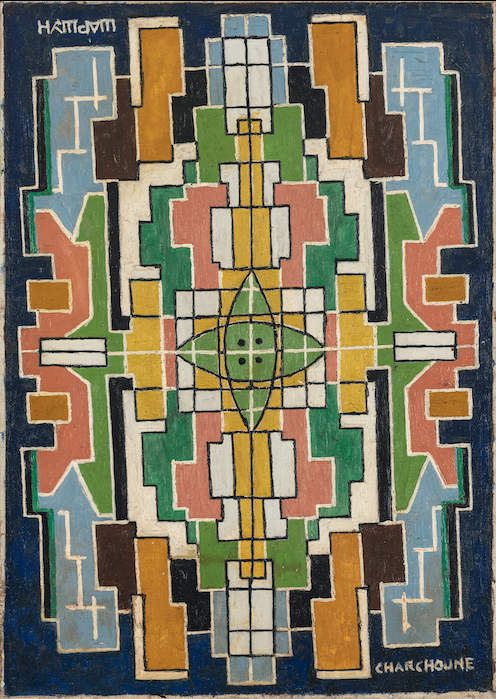
Serge Charchoune, Ornamental Cubism (Ornamental Cubism), 1916, Eric Fitoussi collection. Photo credit: Jean-Louis Losi © Adagp, Paris, 2026.
With the support of leading institutions such as the Musée de l'Orangerie, the Centre Pompidou, the Picasso museums in Paris and Barcelona, the Reina Sofía Museum and the Thyssen-Bornemisza Museum, this exhibition —recognized with the seal of "Exhibition of National Interest"— is presented as one of the essential events of the season. An opportunity to revisit the avant-garde from a more complex, plural perspective and deeply connected to the cultural movements that transformed the contemporary world.


You may be
interested
...