News
Ignasi Solà-Morales returns to the center of the contemporary architectural debate
The Mies van der Rohe Foundation is promoting an international cycle that revisits the thought of the Catalan theorist twenty-five years after his death.
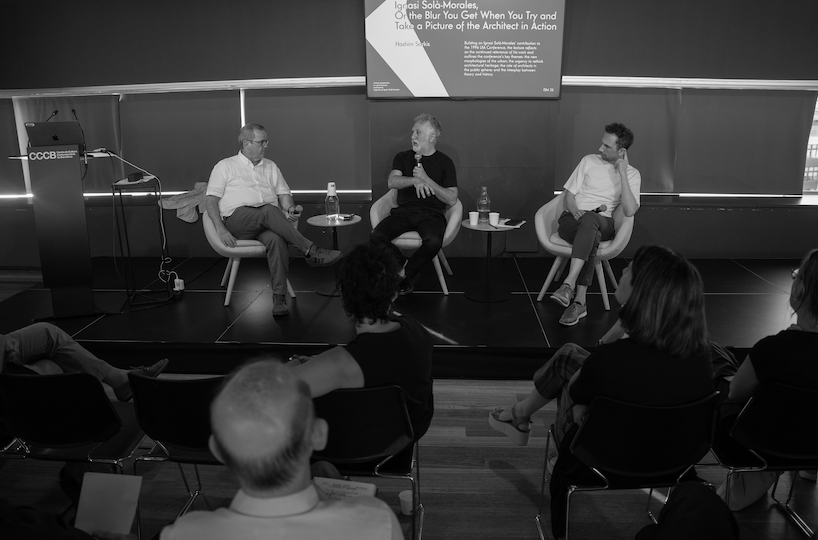
The figure of Ignasi Solà-Morales (1942-2001), one of the most influential thinkers in European architecture at the end of the 20th century, once again occupies a central place in the disciplinary debate thanks to the cycle Critical Perspectives on Contemporary Architecture: Legacies of Ignasi Solà-Morales , an initiative promoted by the Fundació Mies van der Rohe with the collaboration of the Centre for Contemporary Culture of Barcelona (CCCB), the College of Architects of Catalonia (COAC) and the Barcelona School of Architecture (ETSAB).
Integrated within the Barcelona 2026 World Capital of Architecture programming, the program, curated by architects and researchers Hashim Sarkis and Roi Salgueiro, proposes a contemporary review of Solà-Morales' intellectual legacy through five thematic sessions that, between June and October 2026, will bring together prominent international and local voices from architecture, urban planning and critical theory.
The cycle was inaugurated on June 22 at the CCCB with the conference Present and Futures. Architecture in Cities . The event included speeches by Judit Carrera, director of the CCCB; Anna Ramos, director of the Mies van der Rohe Foundation; and Clara Solà-Morales, architect and professor. The central moment was the keynote lecture by Hashim Sarkis, dean of the School of Architecture and Planning at MIT, who asserted the validity of Solà-Morales' thinking based on his influential participation in the Congress of the International Union of Architects in 1996.
During his speech, Sarkis identified some of the major challenges facing the discipline today: the transformations of urban forms, the need to redefine heritage policies, the public role of architects and the essential relationship between theory, history and architectural practice. These are themes that also structure the rest of the sessions in the program.
The second meeting will take place on July 8 at the COAC under the title Terrain Vague: Mapping Contemporary Urbanism . The debate will revisit one of Solà-Morales' best-known concepts, terrain vague , to analyze the residual spaces and intermediate zones of today's cities. Phillip Ursprung, Deane Simpson and Eulàlia Gomez Escoda will participate.
On September 17, the Mies van der Rohe Pavilion will host the session Beyond Restoration: Activating Architectural Heritage , dedicated to exploring new forms of intervention on existing architecture. Lucia Allais, Daniel Abramson and Jan de Vylder will reflect on heritage preservation at a time when reuse and sustainability are becoming central issues.
The fourth day will take place on September 30 at the Casa de l'Arquitectura in Barcelona, located in the former Gustavo Gili publishing house. Entitled The Invisible Hand: Reclaiming the Public Sphere , the session will examine the institutional and communicative dimension of architectural practice. Carlos Miguez, Antonio Monegal and Moisés Puente will address Solà-Morales' legacy as a public intellectual and builder of spaces for debate.
The series will culminate on October 29 at ETSAB with Theory versus History: Recalibrating Critical Practices . Sarah Whiting and Ana Miljački will lead a conversation that will vindicate architectural theory as an active tool for interpreting and transforming contemporary reality, overcoming the increasingly frequent separation between historical research and critical reflection.


You may be
interested
...