Exhibitions
Beauty born from a wound
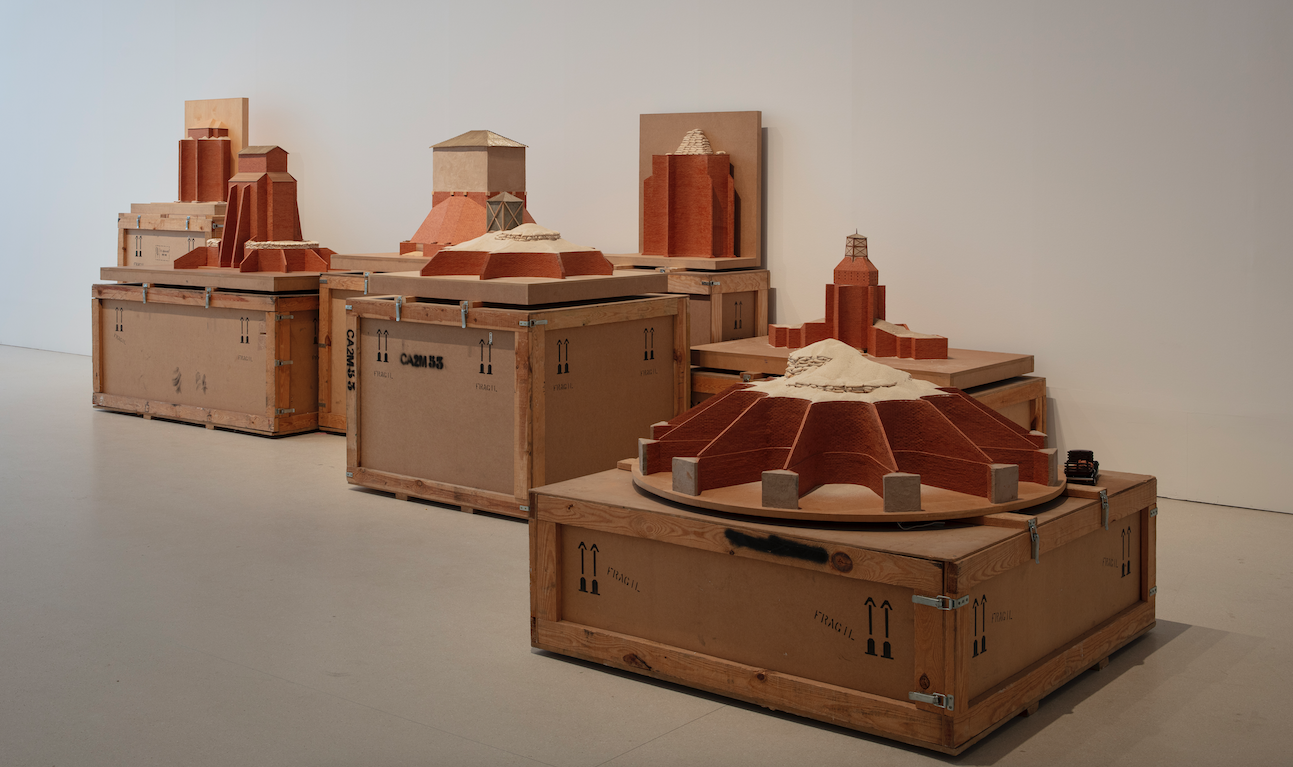
The reopening of the Velázquez Palace, home to the Reina Sofía National Art Centre in El Retiro Park, could not have been accompanied by a more timely exhibition. Following renovations and improvements funded by the Recovery Plan, the historic building reopens its doors with "La Perla Peregrina" (The Wandering Pearl), a major exhibition dedicated to Fernando Sánchez Castillo (Madrid, 1970), one of the Spanish artists who has most consistently explored the relationships between history, authority, and representation over the last two decades.
Far from being a conventional retrospective, the exhibition, curated by Ferran Barenblit—open from June 24, 2026, to March 8, 2027—takes the form of a "retro-prospective," a term used by its curator to define a project that revisits the past without abandoning the present. The exhibition brings together nearly two hundred works, including watercolors, sculptures, installations, videos, objects, reinterpreted pieces, and works in progress. In fact, the artist's own studio is temporarily relocated to the Palacio de Velázquez, allowing visitors to witness the development of new works and making artistic creation an essential part of the experience.
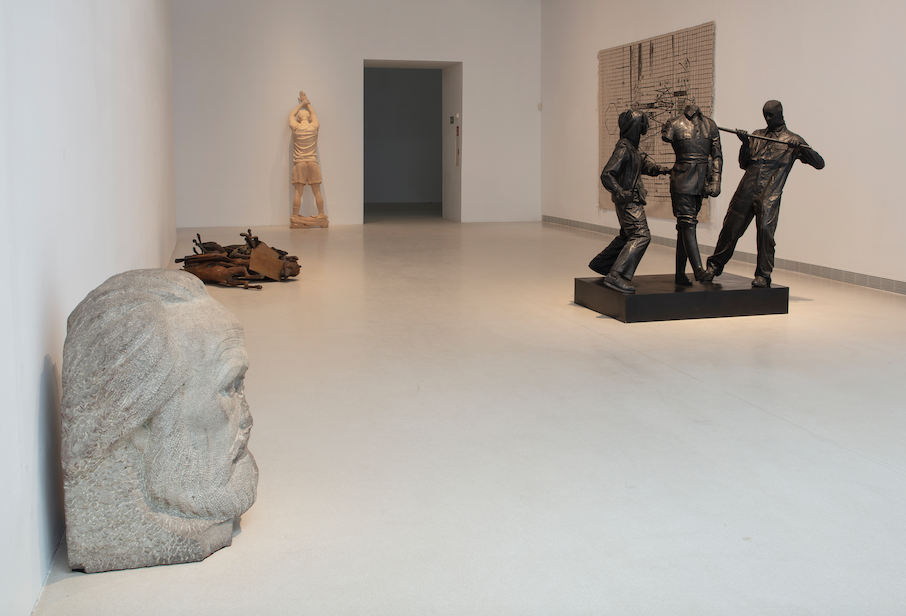
View of the Fernando Sánchez Castillo exhibition room. The Pilgrim Pearl, Velázquez Palace, Reina Sofía Museum. Emiliano Barral López. Bust of Pablo Iglesias. 1923-1936. Granite carving. Loan from the Spanish Socialist Workers Party. Fernando Sánchez Castillo. Naron. 2003-2007. Bronze. MUSAC Fernando Sánchez Castillo Collection. Luminous Path. 2003. Bronze. Workshop of the artist Fernando Sánchez Castillo. Student from Tlatelolco 1968. 2017. Wood carving. Fernando Sánchez Castillo private collection. Tlatelolco, action plan. 2016. Woven rug. Artist's workshop Photographic archive Reina Sofía Museum. Photography: Fatima Sanz.
The exhibition's title functions as a powerful conceptual metaphor. The pearl, born from the aggression suffered by an organism that transforms a wound into precious matter, serves Sánchez Castillo as a vehicle for reflecting on art's capacity to convert trauma into memory, language, and aesthetic form. Beauty here does not appear as a harmonious ideal, but rather as the result of a constant friction with history.
For years, this Madrid-based artist has been building a body of work dedicated to dismantling the symbolic mechanisms of power. Monuments, official ceremonies, gestures of authority, and historical narratives are subjected to critical analysis that reveals the hidden tensions behind institutional accounts. In La Perla Peregrina (The Wandering Pearl) , this investigation reaches a particularly ambitious dimension by placing the vestiges of Francoism in dialogue with other contemporary forms of political and social legitimation.
The exhibition rejects any fixed view of historical memory. Instead of offering a stable narrative, it proposes a space of ongoing negotiation where objects, documents, sculptures, and everyday actions question how societies construct their collective memories. History ceases to be an ordered sequence of events and becomes a conflictive territory, shaped by disputes over what deserves to be remembered and who has the authority to do so.
The exhibition is structured around the artist's studio, the true conceptual core of the project. From there, a journey unfolds where protest, civic resistance, and acts of disobedience engage in dialogue with traditional symbols of power. Rather than guiding the visitor through a linear narrative, the exhibition invites them to establish connections between historical episodes, political imaginaries, and diverse cultural experiences.
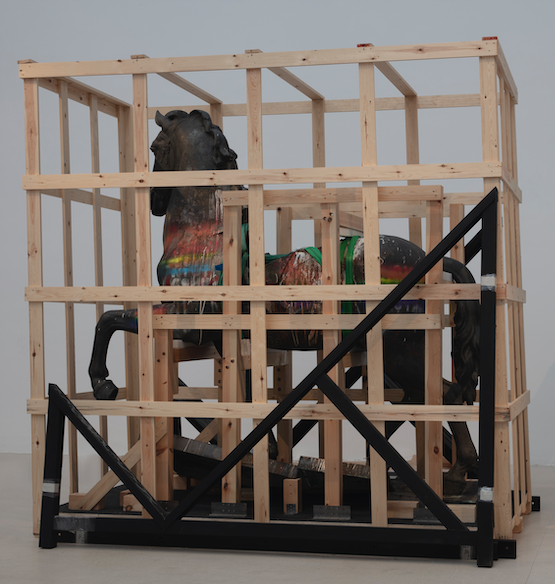
Josep Viladomat Massanass. Horse sculpture, part of the "To General Franco" ensemble. 1963. Bronze cast. Barcelona History Museum. Reina Sofía Museum Photographic Archive. Photograph: Fátima Sanz.
The choice of the Velázquez Palace as the venue adds another layer of meaning. Built for the 1883 National Mining Exhibition, the building has witnessed a multitude of cultural, political, and social uses throughout its history. Following recent interventions aimed at improving the preservation of its roofs, modernizing the climate control system, incorporating LED lighting, and developing a digital twin for building management, the palace reappears not only as a repository of art but also as a historical object open to critical examination.
In this sense, La Perla Peregrina does not merely occupy an exhibition space: it engages in dialogue with it. The exhibition transforms the building into part of its critical argument and reveals how cultural institutions actively participate in the construction, preservation, and transformation of historical narratives. Sánchez Castillo reminds us that all memory is a construct and that, behind every monument or official narrative, an uncomfortable question persists about the power that sustains them.


You may be
interested
...