Exhibitions
A museum outside the museum. Contemporary art enters everyday life
MACBA and the Department of Culture are displaying around forty works in shops, facilities and unusual spaces across Catalonia to bring contemporary creation closer to new audiences.
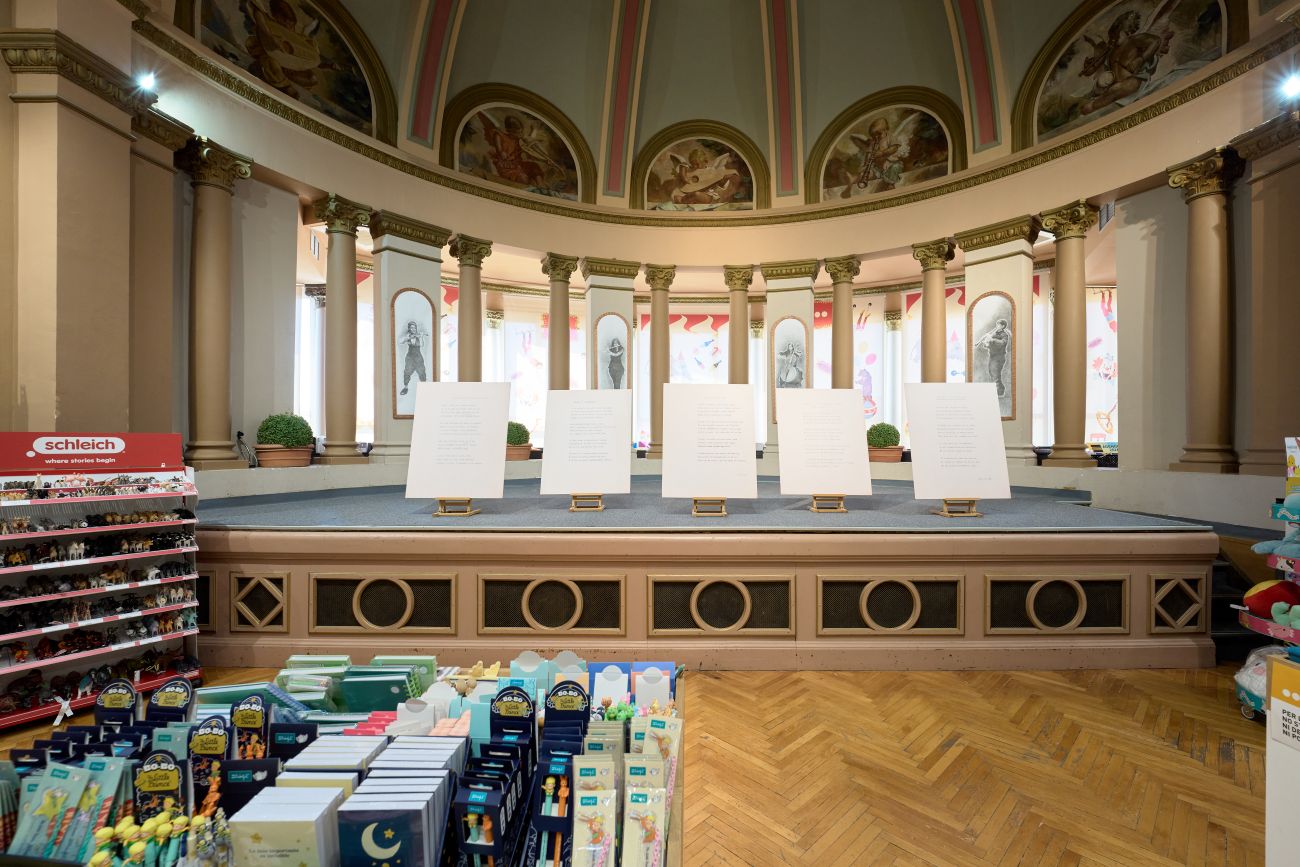
What happens when a work of contemporary art leaves the walls of a museum and appears in a pastry shop, a hairdresser, a pharmacy or even a funeral home? This is the question raised by A Museum Outside the Museum , the project promoted by the Department of Culture of the Generalitat de Catalunya and MACBA which, coinciding with the celebration of the museum's thirty years, is bringing forty pieces from its collection and archive to everyday spaces in more than twenty Catalan municipalities.
Curated by Martí Manen, the initiative will be progressively activated from June 19th and will be open to the public until November 30th. The proposal seeks to move the artistic experience away from the usual circuits and generate unexpected encounters between the works and the public. The condition was clear: the pieces could not be exhibited in spaces designed for art.
Thus, visitors can find a work while waiting for the dentist in Manresa, buying bread in Sant Cugat del Vallès, traveling by bus through Martorell or getting their nails done in Mataró. The aim is to encourage a more direct and spontaneous relationship with contemporary art, away from the codes and expectations that often accompany a visit to a museum.
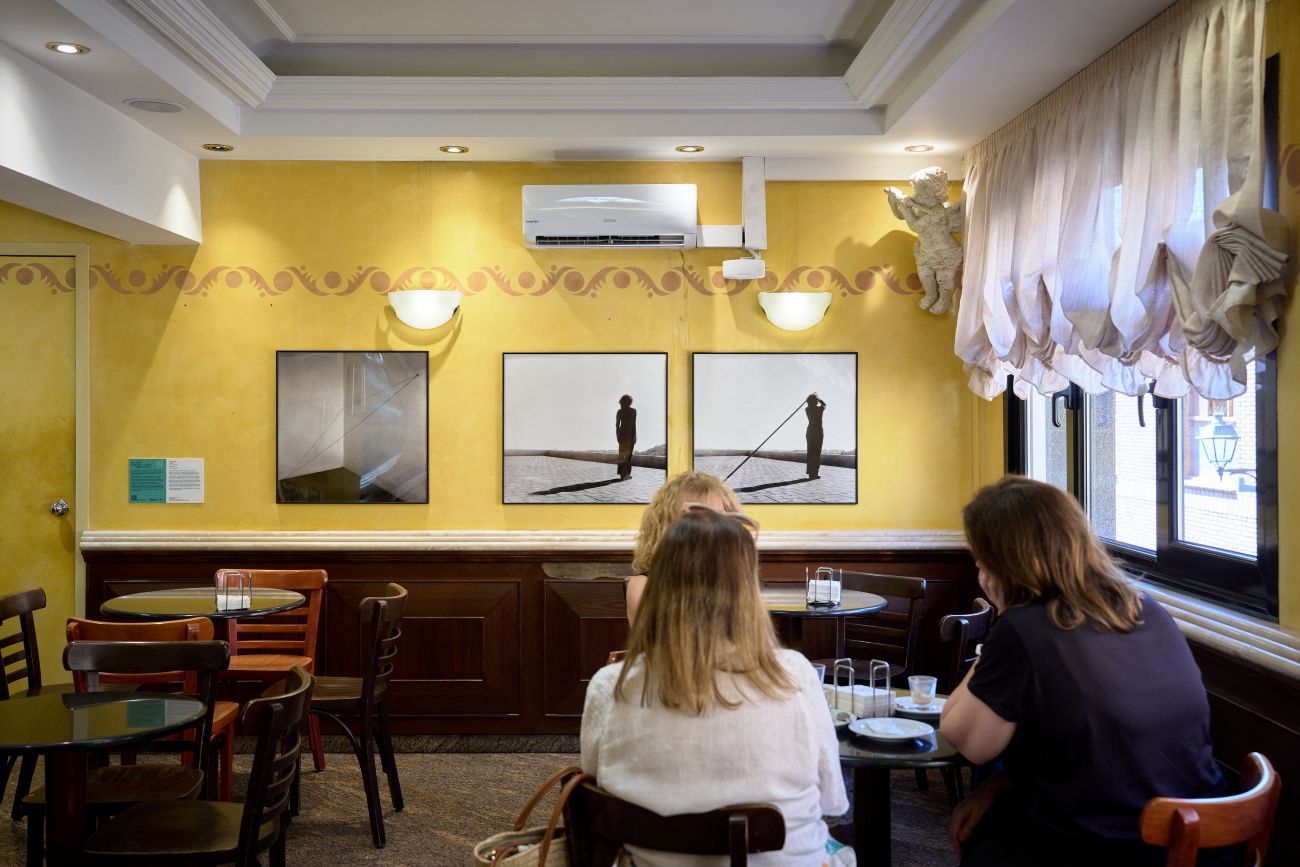
PLACE: PASTISSERIA SÀBAT, SANT CUGAT DEL VALLÈS. WORKS: ÀNGELS RIBÉ "3 PUNTS 1" AND "3 PUNTS 2", 1970 (1992)/2026. PHOTO: MIQUEL COLL.
According to Xavier Fina, general director of Cultural Rights, Creation and Libraries, the project also responds to the need to combat territorial inequalities in access to culture. "We need to overcome a two-speed culture and ensure that the place of residence does not determine the cultural rights of citizens," he said. The initiative aims to contribute to building a more balanced cultural map, in which contemporary art reaches new contexts and audiences.
The selection of the works and spaces has been possible thanks to the collaboration of the visual arts centres that are part of the Public System of Visual Arts Facilities of Catalonia (SPEAV). Each centre has worked together with MACBA to identify the pieces that could best dialogue with each environment. The result is a multifaceted project, in which each municipality offers a unique experience.
"One of the issues that interests us most is the exercise of resignifying the pieces in each context," explains Clàudia Segura, Head of Collection at MACBA. Segura also highlights the collaborative working model developed with the participating centers, which have maintained full autonomy in defining the local proposals.
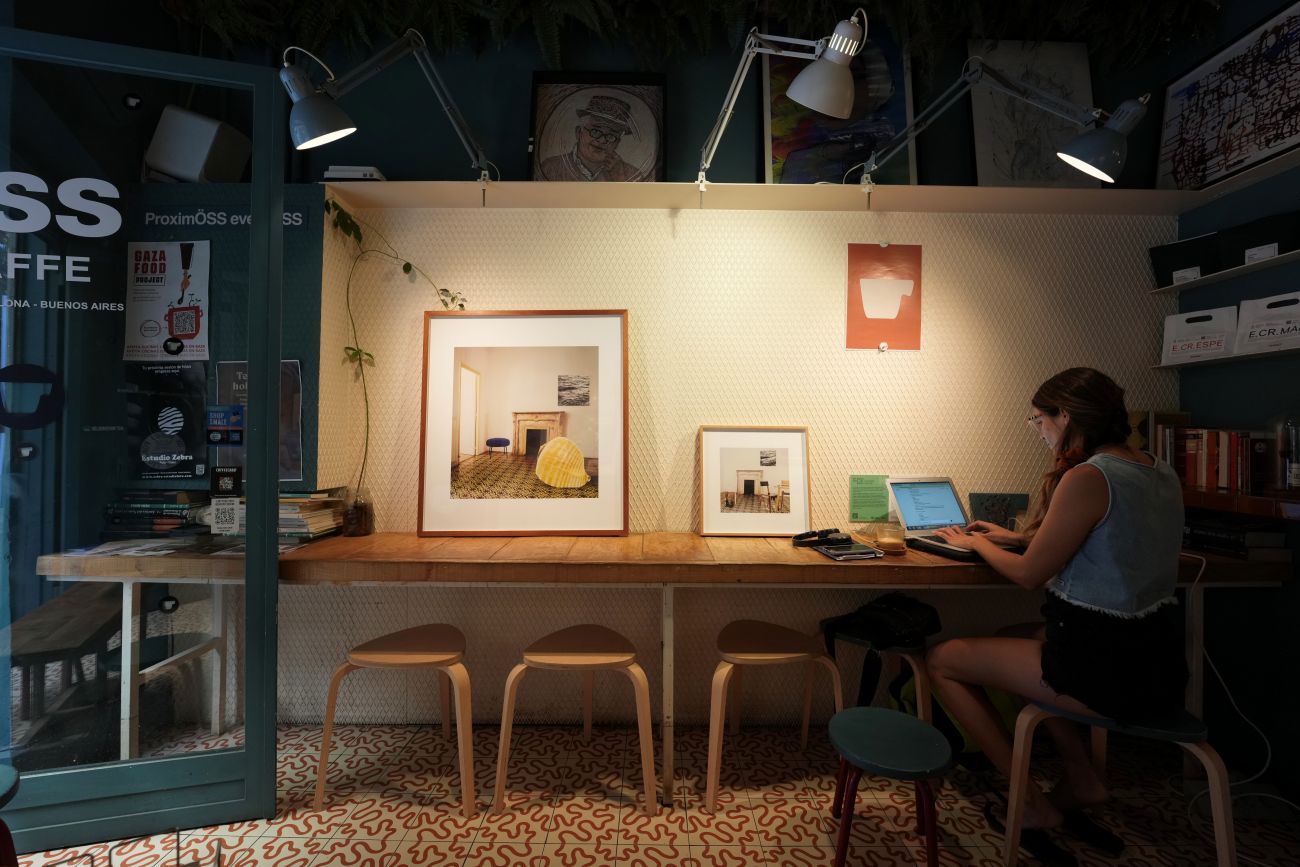
PLACE: ÖSS KAFFE, BARCELONA. WORK: MABEL PALACÍN AND MIRKO MEJETTA, "INTERIOR LANDSCAPE WITH SEA. ARANJUEZ" AND "INTERIOR LANDSCAPE WITH SEA". CARGOL, 2020. PHOTO: MIQUEL COLL.
Among the most significant cases is the presence of a work by Àngels Ribé in the Pastisseria Sàbat in Sant Cugat del Vallès, an establishment frequented by the artist herself. This coincidence opens up the possibility of customers and the creator sharing space in a casual way, further shortening the distance between art and life.
Other interventions play with the symbolic power of the chosen places. In Lleida, the funeral home hosts a piece by Josep Ponsatí, while the city cemetery presents two works by Fina Miralles focused on the relationship between the body and nature. In Cardedeu, all the pharmacies in the municipality project Caricia (2012), by Iván Argote, converting a network of everyday services into a dispersed exhibition space.
The initiative also highlights the role of the people who manage these spaces. Beyond the informative posters and contextualization materials, it is often the traders and professionals who act as improvised cultural mediators. This is the case of hairdresser Carles Carrión, who assures that many customers spontaneously become interested in the works, and that when this does not happen, he himself finds a way to start the conversation.
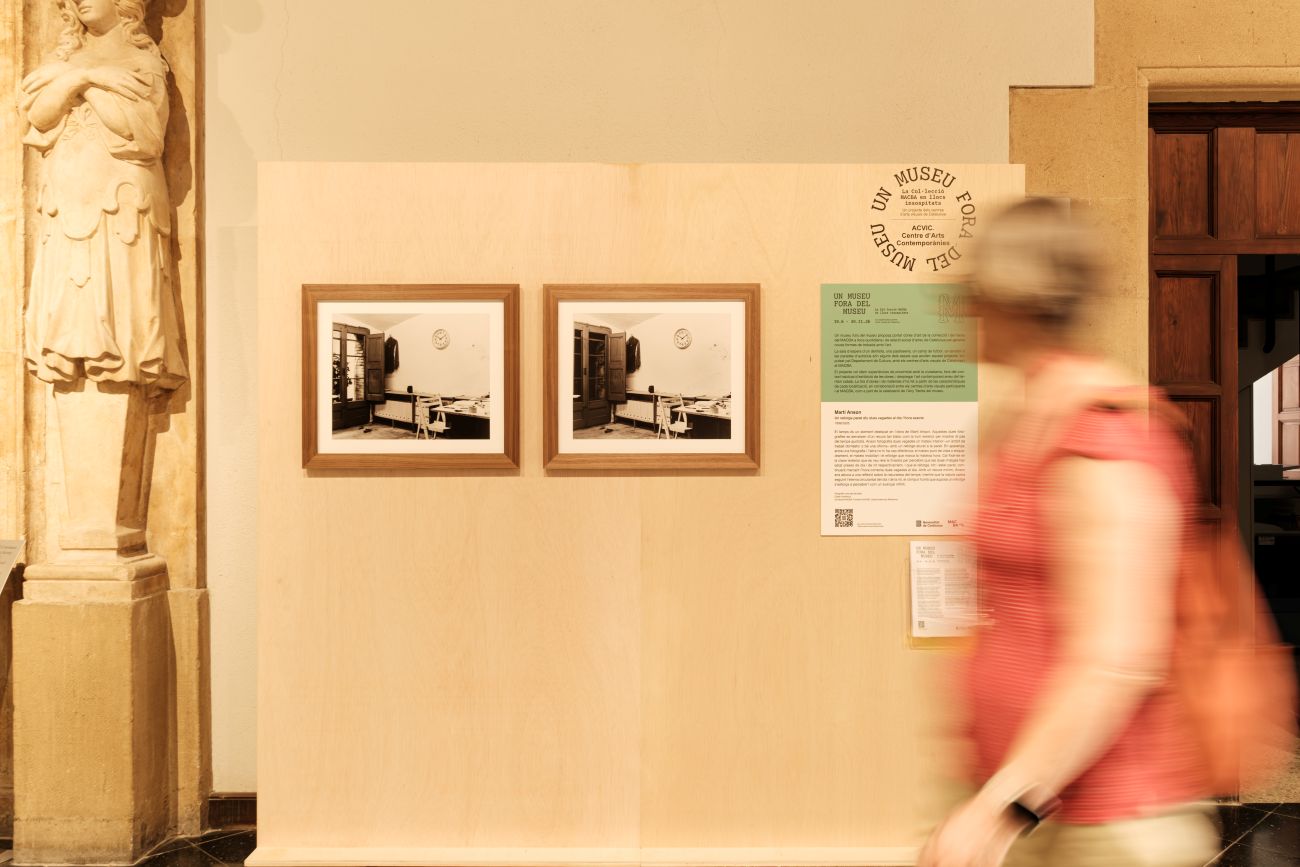
PLACE: VIC TOWN HALL. WORK: MARTÍ ANSON "A STOPPED CLOCK TELLS THE EXACT TIME TWICE A DAY", 1999. PHOTO: CARITG ESTUDI.
With artists such as Joan Brossa, Colita, Fina Miralles, Àngels Ribé, Bruce Nauman, Martha Rosler, Pepe Espaliú, Xavier Miserachs and Allan Sekula, among many others, A Museum Outside the Museum proposes a new way of understanding the public function of collections. It is not only about democratizing access to art, but also about transforming everyday spaces into places of discovery, reflection and cultural experience.
You may be
interested
...