Exhibitions
Antonio Ballester Moreno: the construction of landscape as a spatial experience
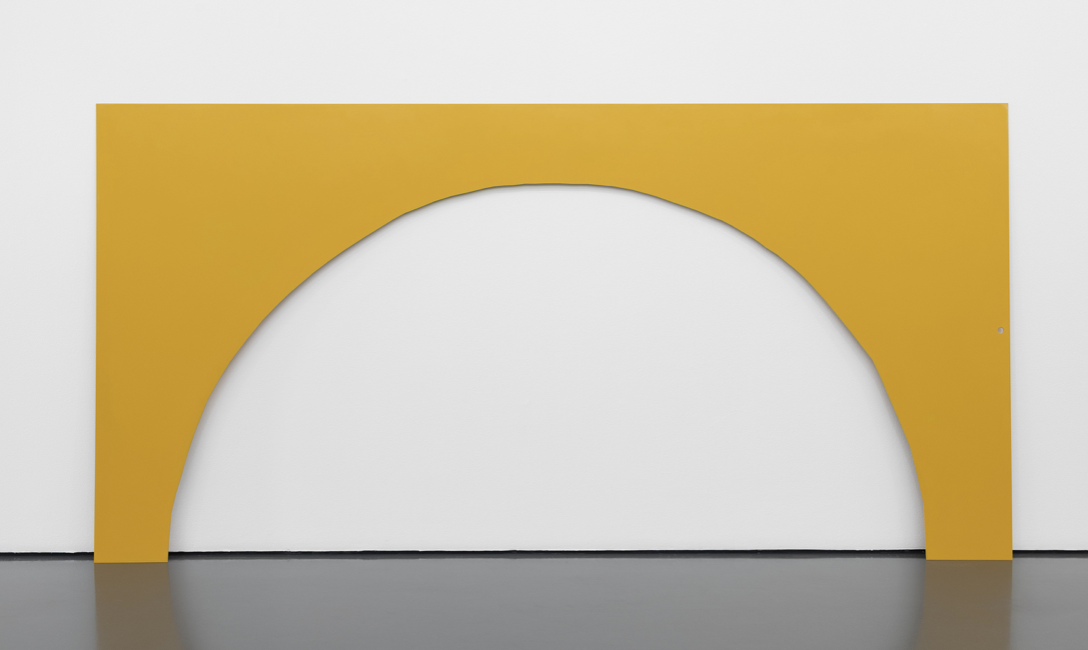
Antonio Ballester Moreno's new solo exhibition at the Pedro Cera gallery, titled CUTOUTS , delves into a visual investigation marked by color and the simplification of geometric forms. In this project, the artist takes a step beyond painting to enter the realm of sculpture, expanding his artistic language through scale and spatial occupation. Form ceases to be merely surface, becoming a physical presence that transforms the viewer's experience in direct relation to the exhibition environment.
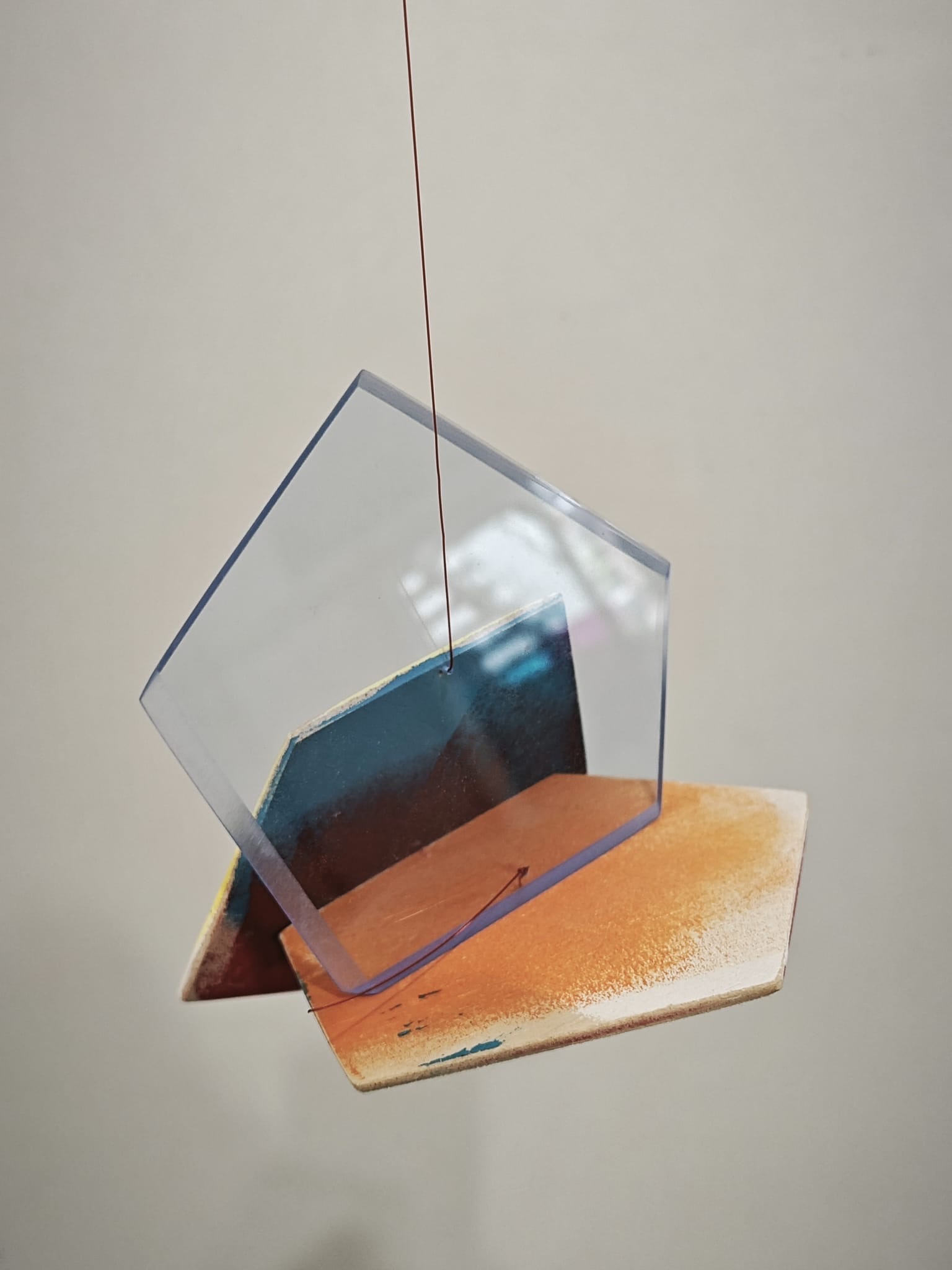
The starting point of this evolution lies in a seemingly simple gesture: cutting. In his practice, Ballester Moreno first works on paper, through collage, where the act of cutting defines both the forms and their remnants. These initial materials, closely linked to his painting, constitute the core of his creative process. In the exhibition, both the cut-out silhouettes and their “remnants” are reconfigured into larger-scale aluminum sculptures, without losing the physical trace of the original gesture of the scissors.
Through this process, the artist confronts the viewer with a fundamental tension between positive and negative form, between presence and absence. However, far from establishing a rigid opposition, both dimensions are presented on equal footing, blurring the boundaries that traditionally separate them. The act of cutting not only generates the artwork but also produces the separation that allows the forms to break free from the classical figure-ground relationship.
In this way, the exhibition space ceases to function as a neutral container and becomes an active field of relationships. The forms do not merely occupy it, but constantly reconfigure it, engaging in dialogue with each other and with the architecture through emptiness and matter. The result is not the representation of a landscape, but the construction of a real landscape within the gallery space itself.
Upon entering the exhibition, the visitor's body inevitably becomes involved in this configuration. The experience ceases to be contemplative and static, becoming a physical and dynamic journey. The meaning of the work is constructed from movement, proximity and distance, as well as from the bodily rhythm of the person experiencing it.
In this sense, the performative dimension of the exhibition emerges from the encounter between sculptural objects and bodies in motion. Perception no longer depends on a single point of view, but rather on a multiplicity of shifting relationships. This activation of space is reminiscent of the practice of Alexander Calder, who liberated sculpture from its immobility to integrate it into a dynamic dialogue with architecture and the environment.
As visitors move through the exhibition, their experience approaches what Gilles Deleuze called “geopoetics”: a form of landscape perception that arises from the accumulation of simultaneous impressions, constantly transforming and without a fixed meaning. Landscape, historically understood not as nature itself but as a constructed image, appears here destabilized.
Ballester Moreno reverses this representational logic. Instead of translating the world into an image, he reintroduces the conditions of representation into the physical space itself. Thus, the landscape ceases to be something observed and becomes something that happens. An experience that does not represent the environment, but rather activates it and makes it perceptible at the very moment the viewer passes through it.


You may be
interested
...