Exhibitions
Radix and the underground immersion between art and science at IVAM
With this proposal, the Valencian Institute of Modern Art consolidates its concept of an “Amphibian Museum”: a living institution, capable of adapting and generating new links between art, science and contemporary thought.
The Valencian Institute of Modern Art (IVAM) offers an immersion into the underground world with Radix , the exhibition by Mexican artist Tania Candiani, which can be visited until September. Curated by Blanca de la Torre and with the collaboration of LABoral Centro de Arte y Creación Industrial, the exhibition reformulates a proposal initially presented at the Helsinki Biennial, expanding it into a new piece conceived specifically for the Valencian space.
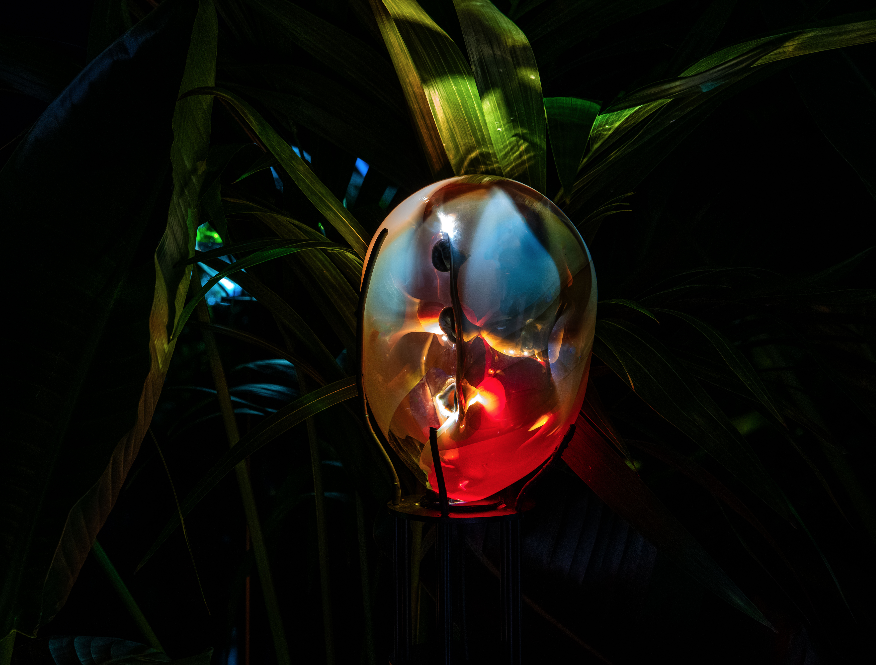
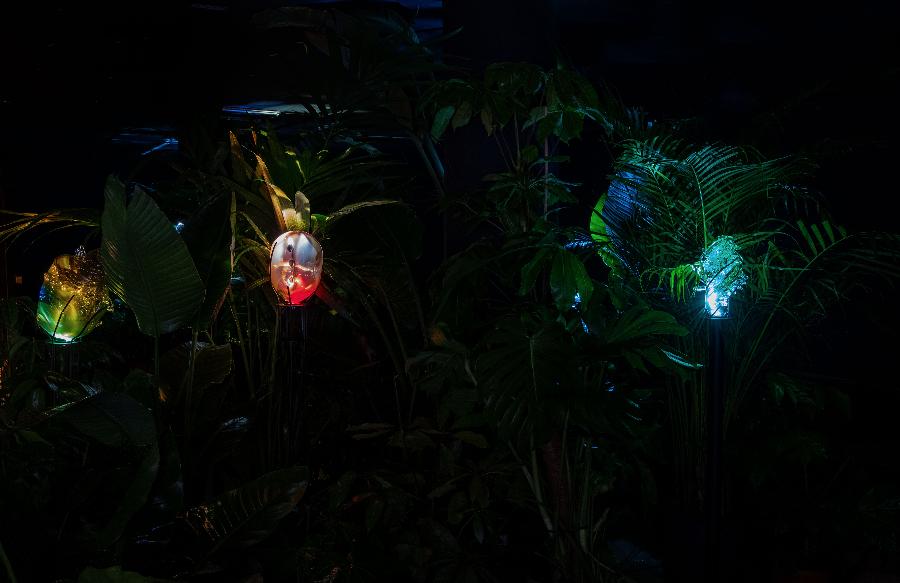
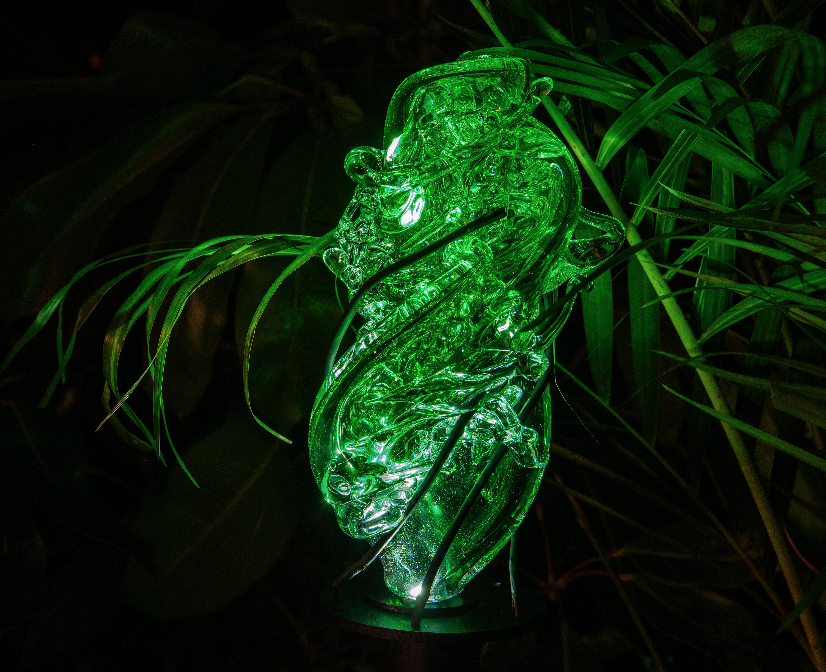
Radix unfolds as a hybrid and immersive ecosystem that evokes a cross-section of an imagined plant. The exhibition combines organic and artificial elements: living plants, blown glass sculptures, suspended organisms, a lightning rod, audiovisual projections and an octophonic sound composition that envelops the visitor. All of this forms an environment in constant transformation where scientific knowledge and artistic speculation converge.
Candiani's proposal dialogues with recent research in plant neurobiology, which questions the traditional view of plants as passive beings. According to these studies, root systems are capable of perceiving stimuli, processing information and adapting to their environment through complex networks of chemical, electrical and mechanical signals. In this sense, Radix does not aim to represent nature as it is, but to explore its possible mutations, microworlds and futures.
Visitors approaching Gallery 3 encounter a dimly lit room dominated by a large imagined plant. The installation is inspired by the cross-section of a plant structure that the artist discovered in a book from the Valencia Botanical Garden. "When the eyes get used to the darkness, they begin to perceive what was previously invisible; it is a metaphor for the roots, which were there before humans, and will continue to be there when we are no longer here," says Tania Candiani.
The installation is divided into several stations that guide the visitor through this artistic “organism”. The tour begins with an archive anteroom that combines historical plates from the University of Valencia with speculative illustrations by the artist herself. According to Blanca de la Torre, this space “explores the boundaries between scientific knowledge and traditional and indigenous knowledge, as well as the different ways of understanding the world”.
The exhibition experience is constructed as a multisensory system where no element works in isolation. Sound, light, living matter, image and architecture are related to place the visitor within the same ecosystem. Thus, the public ceases to be an external observer to become a body involved in the functioning of the work.
You may be
interested
...