News
The new law promotes the Filmoteca de Catalunya as a national reference
The Parliament is promoting the first major cultural norm in fifteen years to provide the Film Library with autonomy, projection and leadership capacity within the Catalan audiovisual system.

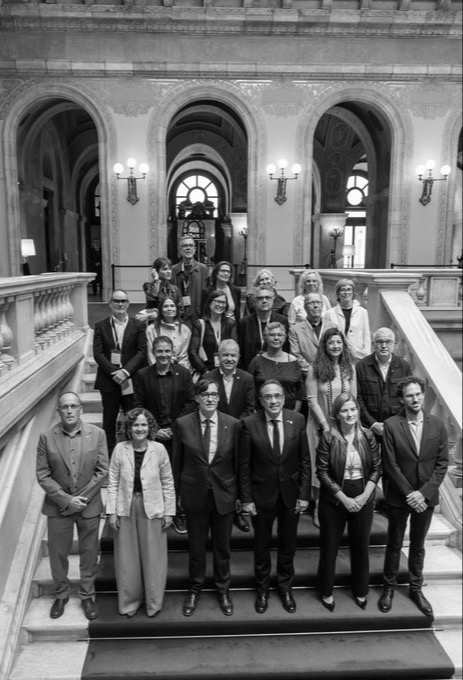
Cinema is not just entertainment: it is collective memory, shared imagination and a critical mirror of society. With this underlying idea, the Parliament of Catalonia has approved the new Law of the Institute of the National Film Library of Catalonia, an initiative that marks a before and after in the country's cultural policy. With broad parliamentary support —109 votes in favor, eleven against and fifteen abstentions—, the regulation becomes the first cultural law approved in the last fifteen years and the first of this legislature.
The Minister of Culture, Sònia Hernández, has described the approval as "a great day for the country's culture", highlighting that the new legal framework will allow the consolidation of a "modern, well-structured and autonomous Film Library". The objective is clear: to strengthen it as a key piece within the Catalan cultural system and guarantee the institutional recognition it deserves.
The law involves the creation of a new body with its own legal personality that will autonomously manage the National Film Library. This transformation will allow for the streamlining of processes and the more efficient development of its essential functions: protecting, conserving and disseminating the film heritage of Catalonia. According to the director of the institution, Pablo La Parra, this new stage will facilitate more flexible management adapted to the specific needs of the sector.
The history of the Filmoteca de Catalunya, created in 1981, reflects a constant evolution. In its beginnings, the activity was carried out in cinemas spread across Barcelona, while a film archive and a specialized library were progressively built. Over time, the institution consolidated itself until making a qualitative leap in 2012 with the inauguration of two key locations: the Raval space, dedicated to dissemination and public activity, and the Terrassa conservation and restoration center, specialized in the preservation of audiovisual heritage in both photochemical and digital formats.
One of the central points of the new law is the emancipation of the Filmoteca from the Catalan Institute of Cultural Enterprises, to which it had been affiliated since 2001. This change not only reinforces its autonomy, but also redefines the institutional ecosystem of the Catalan audiovisual sector. From now on, the film powers of the Generalitat will be channeled through two distinct structures: the ICEC and the new Institute of the National Filmoteca of Catalonia.
The regulation is not limited to the heritage field. It also strongly supports research and training. Among its lines of action, the ability to promote research projects, attract funding and promote regulated studies linked to cinema and audiovisual media stands out. Likewise, the role of cultural and educational mediation is reinforced, with the aim of integrating cinematographic heritage into the Catalan educational system.
Another strategic objective is to decentralize the Filmoteca's activity and extend it throughout the territory, overcoming the historical concentration in Barcelona. This territorial opening seeks to bring cinema as a living heritage closer to all citizens and consolidate a shared audiovisual culture.



You may be
interested
...