Exhibitions
A unique screen by the young Dalí arrives in Figueres
The early work, loaned by the Reina Sofía Museum, shows the painter's first oriental influences and decorative experimentation before his dreamlike universe.
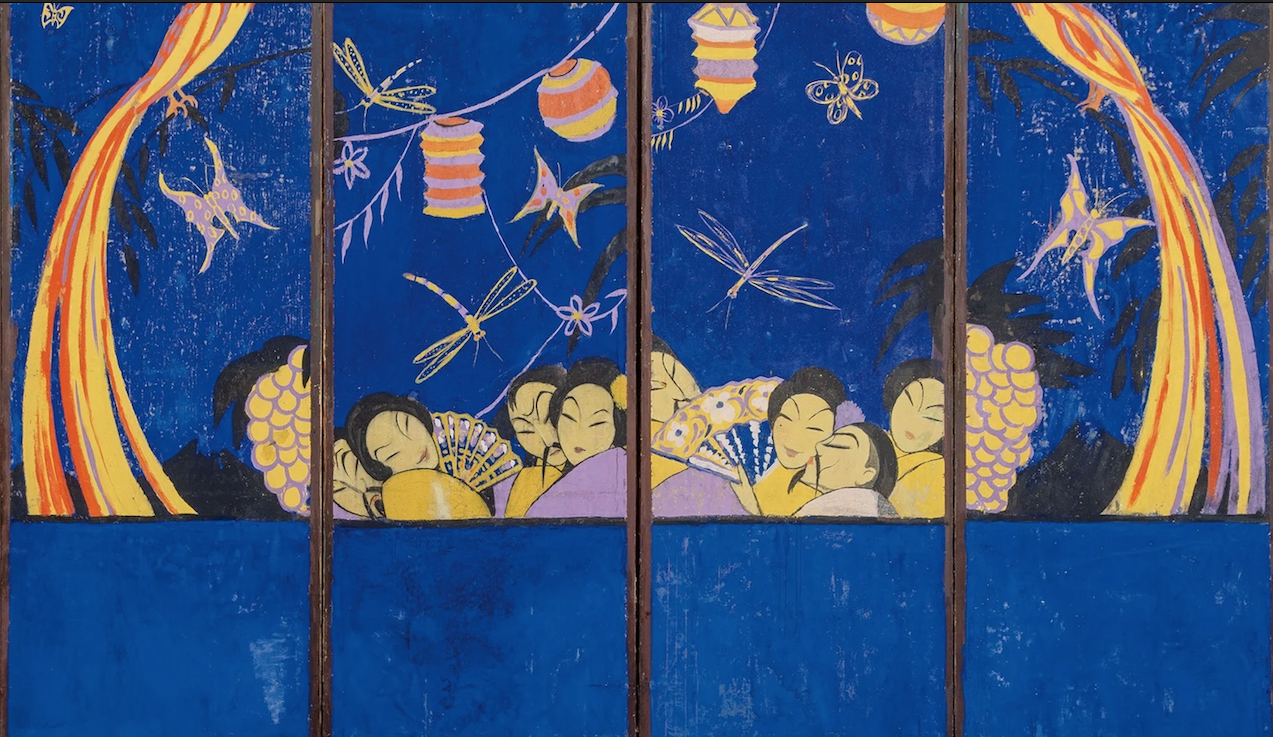
The Salvador Dalí Birthplace in Figueres is presenting a unique piece until September 13th as part of the exhibition An Oriental Dream. Exoticism and Modernity in the Young Dalí , which opened this Wednesday. It is a screen with oriental motifs that the artist painted in the early 1920s, an early work that allows us to delve deeper into the influences and aesthetic concerns of his early creative years.
The large-sized screen (168.8 x 218 cm) has been loaned by the Museu Nacional Centro de Arte Reina Sofía , the institution that acquired and restored it. This is an exceptional opportunity to see it in Catalonia, where it has only been exhibited once before. Its relevance lies in the fact that it is part of Dalí's initial production, making it a key witness to his artistic development.
To create it, Dalí reused an old screen belonging to his father, which he decorated with iconography inspired by Orientalism: Chinese figures, men and women with fans, birds and colored lanterns. This theme, unusual in his later work, reflects the interest in foreign influences that was beginning to reach him at that formative stage.
The historian Ricard Bru Turull points out that, when Dalí made this screen, Japonisme had already been circulating in Catalonia for more than forty years. According to Bru, “Dalí applied this Japonisme very imprecisely, without reproducing any authentic image of Japan. There is a naturalized mixture, closer to the popular approach to Orientalism than to a faithful Japonisme”. It would only be in Paris, later, that the painter would come into direct contact with Japanese models, and it would be from the 1950s and 1960s that his work would reflect more specific Japanese references. For Bru, in this screen Dalí shows a “superficial, exotic and decorative Japonisme”, which makes him especially unique, since he would later develop a much more intellectual and rigorous approach to his painting.
The work also represents Dalí's first known approach to decorative art, at a time when he had not yet begun his exploration of the dreamlike language that would make him universally recognized. In this sense, the screen dialogues with other contemporary works, such as the brightly colored and intensely colored temples that he created during the same years.
Beyond its aesthetic value, the screen is part of the artist's family and evidences a period of research and experimentation in which Dalí explored different creative paths. This piece thus becomes a privileged window into the beginnings of one of the most influential creators of the 20th century.



You may be
interested
...