
library
Unpublished Cadaqués: Portrait of a town over time
Adrià López Sala and Vicenç Altaió reconstruct in images and words the transformation of Cadaqués between 1890 and 1960.
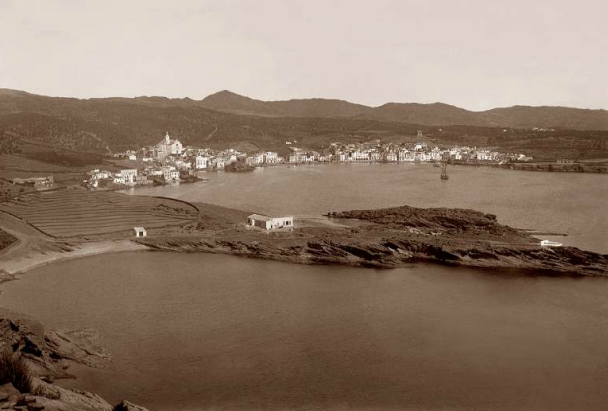
Cadaqués inédit 1890-1960 , a work born from the collaboration between the researcher Adrià López Sala and the writer and art critic Vicenç Altaió, is presented as a visual and documentary chronicle of one of the most relevant periods of transformation of this town in the Alt Empordà. Published by Farell Editors, the book includes a selection of images from the Digital Photographic Archive created by López Sala, which collects thousands of documents including glass plates, negatives and postcards from different periods of origin. The work is structured in such a way that it combines a chronological journey with a thematic division into five large blocks that facilitate the understanding of the evolution of the municipality from the end of the 19th century to the middle of the 20th century.
It begins in 1890, when photographic technique was still based on dry gelatin plates, and ends in 1960, coinciding with the arrival of modern cameras and the beginning of large-scale tourism. This book allows us to travel back in time to see how Cadaqués has changed. Through the images, we discover moments that marked a before and after, such as when the vineyards died from a plague in 1878 or the extreme cold that killed the olive trees in 1956. We also see how the town was transformed with major works, such as the construction of the Baluard wall or the arrival of the first road that connected it with Figueres.
The visual journey begins in the heart of the town, showing what the old town and the sea front looked like before the modern renovations. From here, the view expands to the entire coast, passing through the coves and beaches that go from Jóncols to the Cap de Creus lighthouse. The sea plays a leading role, with all the fishing and transport boats that were the motor of the town, but there is also space for daily life, popular festivals such as Carnival and the customs of the people of the time. Finally, the book puts faces to this history with portraits of lifelong families, curious characters and the first illustrious tourists of the town.
A lot of work is done to identify every detail, from the names of the people in the photos to the license plates of the boats or the changes in the houses. So that the whole set is well connected, all the photographs have been given a sepia brownish color, even if the originals were different from each other. These images are accompanied by texts by Vicenç Altaió, which help us understand that Cadaqués is not just a landscape, but a living memory of all its neighbors. A tribute to the photographers, professional or amateur, who knew how to capture how a town that lived in isolation was opening up to modernity.

You may be
interested
...