Exhibitions
Àngel Jové 'De Intactu' at the Tàpies Museum
Retrospective at the Museu Tàpies d'Àngel Jové: an intimate journey through the enigmatic work of a creator between matter, words and artistic resistance.
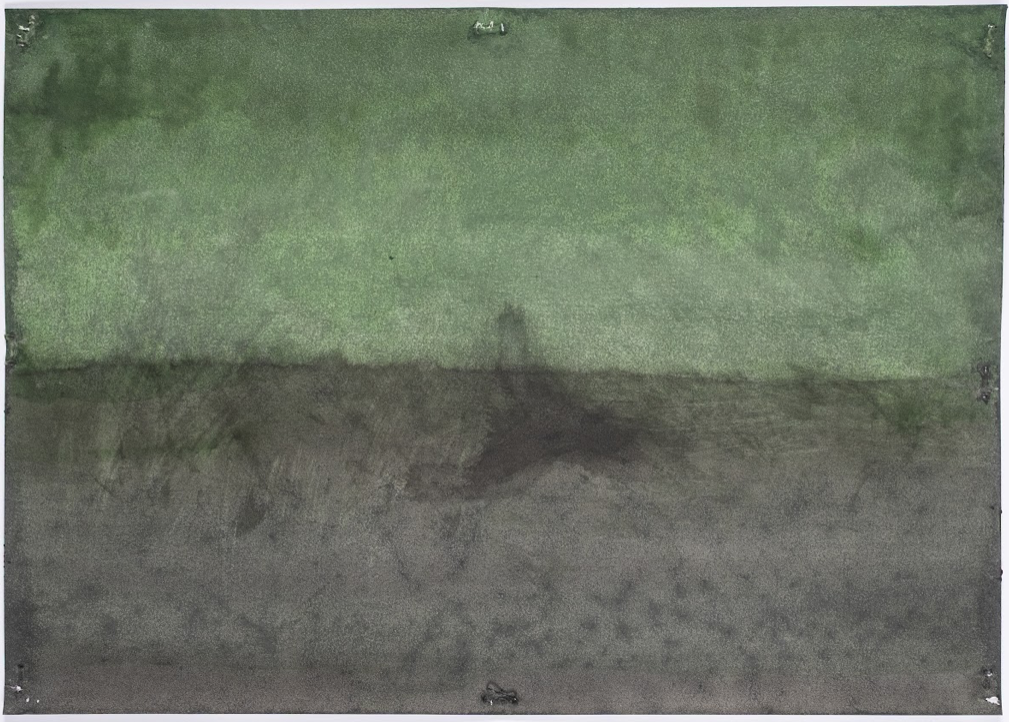
The first major retrospective of Àngel Jové (Lleida, 1940 – Girona, 2023) will be held at the Tàpies Museum between March and September of this year 2026, curated by Maria Josep Balsach, where you can see part of his production from the Metafísica series (1975) to the latest abstract landscapes of the Über alles series (2021). The exhibition occupies the two floors of the museum and offers a complete vision of Jové's artistic practice. According to the curator, the exhibition is structured in an anachronistic way, creating with Jové's works a kind of interrelated constellations that bring the present, past and future into dialogue. Drawings, photographs, films, sculptures and infinite series build a unique universe, a space where his creative essence is shown.
Considered one of the most enigmatic creators of the seventies, Jové moved between art povera, informalism and conceptualism with pictorial works, polaroid photography, poetry, words, matter and objects. There is an aura of enigma around his figure caused by the image he projected in the films of Bigas Luna, Bilbao and Caniche above all, where the character and the actor seemed to be the same person. On the other hand, he was an artist who shunned having too much of a public presence, perhaps as a reaction to this activity as an actor. The character placed him in a dark area of the romantic imagination, made of extreme passions, but in reality —and this is demonstrated in the book made for the exhibition— he was a very generous, committed and compassionate person towards others. A strange contradiction: combining passion with compassion.
Jové is also recognized for having participated, together with Antoni Llena, Silvia Gubern, Jordi Galí and Albert Porta (Zush, Evru), in the so-called Maduixer group. This is not the time to review the importance of this moment, but they all share the same sense of formal evanescence with materials and a strong charge of content.
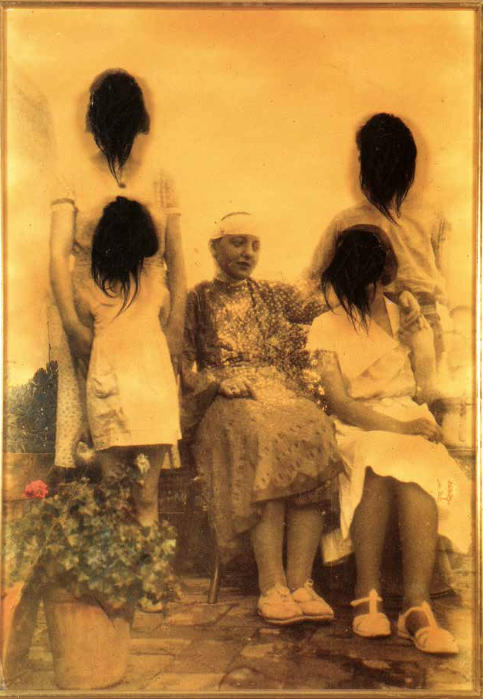
Àngel Jové. Untitled. Metaphysical Series III (1975). Bartolozzi family collection.
Object-sculptural works in Àngel Jové's production are few, but they are there. Objects interested him because of his fascination with the profession of architecture, which he began to study but did not practice professionally. This dimension corresponds to two exhibitions, as demonstrated by the pieces he made for 21 objetos and Malenconia (2002) and also in the exhibition Über Alles , where he placed a wooden chair and table wrapped in barbed wire, one of those that delimit the spaces between freedom and seclusion.
With the technical support of Santi Roqueta and in collaboration with Silvia Gubern, he designed the table lamp for Zeleste in 1969 and Babel in 1971. It is no coincidence that in both the luminosity was nuanced with alabaster, to the point that when they were promoted for sale, there was talk of its good use for making confidants and even more private conversations.
Space is also part of his work in the paintings and landscapes of the series, but where it appears as a major protagonist is in La mirada perduda (2000), an exhibition held in a singular space such as the water tank of Lleida. A space in memory of another.
I consider the work The Lost Gaze to be one of Àngel Jové's best works from the stage before the series. The capture of space with some photo-drawings has made a true artist's book that transports the viewer to the water vapors mixed with those of memory. I consider it to be a point apart. As if he had closed a wound. As if he wanted the dissolution of memory in the form of smoke or vapor, adding shadow on top of the shadow of memories, and began only to gaze at the horizon in his series —looking for what?
From Intact
The title of the exhibition De Intactu suggests many things. I like to think that it could refer to that which always remains identical to itself, without serious affectations, beyond the vicissitudes of existence or in the face of a difficult situation. I also understand that it can refer to a way of doing things that is maintained over time without too many alterations. On an emotional level it can also have a sense of resilience, a way of resisting setbacks, misfortunes and emerging unscathed.
Considering that a video camera purchased by Jordi Galí once entered their lives, with which the group made the first audiovisual work of art in Spain, Primera Muerte (1969). The idea of a first death suggests permanence, intact continuity of what was alive.
His love of working with series also indicates continuity: from Versus Limbus (2008) at the Suñol Foundation, which consisted of 350 pieces; then with the series The Rags of Time (2011) of 70 works; and the third and last series he made with the title Über Alles (2020) of 52 works. Series that he works under the protective light of his main poets: Màrius Torres, TS Eliot, John Donne, Cesare Pavese and Paul Celan.
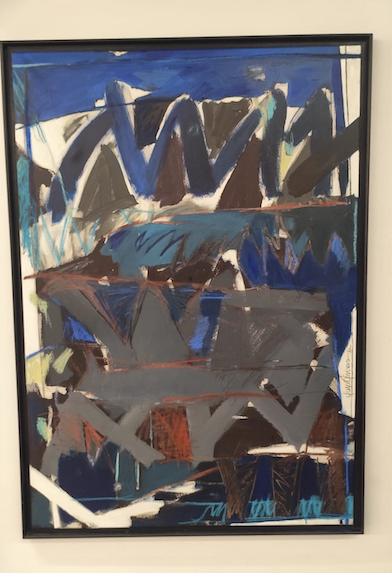
In these, the horizon is an eternal continuum, with a will to infinity, as if nothing could stop its growth, its extension: a perpetual line that cannot be altered by time or circumstances, forever, sensa fine. Paradoxically, when there is no beginning or end, as in these series, what is asserted is the instant of the present: an eternal present. Nothing can affect them and they will remain unalterable: Intact.
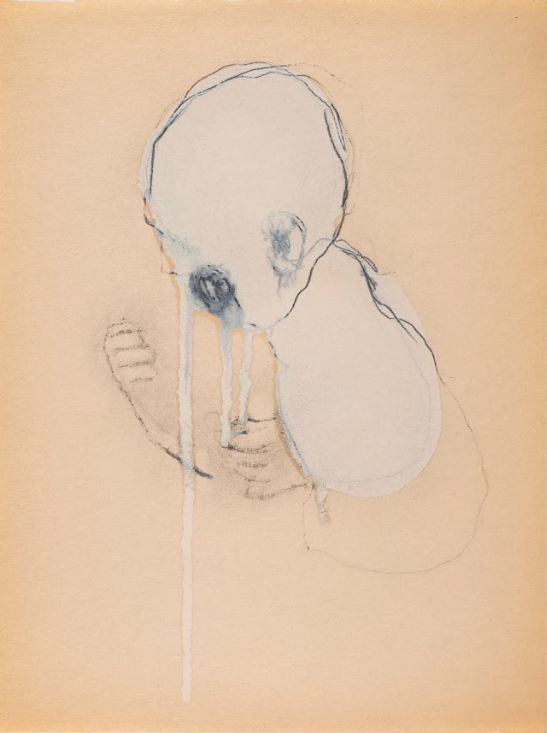
Àngel Jové. Untitled (1990). Private collection, Girona.
Faceless figures
One of the best-known paintings, used to promote this exhibition at the Tàpies Museum, is a manifesto of dissidence and corresponds to the period of the Metaphysics series of 1975. We see five figures: four of them have their faces covered by hair and a woman sitting with a vein in her head. It looks like a family photo, but we cannot identify the people.
The same absence of faces that we see in the previous painting appears in another work from the series Metafísica III (1976), where one of his reference poets in these years appears: Màrius Torres. Six faceless people and only the poet who is recognized. In both works, the varnish emulsion darkens the photographed scene and makes it mortuary.
His friend Antoni Llena interprets this absence of faces and says that Jové paints the non-face of things. Perhaps he is trying to highlight an “Angelica Jovenian” expression when he says that “nothing is of oneself”. Jové has always wanted to insist that in creation he would prefer not to intervene too much in the work, and he liked to say that even not making it, that he does little.
Perhaps he desires the complement of the other, of what he looks at. Isn't this assemblage what we always look for when we walk through an exhibition? We do nothing more than look for an absence, a void, a fissure to be able to make a sentimental projection of it towards the works, towards the author, seeking a visual harmony with the other, just as we would like to do with everything.
You may be
interested
...