Exhibitions
Cristóbal Hara, the indomitable eye of Spanish photography, stars in Principiante in Palma
The Juan March Foundation Museum traces the beginnings and evolution of photographer Cristóbal Hara —National Photography Award 2022— in an exhibition that revisits fifty years of documentary vision, from the black and white of his first trips to the expressive explosion of color.
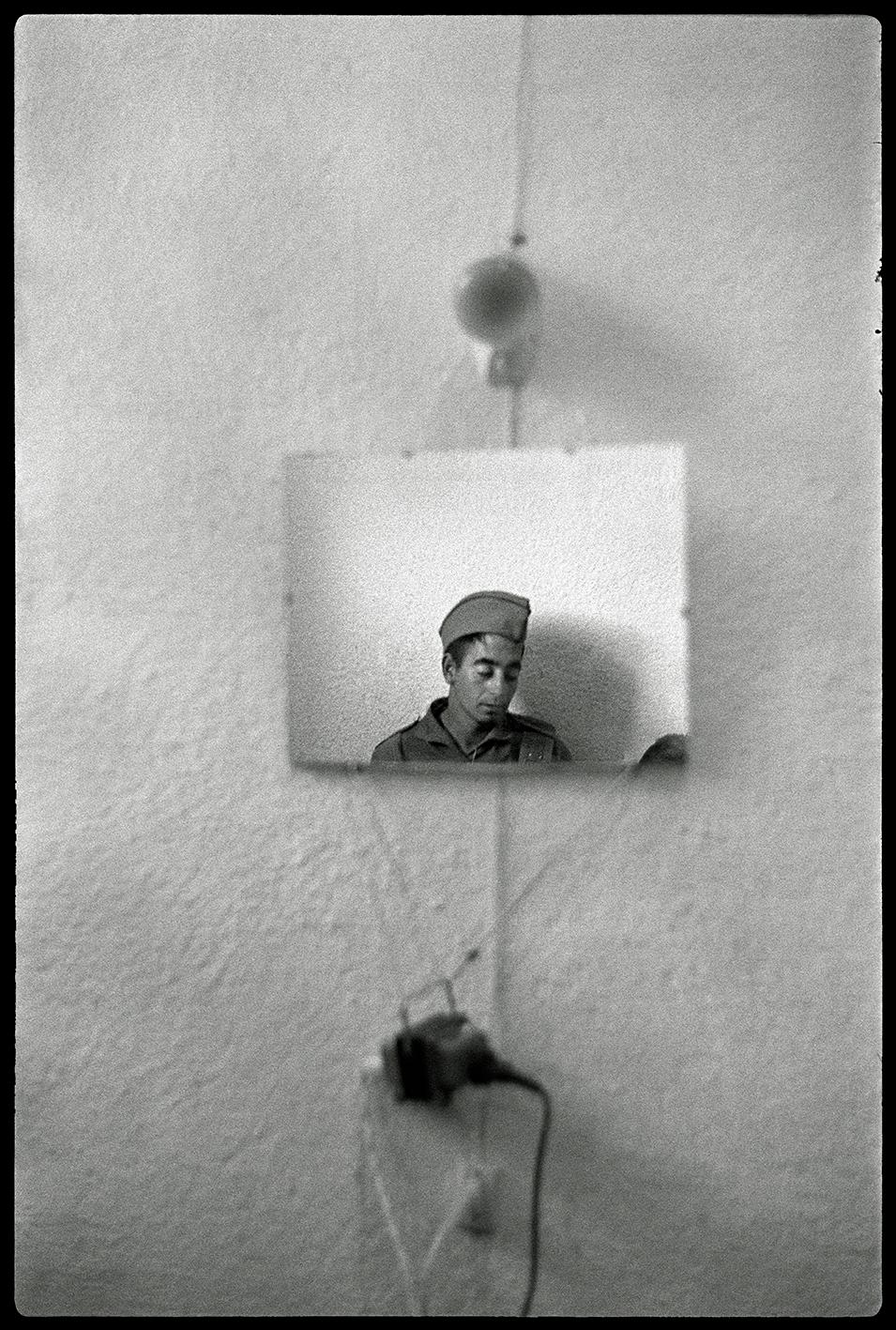
From February 10 to May 2, 2026, the Juan March Foundation Museum in Palma presents an exhibition on the beginnings and evolution of Cristóbal Hara, the Madrid photographer recognized by the National Photography Award in 2022, entitled Principiante . The exhibition, organized in collaboration with the Caja Burgos Foundation, is a journey in black and white and color that invites us to look through the camera of a figure who has marked Spanish documentary photography over the last half century.
Trained in Business Administration in Germany, Hara's life took a radical turn at the age of twenty-two when he discovered the work of Henri Cartier-Bresson. That impact led him to abandon the world of business to devote himself entirely to photography. The initial pieces in this exhibition capture his learning phase on the streets of Cuenca, during his military service and on trips to Yugoslavia and London. They are images that capture the freedom and risk of the beginner in the midst of Franco's regime, where being a photographer was synonymous with adventure and danger.
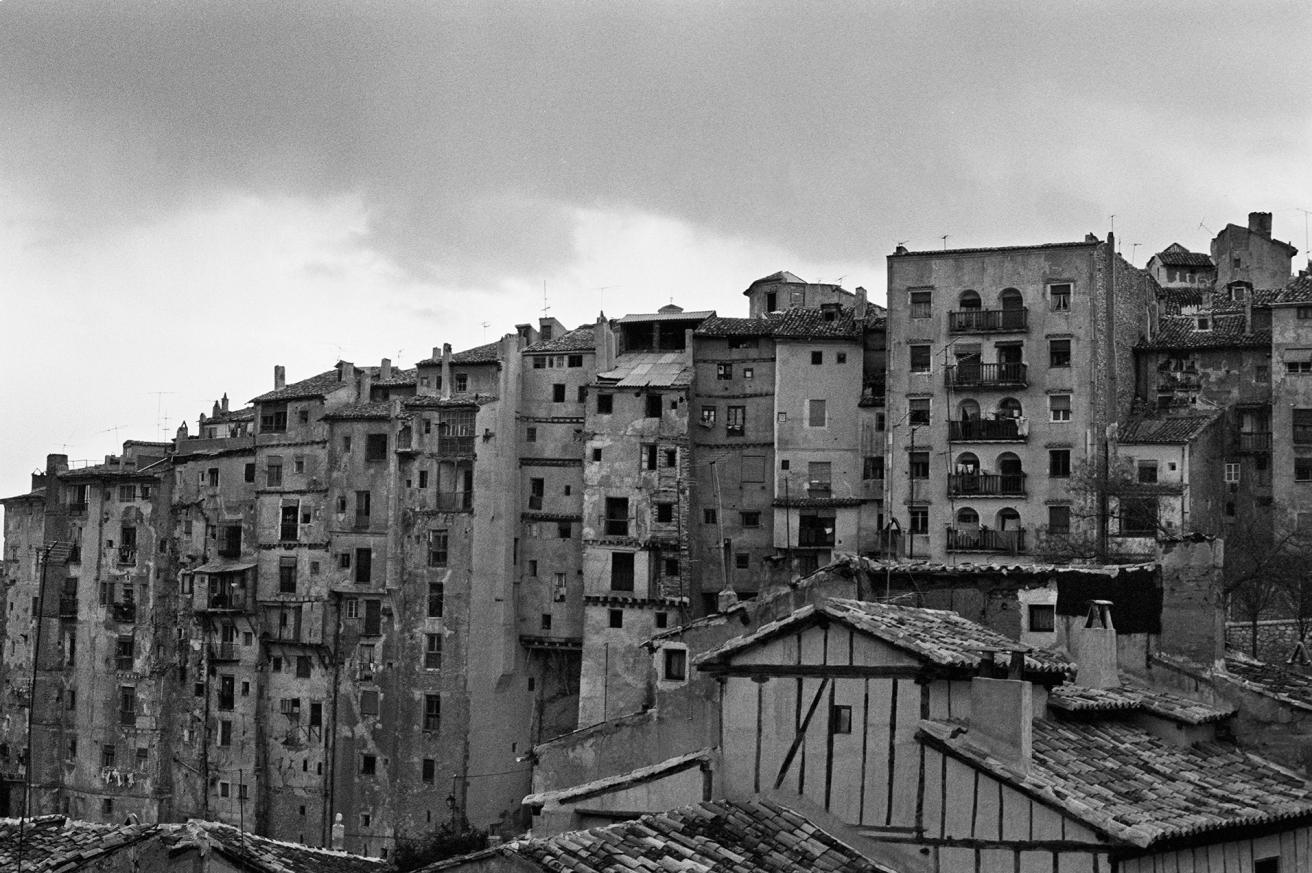
Cristóbal Hara, Cuenca, 1983, © Cristóbal Hara, VEGAP, Madrid, 2025.
Despite early recognition, exhibiting at the Victoria & Albert Museum in London in 1974, Hara experienced a period of creative frustration. "I was bored with myself doing what everyone else was doing," he confesses. The solution came in 1985 with the leap to color. This change was not only aesthetic, but an emotional leap that allowed him to work "at the physical and emotional limit."
His color photography escapes traditional compositional correction to encounter casualness and the unforeseen. Through unexpected angles and perspectives, Hara portrays a provincial Spain that has often been rejected: atypical processions that approach paganism, the marginal world of bullfighters' "suitcases" or the disordered daily life of the soldiers of the dictatorship.
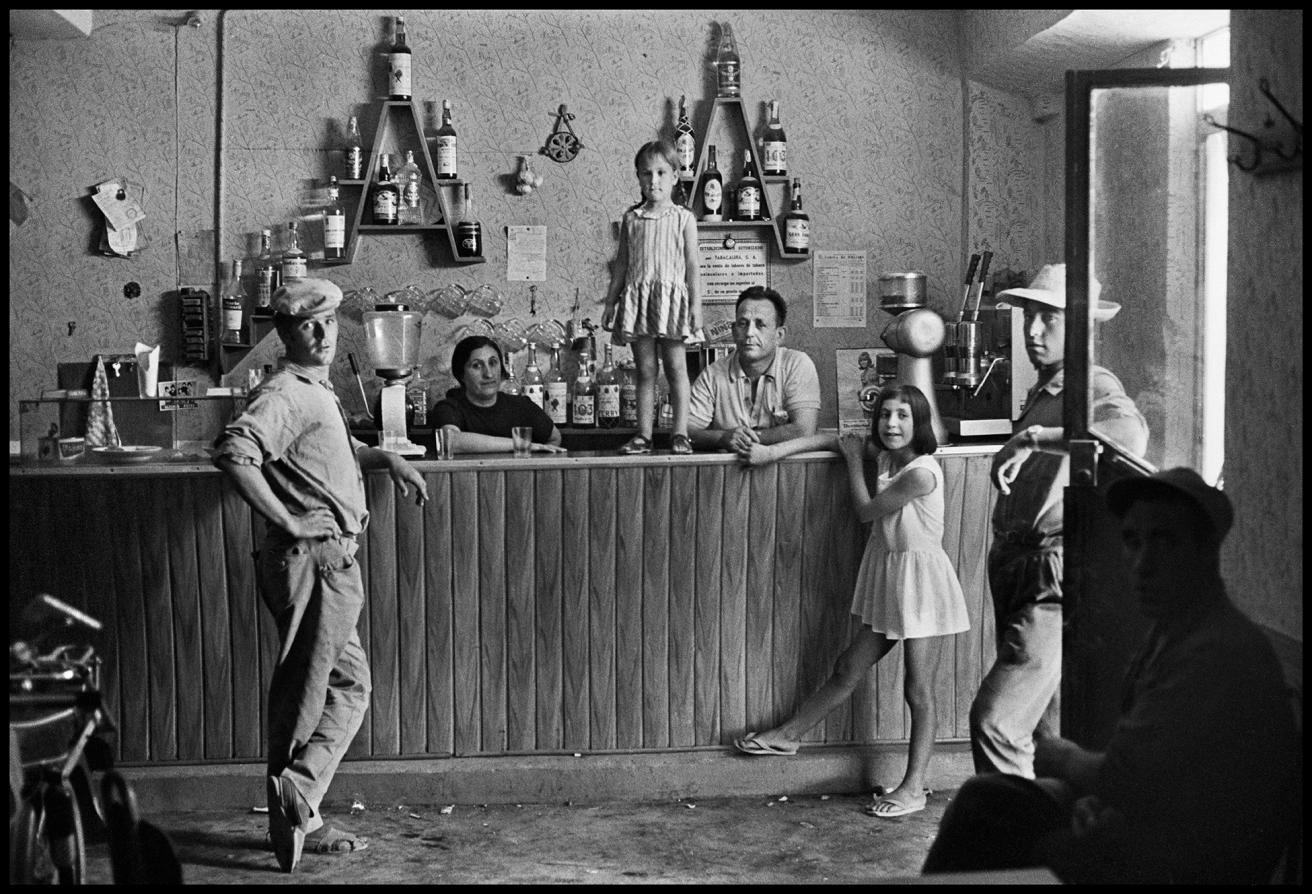
Cristóbal Hara, El Pedernoso, 1971, © Cristóbal Hara, VEGAP, Madrid, 2025.
Hara defines himself as a "bad press photographer" because, despite wanting to be a reporter, he was distracted by light or the construction of language instead of going straight to the news. He considers himself an "anti-photojournalist", that is, he is more interested in the anecdote than the fact, and the composition than the graphic document.
He also claims the value of photographing from within the culture itself. For him, the importance of images lies in the deep experience of the territory. "Photography has saved my life," he says with the serenity of someone who lives today in a small town in Cuenca, following the trail of wild horses and keeping alive that spirit of experimentation and capturing moments and images that was born with his first Kodak Brownie.
You may be
interested
...