Opinion
Montjuïc reinvents itself: the new MNAC takes shape
The expansion of the National Art Museum of Catalonia will connect the Palau Nacional and the Victoria Eugenia Pavilion into a single cultural facility, double the exhibition space and could transform Montjuïc into a great cultural agora of the 21st century.
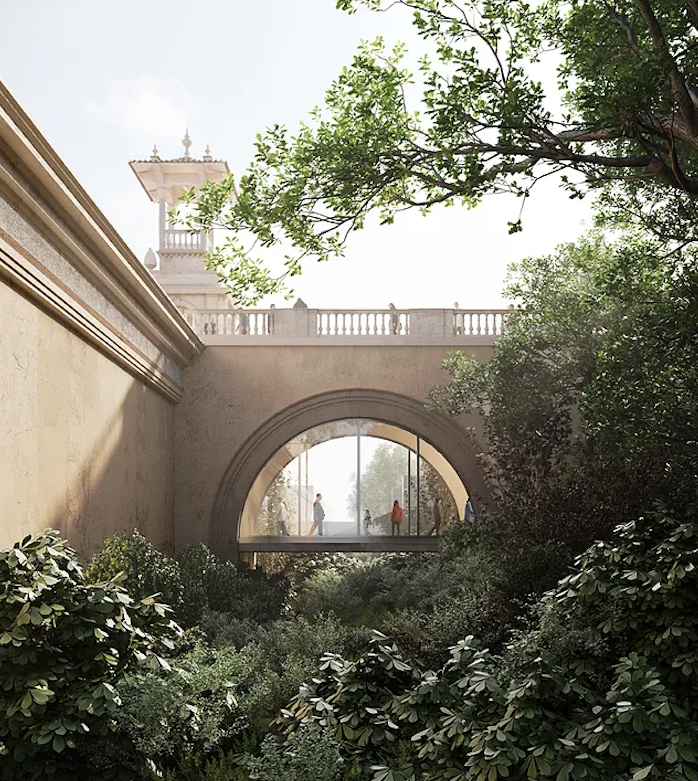
Great cities are also defined by their museums. Not only as containers of works of art, but as spaces that explain a collective identity and project a vision of the future. In this sense, the expansion of the Museu Nacional d'Art de Catalunya (MNAC) represents much more than an architectural work: it is an opportunity to rethink the role of culture in 21st century Barcelona.
For years, the debate on the future of the museum has been stuck between projects, reports and expectations. Now, finally, the project is taking shape with a clear timetable —the inauguration planned for 2029— and with a budget exceeding 112 million euros contributed by various administrations. The coincidence with the museum's centenary is no less significant: it symbolizes the passage of an institution born in the context of the 1929 International Exhibition towards a new stage marked by contemporaneity.
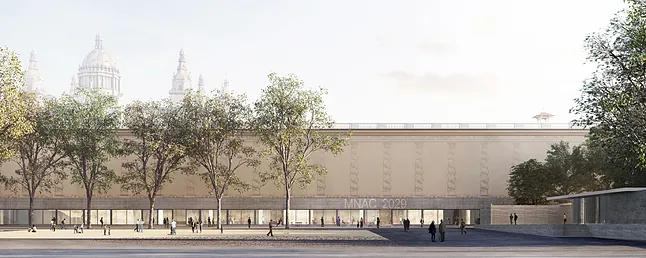
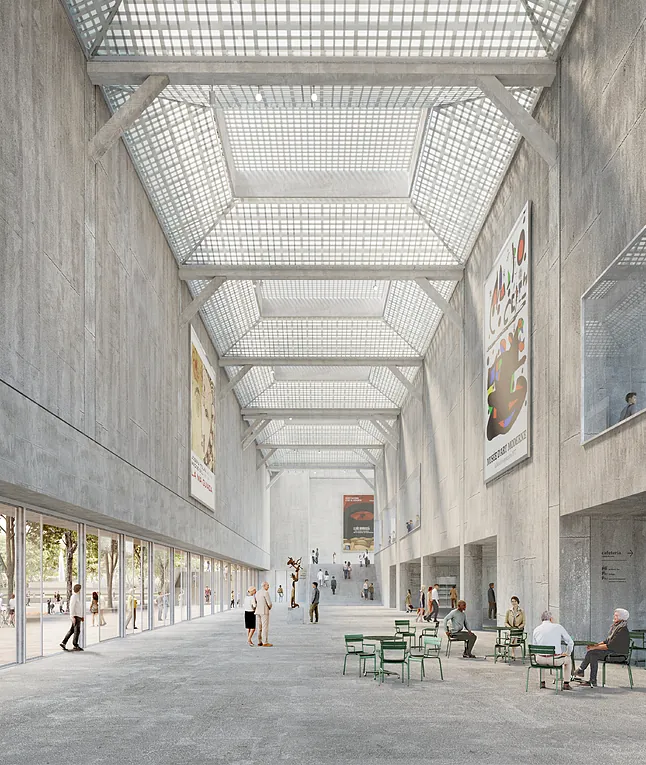
The winning architectural project, conceived by the HArquitectes and Christ & Gantenbein studios, proposes an idea as simple as it is powerful: to convert the Palau Nacional and the Palau Victoria Eugènia into a single connected museum. The covered passage that will unite both buildings is not only a functional solution; it is also a metaphor for an institution that wants to sew the past and present of Catalan art into a single story.
This approach responds to a clear museographic ambition. As the museum's director, Pepe Serra, has defended, the challenge is to show the artistic creation produced in Catalonia throughout its entire history up to the present day. It is not just about exhibiting heritage, but about building a continuous story that connects Romanesque art —one of the museum's great treasures— with contemporary artistic practices.
The expansion also responds to a clear need for space. With the incorporation of the Victoria Eugenia Pavilion, the museum will almost double its usable area and will exceed 70,000 square meters. This expansion will allow the deployment of new temporary exhibition rooms, a library with more than 150,000 volumes, a study center and new spaces for cultural and participatory activities. In other words, the MNAC will stop being just a museum and become a true cultural infrastructure.
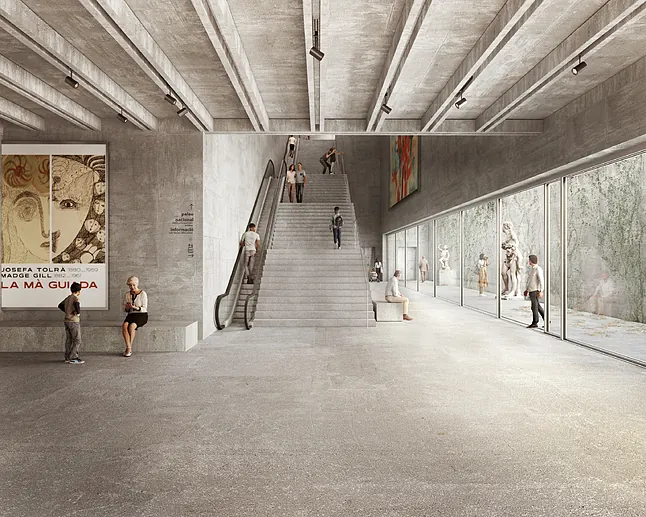
But the project goes beyond the walls of the museum. The intervention is part of a broader vision of the transformation of Montjuïc and its surroundings. The new entrance located in Plaça de Carles Buïgas and the direct connection to the metro will radically transform the way to reach the museum. Visitors will no longer have to face the long climb to the palace: the access will be integrated into the urban flow that crosses Plaça d'Espanya and the Columns of Puig i Cadafalch.
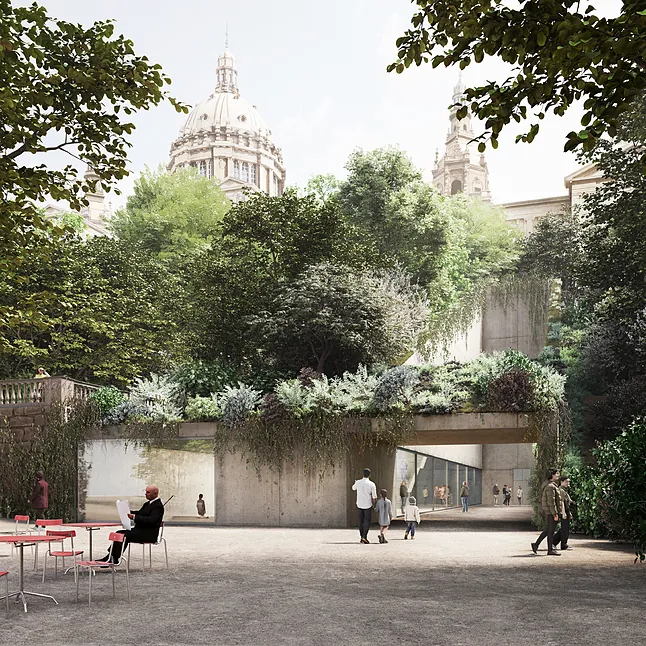
This change is no small one. For decades, the MNAC has lived in a certain paradox: it is one of the most important artistic institutions in the country, but at the same time it is located in a geographical point that often keeps it away from the daily life of the city. “Bringing the museum down to Barcelona”, as the project suggests, may be key to turning it into a more open and accessible space.
At heart, the debate about the new MNAC is also a debate about what cultural model Barcelona wants. In recent years, major European capitals have opted for museums capable of becoming contemporary agoras: places for meeting, research and public debate. If the project is developed with ambition and coherence, the MNAC can aspire to occupy this role.

You may be
interested
...