Exhibitions
Aureli Ruiz: the cultivation of self
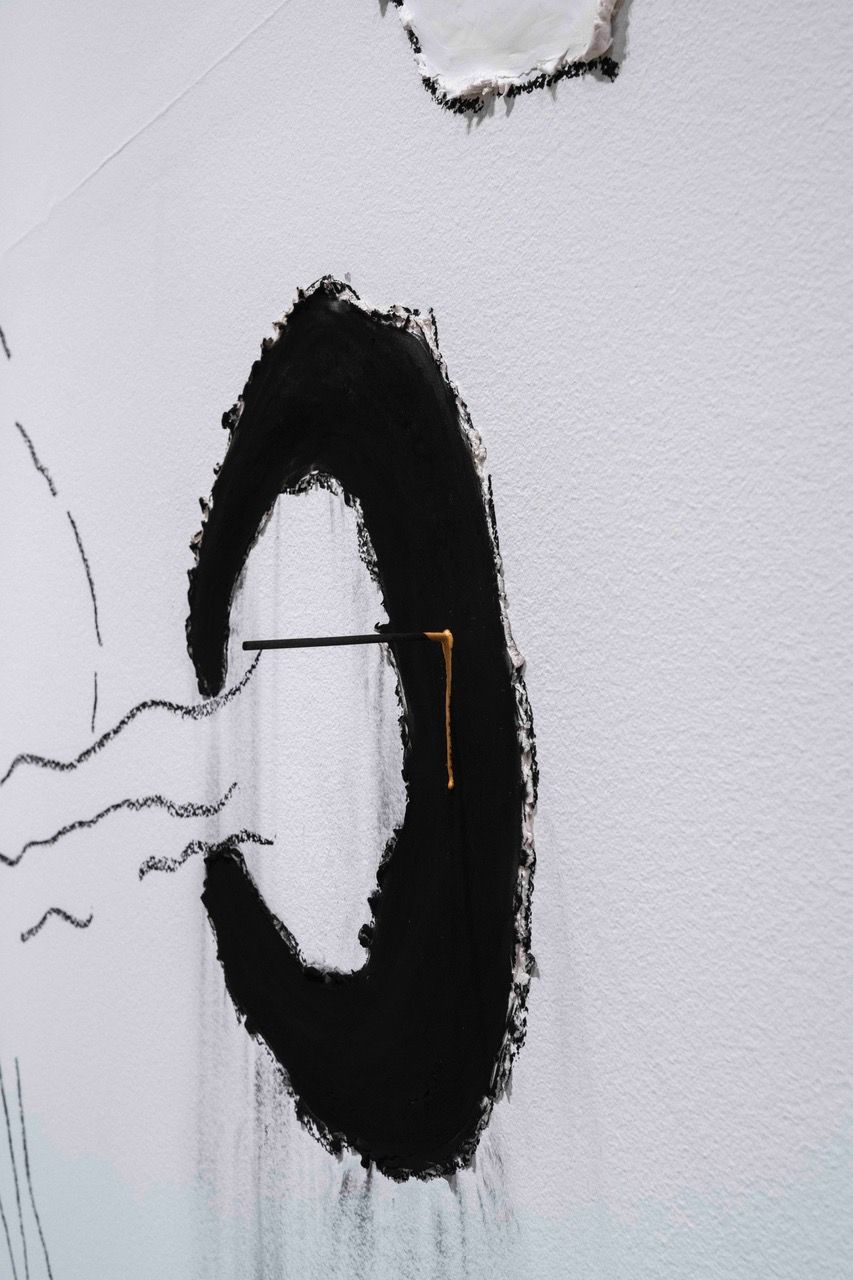
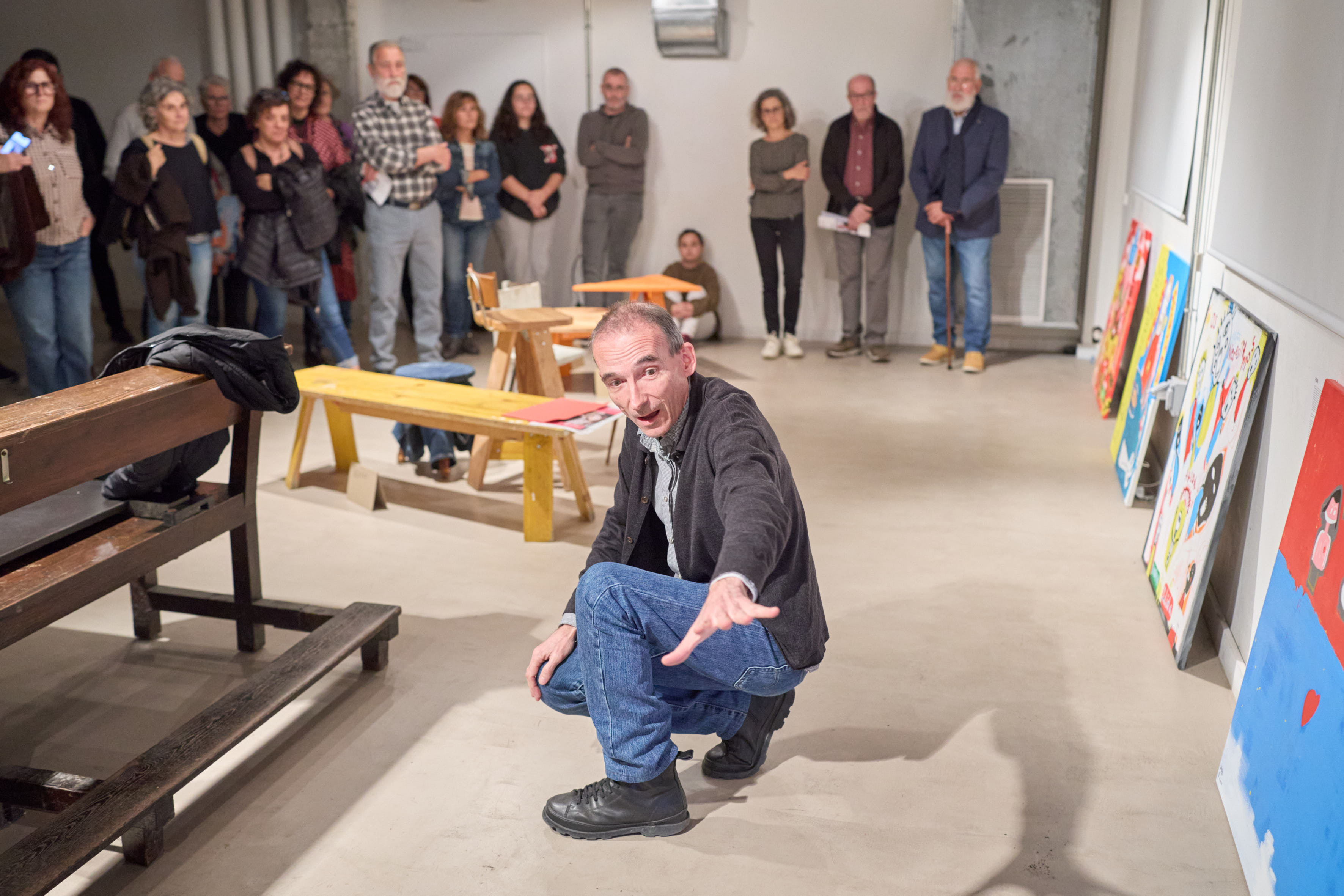
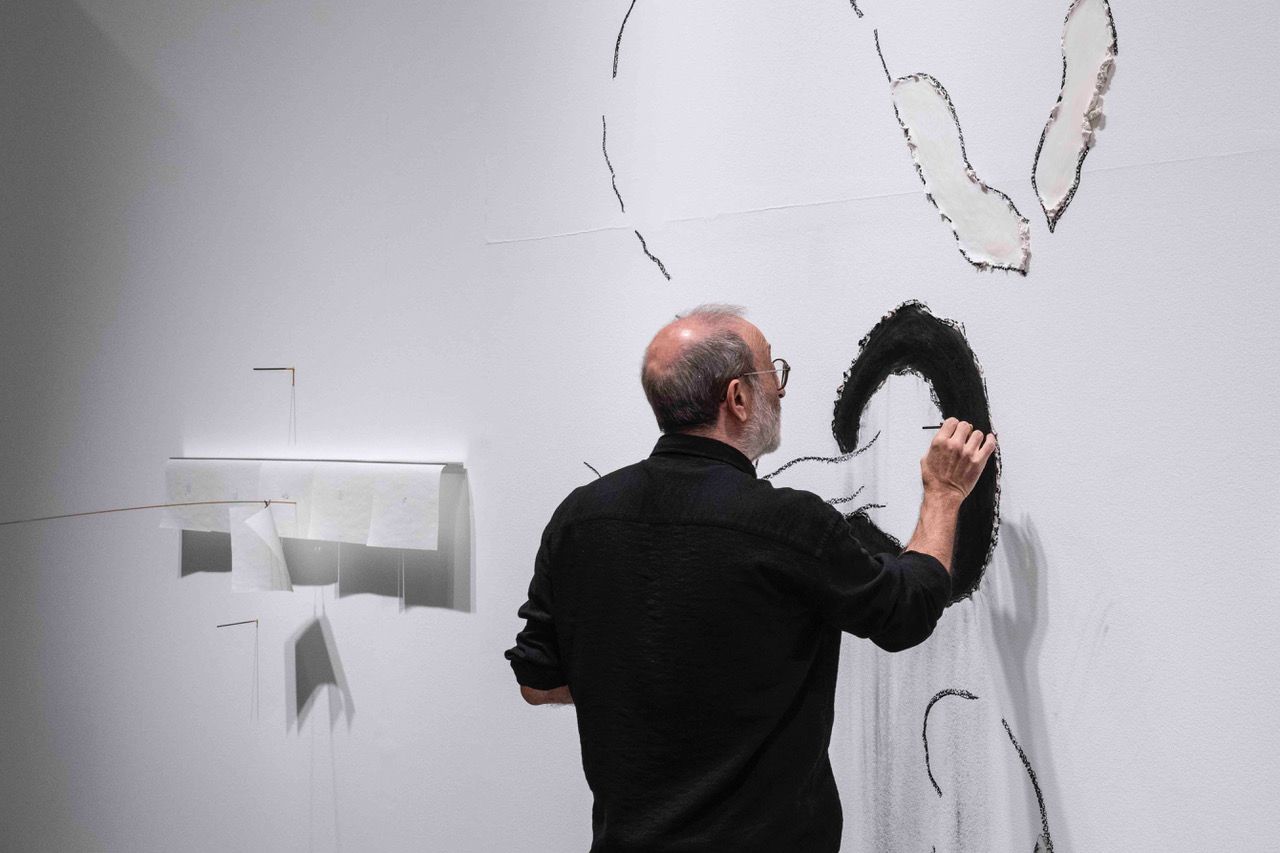
Aureli Ruiz has presented a performance at the Tecla Sala Art Center as the finale of the exhibition called The Cultivation of Self . The chronicle has already been published in Bonart magazine, both digitally and on paper.
Here I want to focus on the closing performance of the exhibition held in the “Observatory” space, curated magnificently by Teresa Blanch, who presented it as an Eco-somatic Performance of the place.
I attended with great interest because I sensed that his action would be consistent with my consideration of art as transformation, something I have written about on other occasions, and in a book with the same name. The initial agreement with Aureli is given by the fact that I am proposing an art that favors “Self-care” and to achieve this, the seeds must be placed in fertile soil, well-fertilized for “cultivation”.
The cultivation of the self is the basis of practical philosophy, the exercises and propositions of the great philosophers of antiquity studied in depth by Michel Foucault in the magnificent book “Hermeneutics of the Subject” or like Epicurus, Seneca, Epictetus, Lucretius, Democritus and all those who have proposed advice to us to know how to live and above all die. However, the urgency of the subject has reached contemporary art and the need has meant that in addition to Foucault, two other contemporary philosophers have become a reference for Aureli Ruiz, and they accompany his work and this performance, I am referring to Peter Sloterdijck and Marie Bardet.
In the case of the German philosopher Sloterdijck, words like: change your life, self-training, the effort of physical, artistic or intellectual exercises in order to overcome oneself and find one's own nature, everything is oriented towards a self-exercise that shapes the individual and society, favoring an art for the encounter of the origin and the good cultivation of oneself.
For this challenge, the “Sophia” of the body is fundamental, and this is where the Canadian philosopher and dancer Marie Bardet appears, cited by the artist and the curator, who proposes the connection between touch, perception and the body. This somatic haptic has many derivatives, one of them being that the body, the skin, stores and expresses some emotional experiences that are released through movement. This is a main theme that the poet and master of body movement Raimon Àvila dealt with in his 2011 book Moure i Commoure.
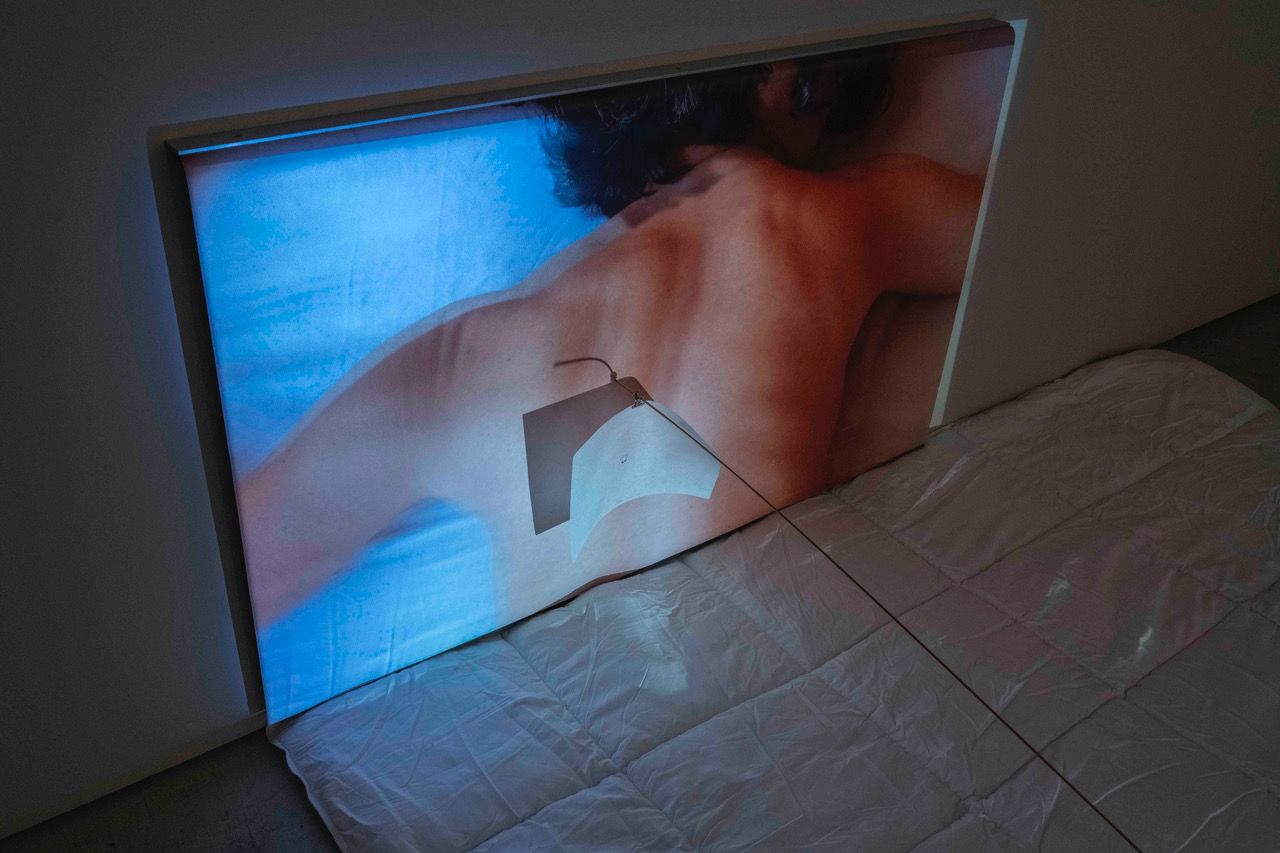
Aureli Ruiz has made touch and gaze the axis that dominates the entire exhibition and the performance in particular. Very especially the back as the repository of a particular obsession of the artist, images that he has been collecting for some time. This is a significant coincidence with the thought of Marie Bardet when she says that the experience of “dorsalizing” and losing the frontality of the gaze offers an alternative to the dominant imperative. It is a way of turning our backs on what we reject, by “dorsalizing” we emphasize feeling and learning through the back, which is the invisible part, the hidden face of oneself.
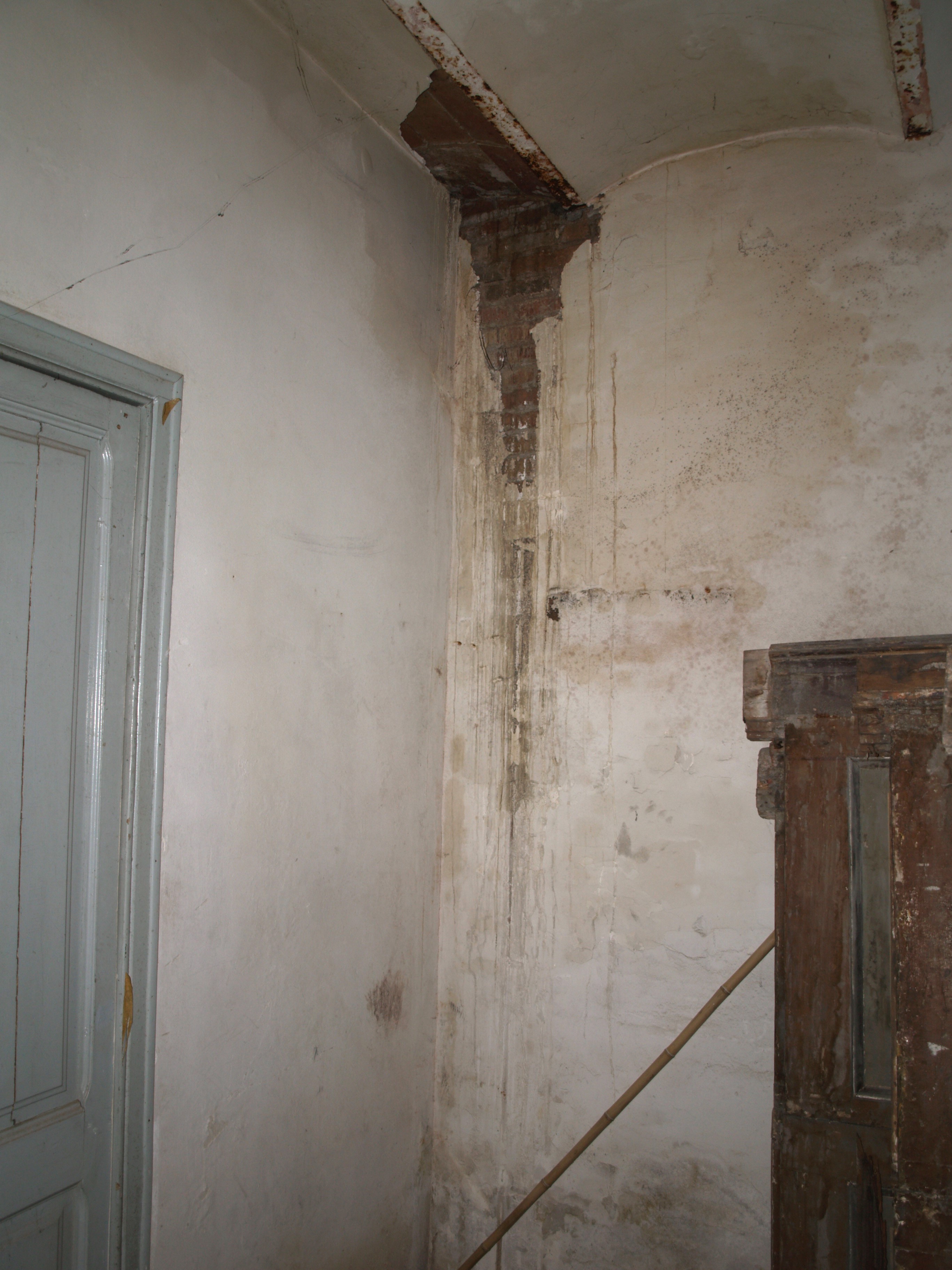
In the performance, the viewer's imagination saw the walls intervened with fine charcoal sticks glued with gold paint as a kind of spatial acupuncture, the walls now converted into the back of an imaginary body.
Aureli Ruiz's proposal is brave because it offers us useful solutions in an era dominated by the skeptical crisis, diversity, dispersion and hyperinformation of digital domains, an era that does not usually accept advice or manifestos. It is very brave on the part of the artist, since it could fall into the soft simplicity of therapeutic art, the fact of raising the need to find remedies to go from restlessness and unrest to rest, from anxiety to calm.
To achieve this, Aureli proposes exercises of pure meditation and concentration in the inner self. A transformative art that favors the encounter with the strength of the origin and good self-care. Intellectual reason, whose conceptualism he is a good connoisseur, maintains a subtle balance with form and becomes contemplation, not only aesthetic contemplation, but a look at things in the small detail and as they are. It forces the viewer to focus on its micro-drawings, to perceive the presence of the world, of the whole, of the self that favors full attention.
This Eco-somatic performance of place and self-cultivation is an artistic proposal with a clear desire to renew the meaning of art as we understand it until now, it allows us to take hold of who we are and augurs a new state of everything, of the body and consciousness, of the self and the we.

You may be
interested
...