Editorial
First steps at the Bogota Biennale: between memory and poetry
Arriving in a city like Bogotá with the excuse of the Biennial is like opening an immense, dense and vibrant book, where each page surprises you with an unexpected chapter. And speaking of books, I arrived on the plane immersed in “El Pla Mestre” by Javier Sierra, a volume that had reached my hands in April and that, due to those things in life, I had not been able to start until now. The recommendation and intersection of my friend Montse Aguer led me to open it, and the truth is that it is revealing itself as a literature full of connections, mysteries and that invisible thread that makes you think about the things that must happen.
This state of attentive, almost conspiratorial reading has been the best prelude to landing on a stage like the Biennial: a city and an event that ask you exactly that, to read between the lines, look for hidden meanings, to be surprised by the plots that are not shown to the naked eye.
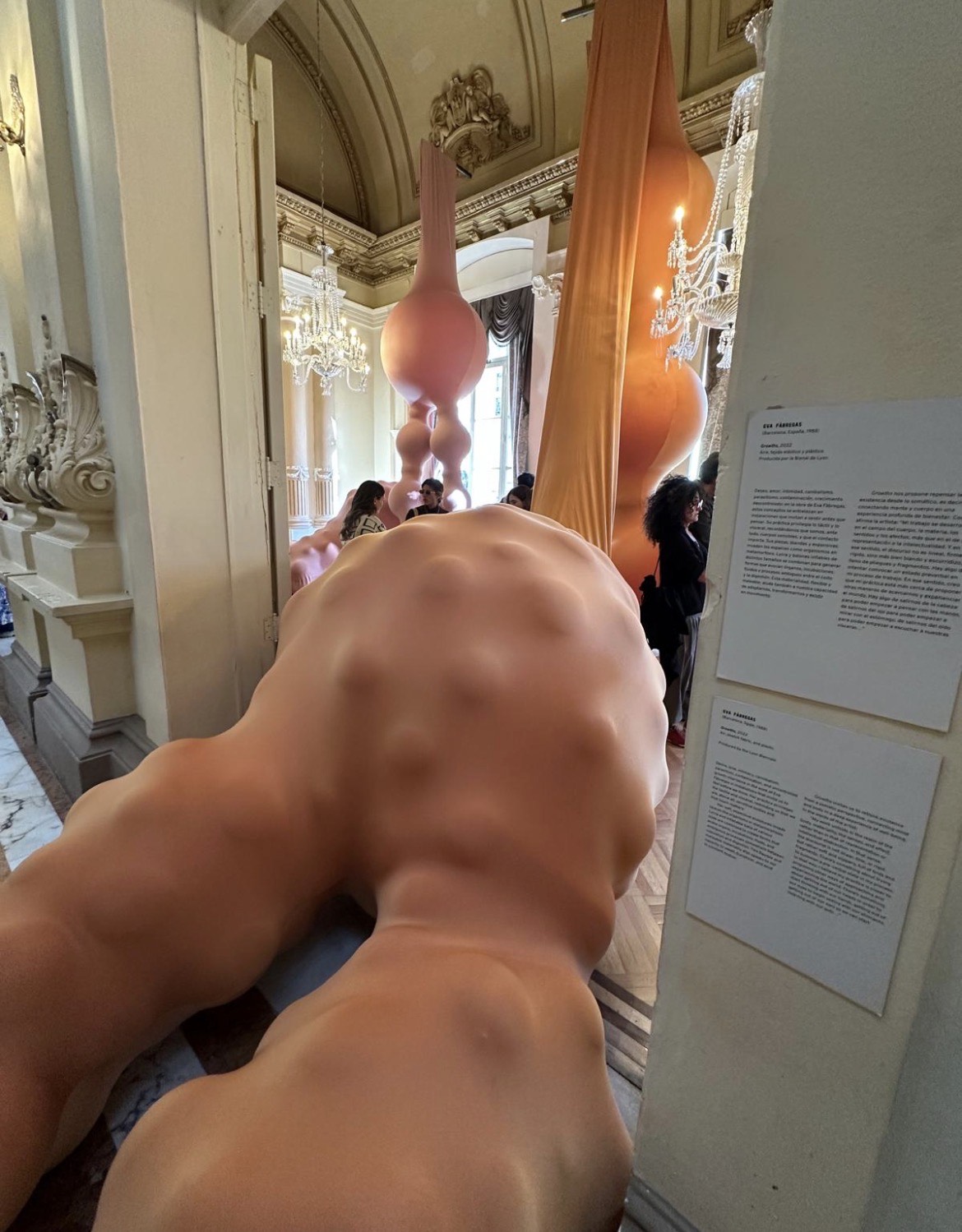
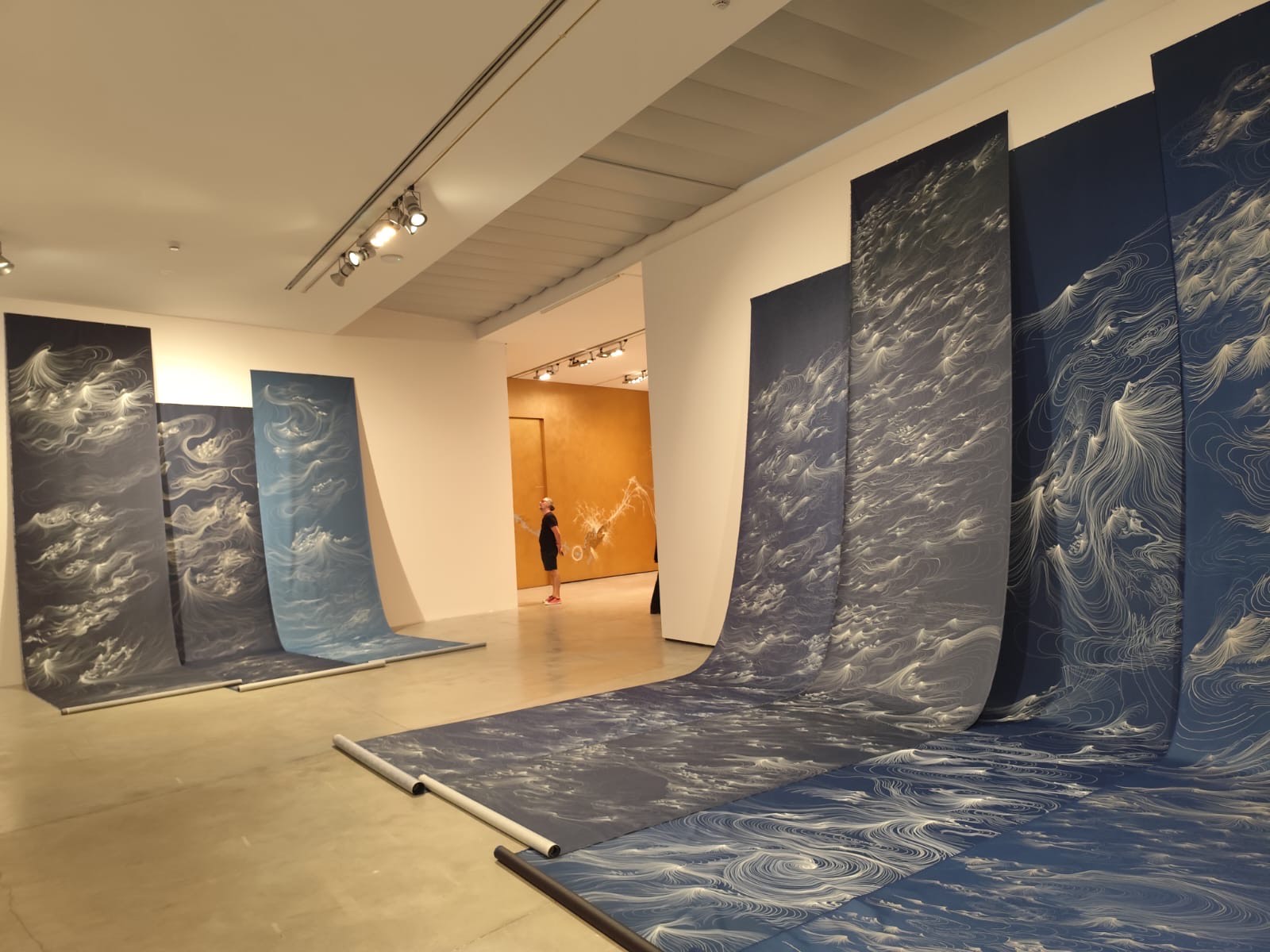
Work by Eva Fàbregas at the Bogotá Biennale.
The discovery of Fragments
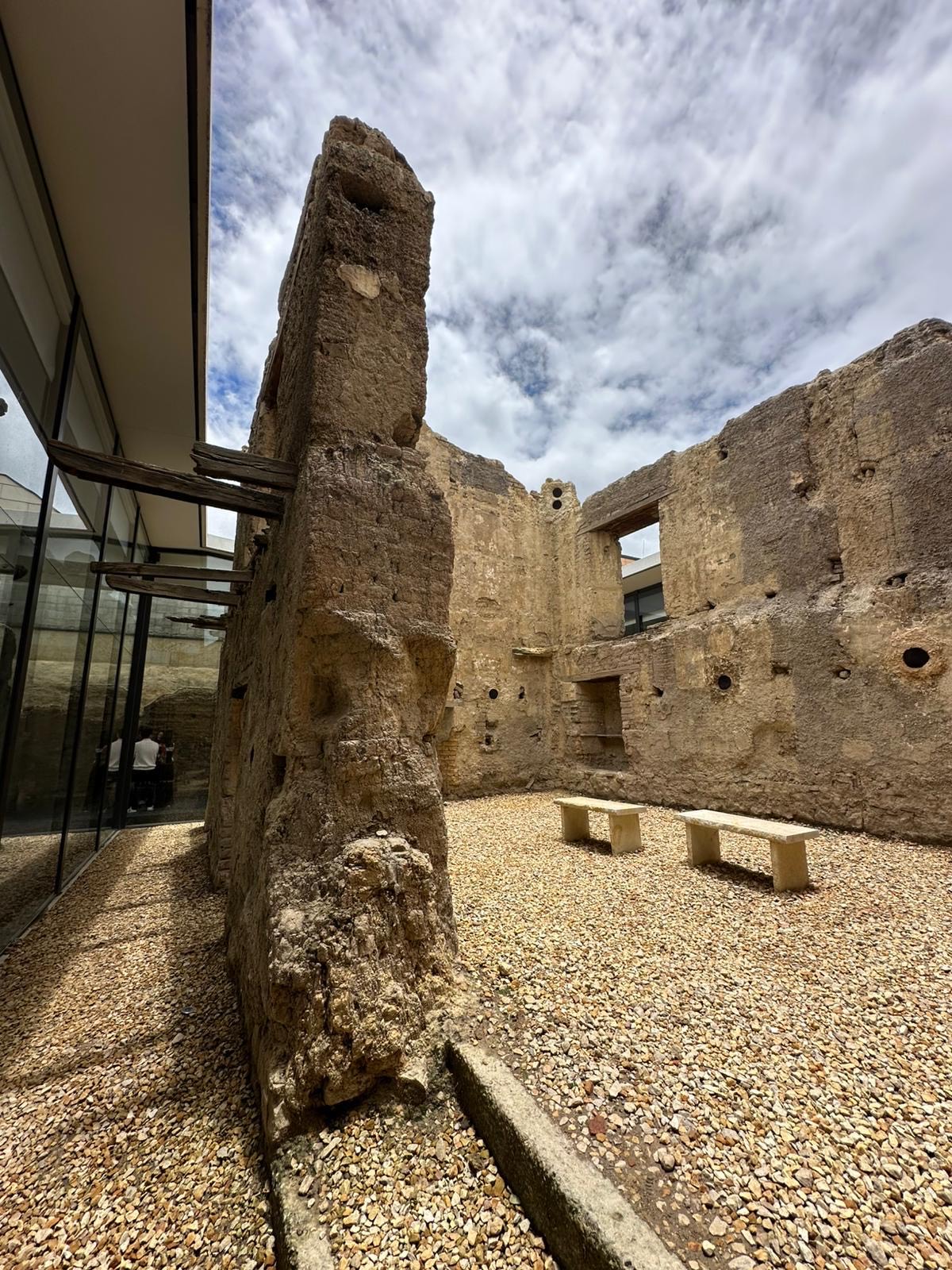
Before, however, talking strictly about the Biennial, my first great experience was the discovery of a unique space: Fragmentos, promoted by the artist Doris Salcedo. Located in a point in the heart of the city, but not in the most touristic geography, this place is much more than an exhibition hall. It is a counter-monument and a living work of art that turns the pain and memory of the Colombian armed conflict into a territory for dialogue and reconciliation.
What is impressive is its architectural dialogue: the ruins of a demolished heritage have been preserved and incorporated into the envelope of a new building, where glass dominates and confers an overwhelming poetics, full of a subtlety that makes you dazzle. In this framework, the entire floor is a walkable sculpture built from the melted weapons of the FARC-EP. Tons of war metal converted into cultural pavement. But the most striking thing is that women victims of sexual violence during the conflict participated in this process, who in occupational workshops transformed this metal into slabs. Doris Salcedo defines it as her most relevant work, almost definitive. And she is not exaggerating: walking on it is like stepping on Colombia's recent history.
Talking to Doris Salcedo is discovering an artist who does not play with forms, but works with deep convictions. At her side, the presence of her friend and accomplice Clemencia Echeverri, an artist and university professor of great prestige, reinforced the feeling that she was facing an exceptional moment.
Openings at Fragmentos: Michael Armitage's Raft and Hajra Waheed's HUM II
The opening day at “Fragmentos” was, in itself, a declaration of intent. On the one hand, the installation “Rafter”, by Michael Armitage, an exhibition that strikingly addresses the conflict of deaths that take place when thousands of people try to cross seas, borders in a boat, looking for a better future. Armitage converts this contemporary drama into a plastic language of devastating intensity, placing at the center the fragility and value of human life in the face of political indifference. He does this through such a historical —almost prehistoric— medium as painting, worked with a vibrant stroke and with acid colors, as acid as the drive of everything it says and denounces. It is impossible not to think of the struggle of Open Arms and of its founder, Òscar Camps —a friend and exceptional person—, who embodies in the Mediterranean the same ethical urgency that Armitage's work deploys from Bogotá.
On the other hand, the work HUM II, by the Canadian Hajra Waheed, a large-scale multi-channel sound installation that transformed the colonial ruins and gardens of the counter-monument into a living and pulsating sound body. This piece, composed of female voices performing seven songs linked to social and political movements in America, Asia and Africa, claims the central role of women in processes of resistance and social transformation. The social commitment of women is particularly evident in it: they are the ones who, time and again, sustain collective struggles, even beyond the so-called glass cliffs, a concept that denounces how they are often only called upon when it is necessary to resolve extreme situations, requiring them to overcome additional obstacles to access decision-making and leadership spaces. Waheed thus proposes a reflective and poetic experience that crosses borders and projects a shared future beyond imposed divisions.
It must be said that this proposal was possible thanks to Fernando Cuevas, the new coordinator of the Colombian edition, who managed to make this another OFF/ON space of the Biennial, in order to access such a spectacular place. We went there accompanied by two interesting artists: Sandra Rengifo, who will exhibit next year in the space under the curatorship of Cuevas himself, and Valentina Ruiz, a video artist and university professor of great power and projection.
In fact, the day culminated in Valentina Ruiz's own studio, located in an artists' building in downtown Bogotá, a project promoted by the founder of ArtNexus, which rents spaces to local creators. Ruiz's work is particularly compelling because it combines the recycling of technological materials —full of memory and remnants of an accelerated modernity— to reflect on the human condition, in a proposal that leaves no one indifferent. She also reuses unused or obsolete materials, which she turns into raw material to think about obsolescence itself as a metaphor for our time.
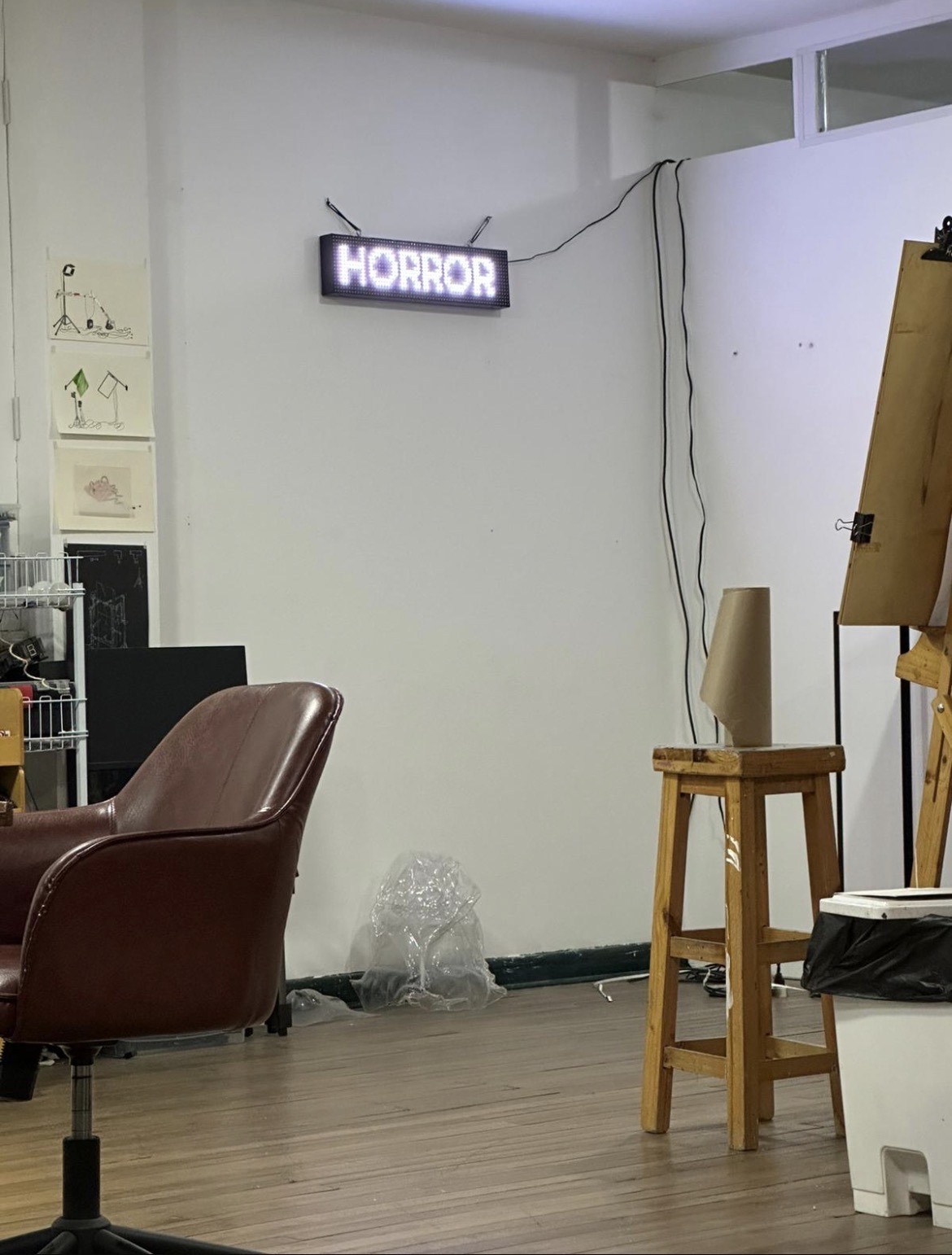
Valentina Ruiz's studio.
The Biennial: first impressions
The main building of the Biennial is the Palacio de San Francisco, a majestic neoclassical building that was partially restored fifteen years ago and declared a Site of Cultural Interest. However, as often happens in Bogotá, reality insists on breaking the solemnity: the leaks are omnipresent and the birds swarm freely through its interior spaces, which, according to my Colombian friends, is a very typical and almost endearing scene. Between the weight of history and this unexpected vitality, the palace becomes a perfect symbol of what the Biennial is: a permanent dialogue between order and disorder, between heritage and everyday life.
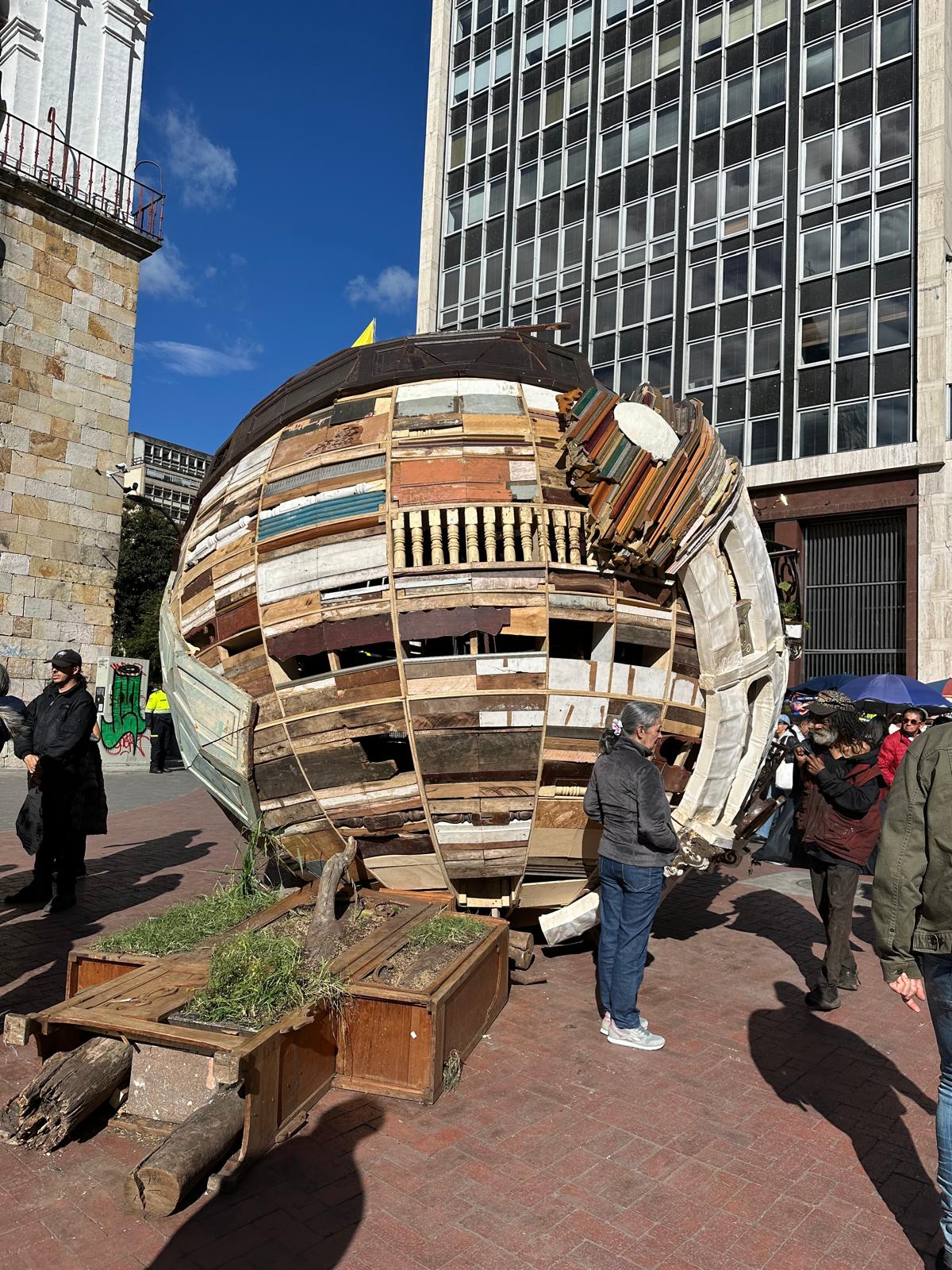
At the entrance, the first thing the visitor encountered was a sphere of the world of the artist Alejandro Tobón, a monumental piece that functioned as a prelude and an invitation to reflection on this global-glocal world we live in. An impactful work that also took on a personal meaning: next week I will meet with Tobón to continue the dialogue about these connections between art, territory and universalism.
The Biennial itself began with works that already set the tone. One of the first pieces I was able to see was by the Catalan artist Eva Fàbregas, capable of expanding sculpture towards organic forms that transform space into a living organism. The dialogue with architecture, always a challenge, was resolved here with freshness and power.
The leitmotif of this edition is happiness, a concept that at first glance may seem weightless, even light, but which is here approached from its contradictions. Among the different curatorial axes, “Toxic Optimism” stands out, which questions imposed forms of well-being and the social pressure to be happy at any cost. One of the most subtle and successful installations in this section literally proposed stepping on self-help books, forcing the visitor to feel under their feet the fragility of these prefabricated recipes for life. A metaphor that worked as an ironic stab, reminding us that there are no easy paths to existence.
But the Biennial does not stop at a single space: it spreads throughout the city, colonizing corners, occupying historic buildings and activating places loaded with meaning. And this is what makes it different: it is not just a collective exhibition, but an urban experience, a journey that confronts you with questions rather than answers.
The museums of the Bank of the Republic
Among the must-sees of this first day, I couldn't miss a stop at the Banco de la República museum complex, one of the most powerful cultural epicenters in Bogotá. There I came across the central exhibition by Juan Fernando Herrán, entitled Materialities and Constellations. Herrán, a professor at the University of Los Andes, works with wood and lead as basic materials, but also with photography, drawings and his notebooks, which have a specific and fundamental weight in his practice. The result is a poetic and committed discourse that articulates memory, data and visual constellations, converting the apparently inert into symbolic and deeply suggestive cartographies. A first-rate creator, capable of making the material a delicate and poignant language at the same time.
Then, the tour of the contemporary art collection was a revelation. Among the pieces, I was able to discover the work of Alejandro Obregón, an artist born in Barcelona and exiled, who became a major reference in Colombian art. It is hard to understand that a major exhibition has not yet been dedicated to him in Catalonia, where his career and influence would deserve a first-rate review.
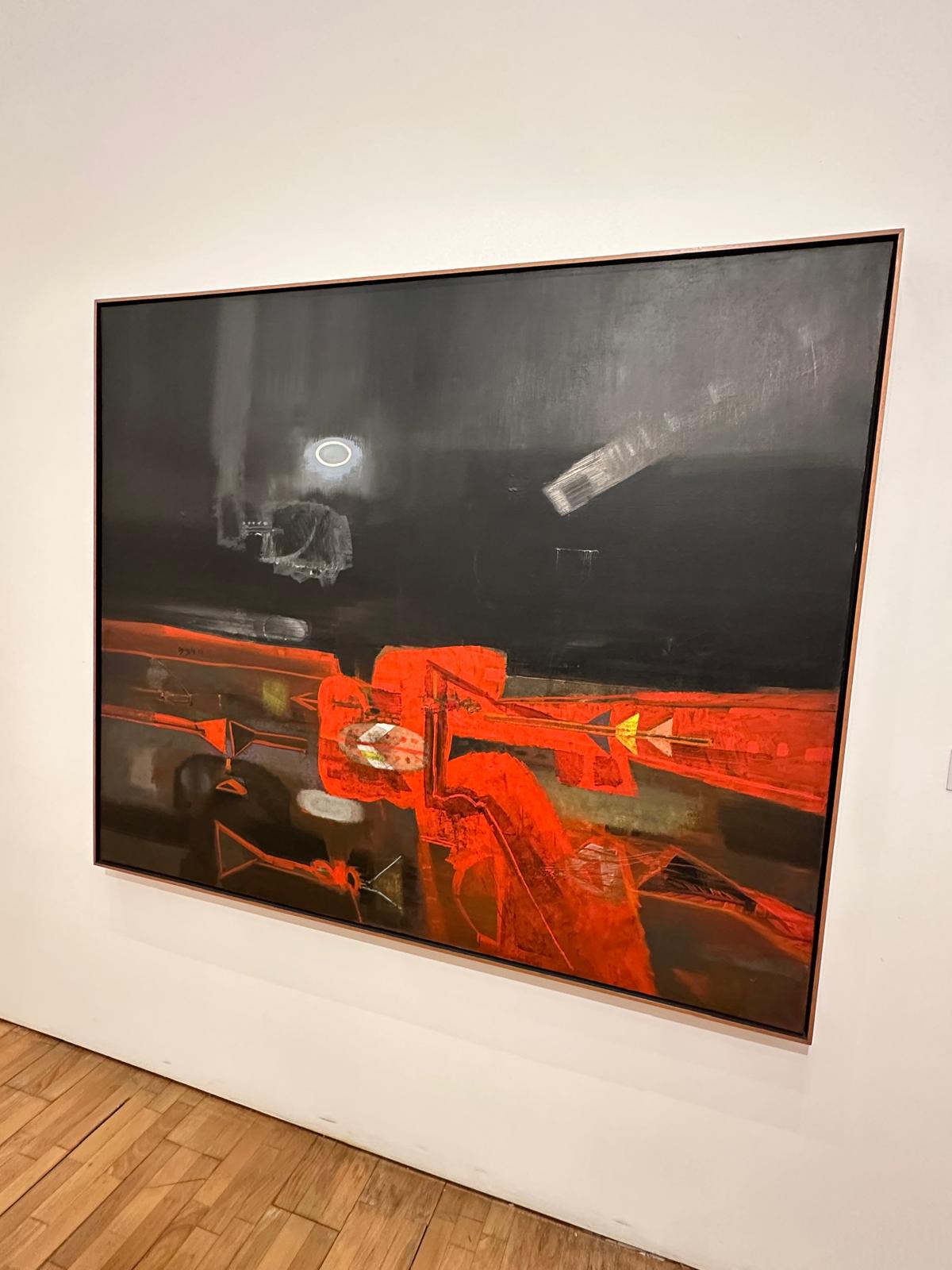
Alejandro Obregón Rosés, Laguna de Saturno, 1961.
The collection also allows us to meet first-rate creators, such as Alicia Tafur, a sculptor from Cali who is subtle and extraordinarily refined; or with undisputed names such as Beatriz González, who already starred on the cover of Bonart in the Colombian edition. And, of course, with Fernando Botero, present with works from his early period, surprising for their strength and imagination. We already find that very own universe, full of impossible still lifes and surrealistic figures, which gives his work an unmistakable identity.
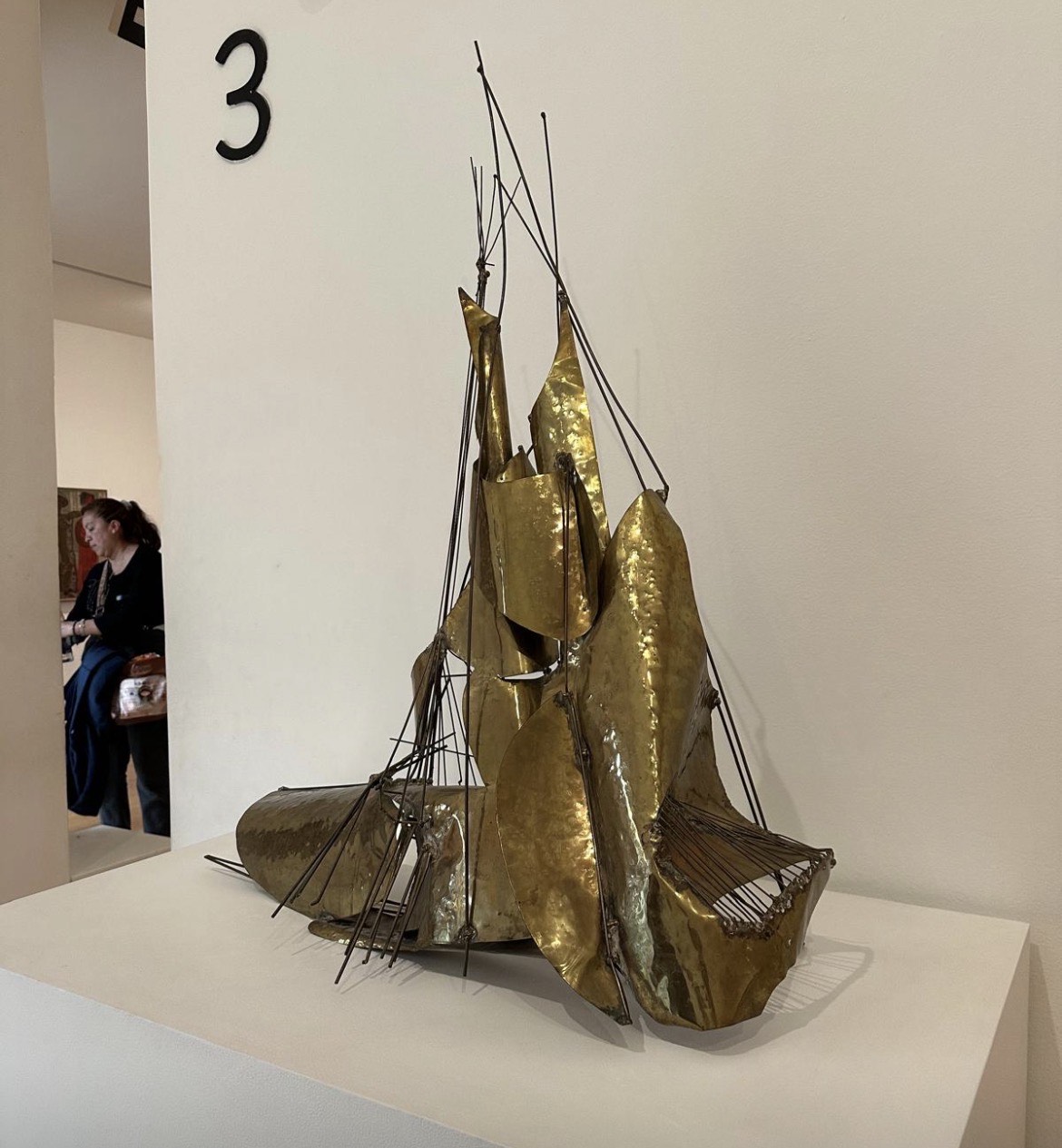
Alicia Tafur, Nautilus, 1966.
And yet, among these jewels, we came across an exceptional piece: Retrospective Bust of a Woman (1933), by Salvador Dalí, a sculpture of impressive force. It represents a woman with a loaf of bread on her head and, on top of this loaf, the figures of Millet's Angelus, that piece that Dalí had always considered as the symbol of his "stolen heart". A work that, due to its strength and uniqueness, stands out in the middle of the collection as a true revelation.
There were also imposing hands by Juli González, one of the most important sculptors of the 20th century. These hands, with their dramatic force, seemed to have come straight out of Picasso’s Guernica, adding a layer of tension and historical memory to the collection.
A quick lesson
This first day at the Bogotá Biennial has been an accelerated lesson in history, art and memory. I have been reminded again in a striking way that art is not a “decoration”, but a tool for thinking, for remembering and for imagining possible futures. “Fragmentos” is perhaps one of the best examples: the weapons that were once fired are now cultural pavement. Walking on them is understanding that reconciliation can also be physical, that memory can be inscribed in architecture and that beauty can emerge from scars.
The Biennial still has a lot to unfold, and we will talk about it later. But starting with this immersion between memory and creation has been a privilege. An intense, demanding and at the same time beautiful beginning. Exactly what a Biennial should be: an exercise in strangeness and discovery that forces us to look at the world with new eyes.


You may be
interested
...