Exhibitions
Joan Brossa arrives in Manchester with the exhibition The Mental Sensation of Complete Happiness
As part of the twinning of the cities of Manchester and Barcelona for La Mercè 2025, the University of Manchester is hosting the exhibition The mental feeling of complete happiness until September 30.
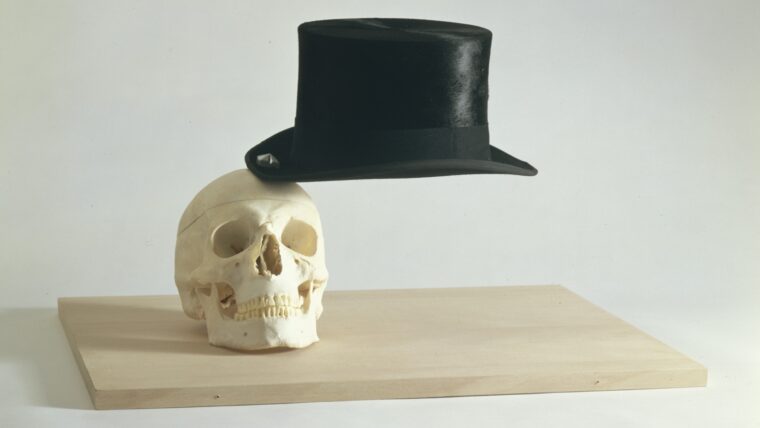
Throughout September, the University of Manchester is hosting the exhibition Joan Brossa. The mental feeling of complete happiness , a tribute to one of the most innovative and influential poets in 20th-century Catalan literature. This exhibition is part of a joint project between the UNESCO Cities of Literature of Manchester and Barcelona, as part of the celebrations of La Mercè 2025. The exhibition has been organised in collaboration with the Fundació Joan Brossa – Centre de les Arts Lliures and is curated by Anna Llopis.
The exhibition brings together a selection of around fifty pieces that illustrate the career of Joan Brossa as a poet, playwright and visual creator, highlighting his key role in the development of experimental poetry and the performing arts. The works show how Brossa transformed visual language into a poetic tool to subvert and resist the repression of the Franco regime. This is the first time that the exhibition has travelled outside Catalonia, in a tour that responds to the Fundació Joan Brossa's desire to project the figure and work of the poet internationally.
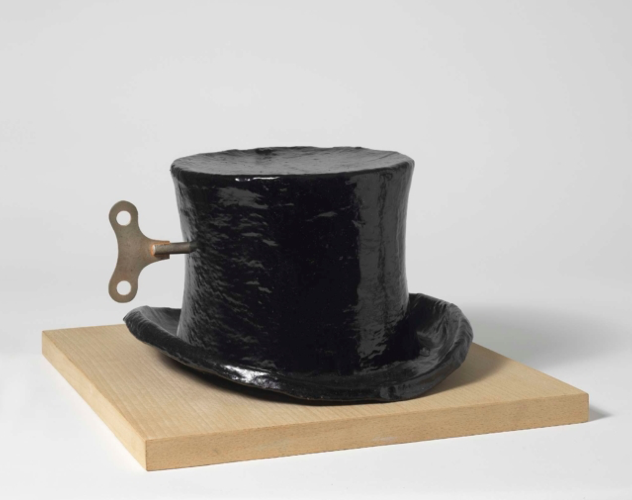
Until September 30, the exhibition will be on view, born from the fascination that the figure of Joan Brossa continues to arouse today, and aims to give him a voice through his artistic and poetic legacy. Based on twelve major areas that define the multiple dimensions of his literary and visual production, the exhibition invites visitors to delve into Brossa's universe, where poetry transcends paper and materializes in diverse forms such as poetic prose, stage poetry, visual poetry, the object poem or more conventional literary poetry.
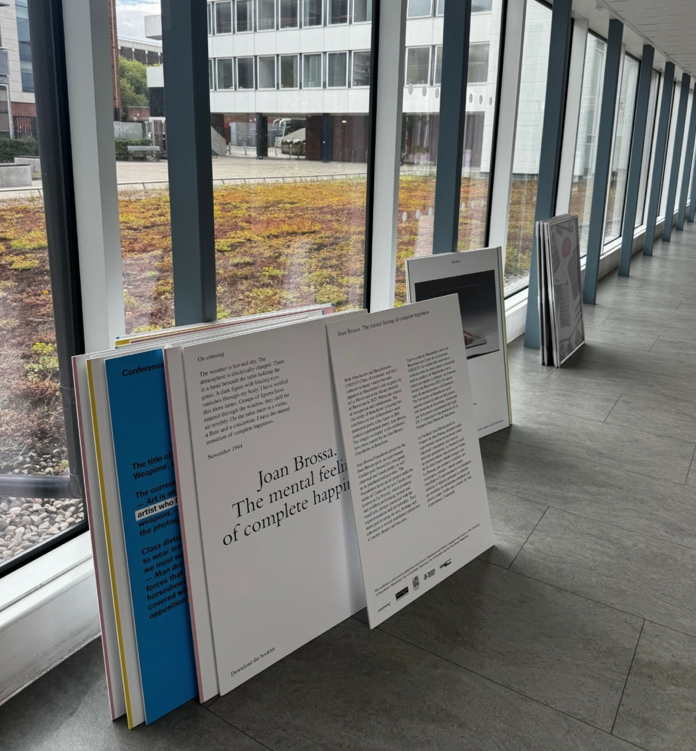
This journey through some fifty pieces—including object poems, visual compositions, publications and documentary materials—offers a profound insight into how Brossa conceived of art as a tool of resistance and liberation. In a historical context marked by the political and cultural repression of Francoism, Brossa's work presents itself as a radical response: an exploration of language and form as instruments to transcend the limits of thought and escape the suffocating reality that surrounded him.
The exhibition not only vindicates his major contribution to experimental poetry and the artistic avant-garde, but also challenges the contemporary public with the validity of his message. In short, it is a tribute to a creator who made art a form of life and freedom, opening new paths for the word and image in Catalan culture and beyond.
You may be
interested
...