Exhibitions
Santi Moix kidnaps Europe with the free force of painting
The Marc Domènech Gallery presents the artist's first exhibition in the Barcelona space, a journey of twenty-one paintings and six works on paper that revisit myths, European artistic memory, and present-day tensions.
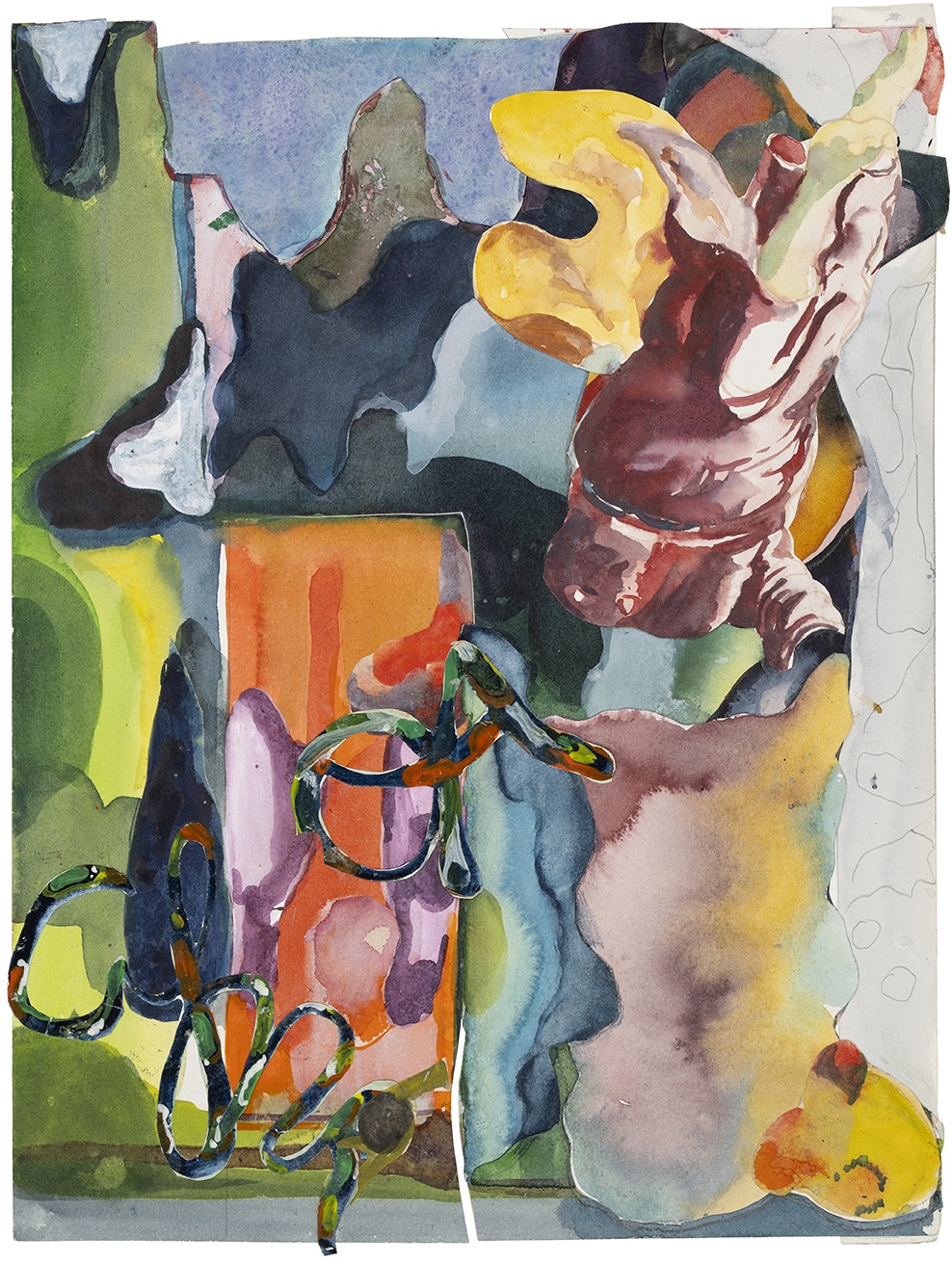
Santi Moix's painting is a territory in expansion, a space where organic forms, colors, and references to the history of art coexist in a constant transformation. In The Abduction of Europa, the artist delves into the European cultural imagination to establish a dialogue between the memory of myths, pictorial tradition, and the uncertainties of the present. The exhibition, presented for the first time at the Marc Domènech Gallery, gathers twenty-one paintings and six works on paper, mostly created during the last two years, in a journey that reivindicates painting as a free, intuitive language capable of generating new readings of the contemporary world.
Moix's language unfolds through an exuberance of organic forms, fabrics, flowers, signs, and arabesques interwoven in compositions of great chromatic intensity. The images seem to grow, branch out, and establish unexpected relationships on the pictorial surface. There is no single narrative or story that leads the viewer to a closed interpretation. On the contrary, each work presents itself as an open visual organism, a space of appearances and disappearances where forms transform and meanings multiply. The painting thus becomes a sensory experience, but also an intellectual one, demanding a gaze willing to get lost in its paths.
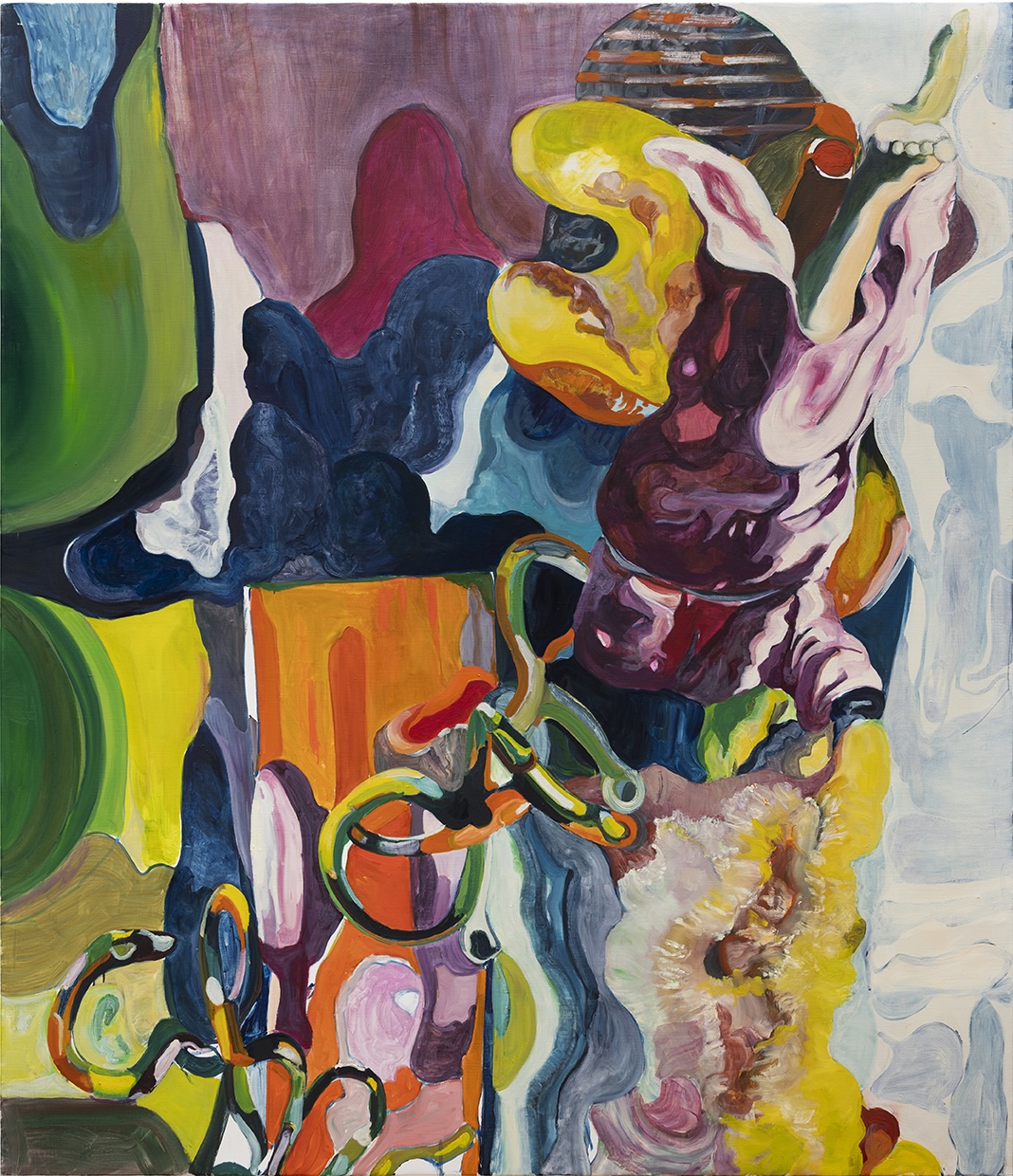
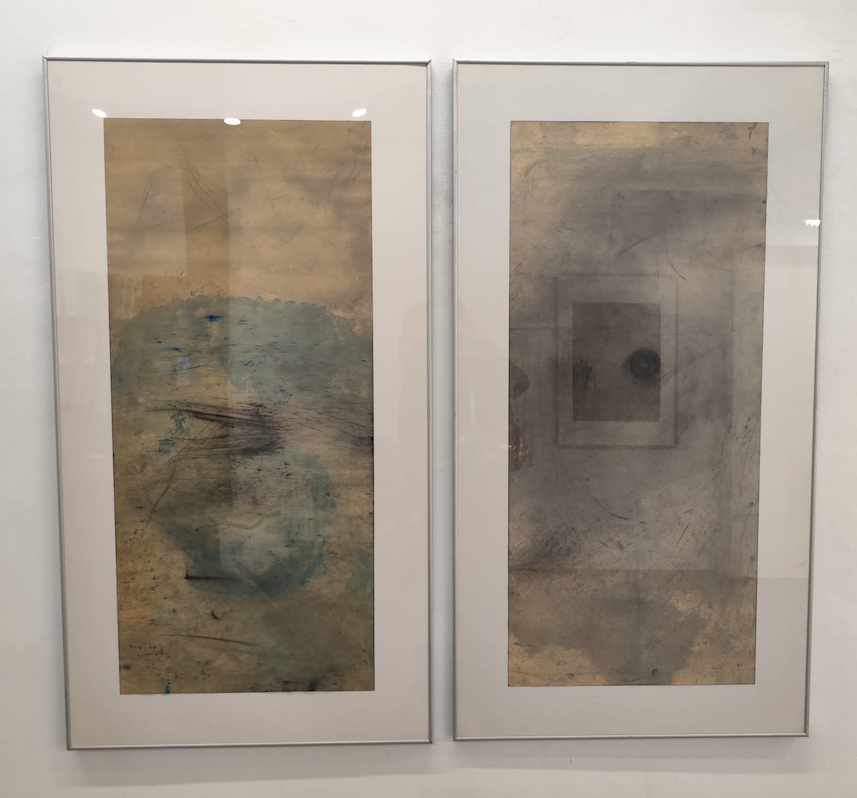
Santi Moix, Miracle of Saint Mark II, 2025-2026.
The myth of the abduction of Europa acts as a guiding thread and as a metaphor for a civilization that has built over centuries an artistic and intellectual tradition of extraordinary sophistication, but which today is crossed by tensions, transformations, seductions, and deceptions. Moix approaches this heritage with admiration, without giving up a critical gaze. Europa appears as a complex cultural space, far from any innocent idealization, where the greatness of the legacy coexists with the uncertainties of the present. The abduction ceases to be only a mythological episode to acquire a symbolic dimension: that of an identity constantly transforming, one that is an object of desire and, at the same time, compelled to question itself.
This conversation with the memory of painting finds particularly significant expression in Miracle of Saint Mark, a work inspired by The Miracle of the Slave, by Tintoretto. Moix recovers the compositional energy and dynamism of Venetian painting to transfer them to his own vocabulary, populated by organic forms and visual rhythms. The historical reference does not function as an ornamental quotation nor as an exercise in nostalgia, but as a living matter allowing contemporary issues to be addressed: the mixture of cultures, uncertainty, and the need for freedom. The past, in this sense, is not a closed-off territory but a source of images that can still activate new readings.
This dialogue with the history of art constitutes one of the essential axes of Santi Moix’s practice. Tintoretto, Fortuny, Delacroix, Miró, Gauguin, or Rothko are part of an assimilated and transformed imaginary without chronological hierarchies or strict dependencies. The artist establishes connections between eras, sensibilities, and apparently distant languages, as if painting were a great shared memory in which images never completely disappear. References emerge, shift, and find new forms of life within a visual archaeology that avoids imitation and bets on reinvention.


You may be
interested
...