Exhibitions
The poetics of the white order by Josep Navarro Vives
Alex Mitrani curates an exhibition in Paris that vindicates the Catalan artist's geometric abstraction and his exploration of structure, rhythm and repetition as forms of confidence in modernity.
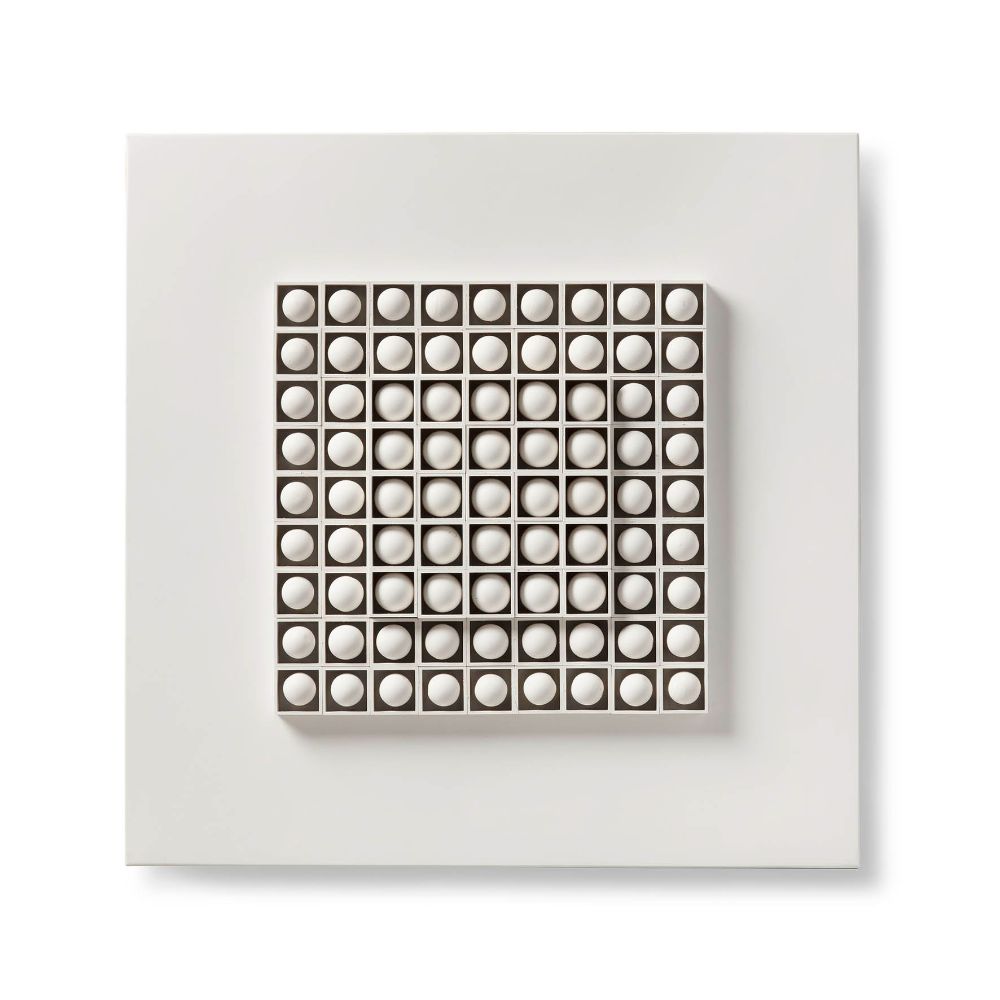
The painting of Josep Navarro Vives finds in geometry a language of precision and in white a territory of research that transcends the chromatic dimension. Repetition, rhythm and structure become the axes of a work that, from geometric abstraction, explored the possibilities of modernity with a singular confidence. This research focuses on Josep Navarro Vives. Blancs , an exhibition curated by Alex Mitrani that the Centre d'Études Catalanes de la Sorbonne Université presents in Paris from November 5, 2026 to January 23, 2027.
Navarro Vives was one of the most consistent representatives of geometric abstraction in Catalonia, especially during the second half of the sixties and the following decade, in a plastic territory close to concrete art and Op Art. His work shares a desire for formal research that, far from being limited to compositional exercise, finds in structure and repetition a field of expressive possibilities. White, recurring throughout his production, becomes one of the elements that best allows us to understand this research.
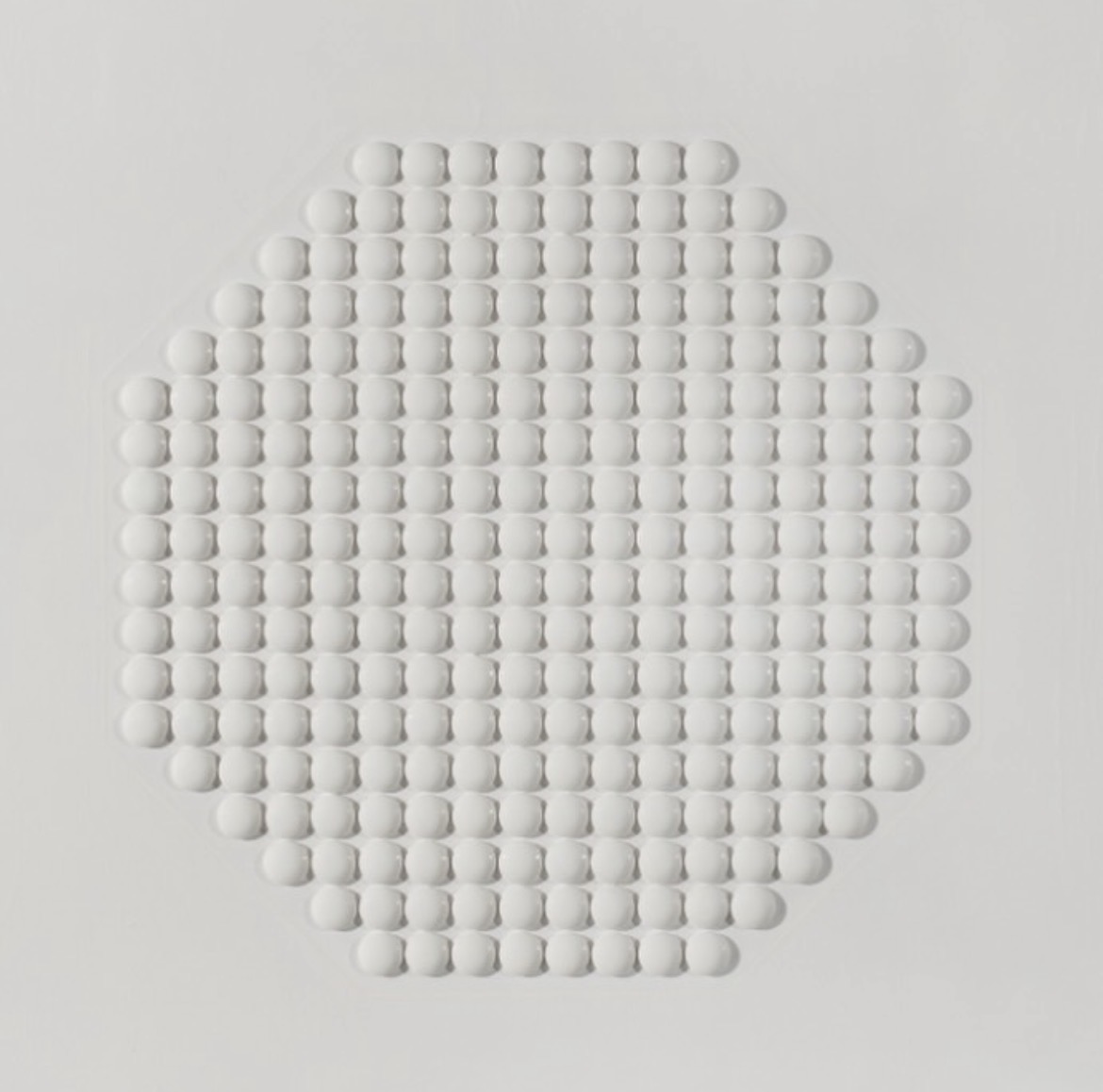
His painting is articulated from a need for systematic concentration, but also from a predisposition to evolution and change. During the seventies, the artist explored the idea of structure and repetition through a singular abstraction, for which he developed his own pictorial tools. This desire for research places his work in a space of tension between order and transformation, between rigorous construction and the possibility that each variation introduces into the system.
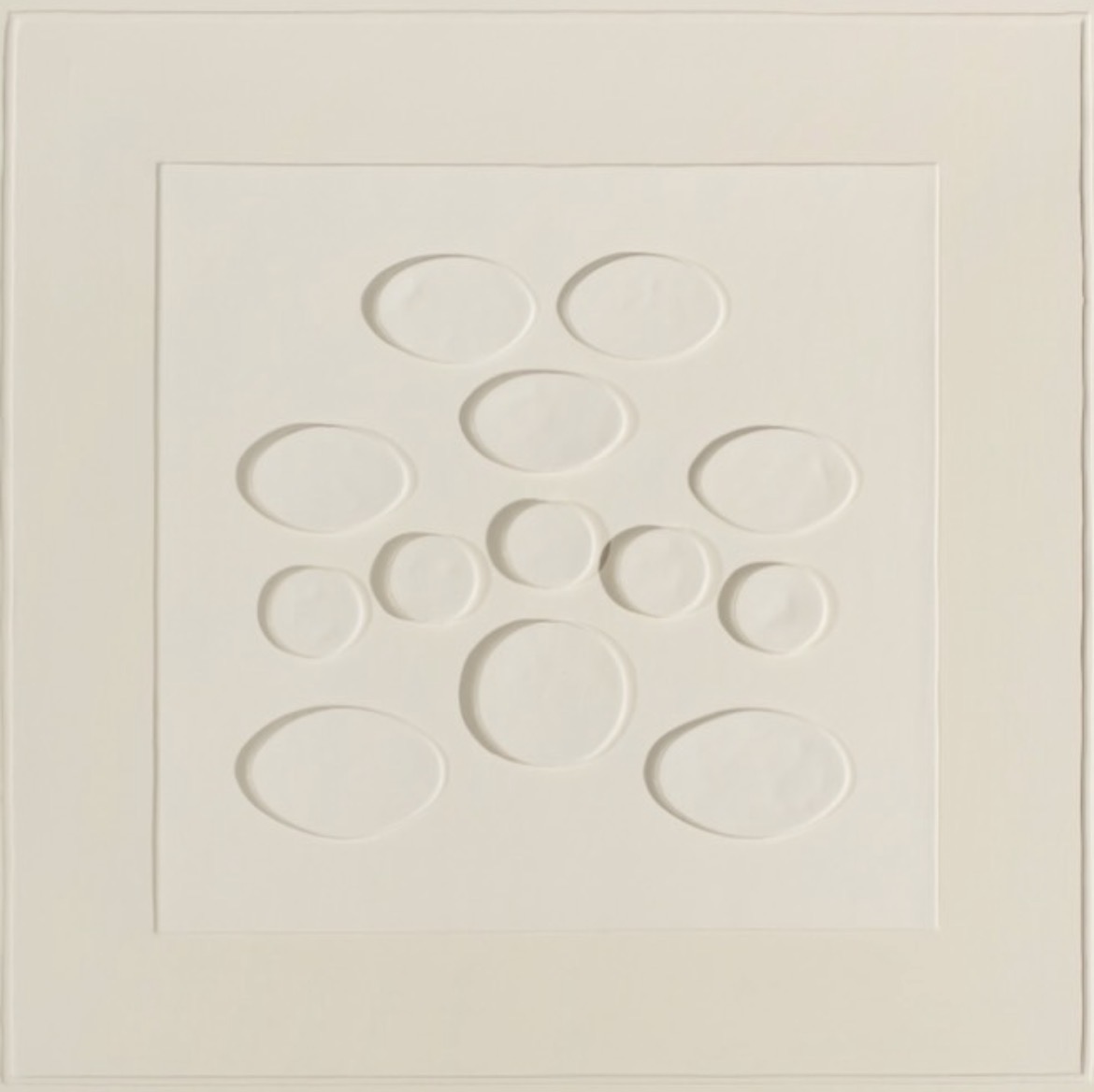
In this context, whites acquire a significance that goes beyond their chromatic condition. They can be understood as a way of focusing the gaze on the structure, of bringing out a visual architecture of elegant rhythm and of promoting a perceptual experience in which the painting unfolds through its own internal relationships. White does not cancel the form, but rather highlights it; it is not a void, but an active space in which geometry manifests itself with contained precision.
The exhibition also allows us to recover a certain confidence in modernity, linked to rationality, construction and the capacity of art to generate new languages. An optimistic confidence that, seen from the present, may seem lost today or, at least, subjected to a more ambivalent gaze. In this sense, Navarro Vives' painting retains a dimension that transcends its strict formal research: that of a conception of art as a space of order, knowledge and possibility.
Organized by the Centre d'Études Catalanes of the Faculty of Letters of the Sorbonne Université, with the collaboration of the Josep Navarro Vives Archive and the Institut Ramon Llull, Josep Navarro Vives. Blancs proposes an approach to a fundamental trajectory of Catalan geometric abstraction. Alex Mitrani's gaze focuses on a painting that, through containment and repetition, claims the capacity of white to construct spaces, order the time of the gaze and make visible a certain idea of modernity.
You may be
interested
...