Exhibitions
The Poetics of Resistance in Carmen Calvo's Turntables
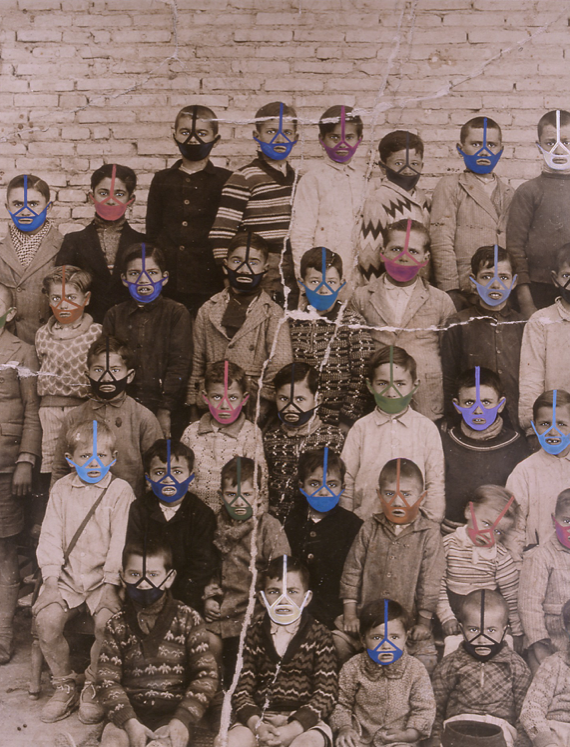
The work of Carmen Calvo (Valencia, 1950) delves into the most uncomfortable aspects of the human condition to question social conventions, mechanisms of subjugation, and the moral structures that shape existence. Her imagery, remarkably dense with symbolism, combines a critical perspective on reality with a profound empathetic sensitivity toward those who suffer its most violent forms of exclusion. Childhood abuse and women trapped in models of familial and marital dependency occupy a central place in an artistic practice that finds some of its main areas of investigation in memory, identity, and resistance.
The Niemeyer Center presents Turntables , an exhibition produced by La Fábrica and curated by Ana Berruguete, on view from October 30 to February 14. The exhibition offers a journey through the multiplicity of languages and registers that characterize the career of Calvo, an artist difficult to categorize within a specific movement or discipline. Her work brings together echoes of Surrealism, Dadaism, Arte Povera, and Conceptual Art, in a hybrid territory where painting, sculpture, installation, photography, ceramics, textiles, drawing, collage, and film are articulated around a fundamental element: the image as a space for thought and questioning.
In Turntables , experimentation is not merely a formal choice, but a strategy to destabilize perception and alter the habitual relationship with objects and images. The title, true to the poetic dimension and surrealist associations that permeate the artist's work, introduces the ideas of movement, rotation, and transformation. Calvo establishes a dialogue with the architecture of the exhibition space and proposes an interpretation in which the pieces seem to participate in an open scenography, permeated by tensions between presence and absence, concealment and revelation.
Old photographs of anonymous people, altered with masks and other elements that conceal their faces, constitute one of the most significant elements of his visual universe. The manipulation of these images alters their documentary nature and opens a reflection on identity, depersonalization, and moral blindness. Where the photograph preserves the trace of a concrete existence, Calvo's intervention introduces a fracture that prevents an innocent reading of the image. The face disappears, identity becomes uncertain, and the viewer is confronted with the mechanisms by which society erases, silences, or diminishes the individual.
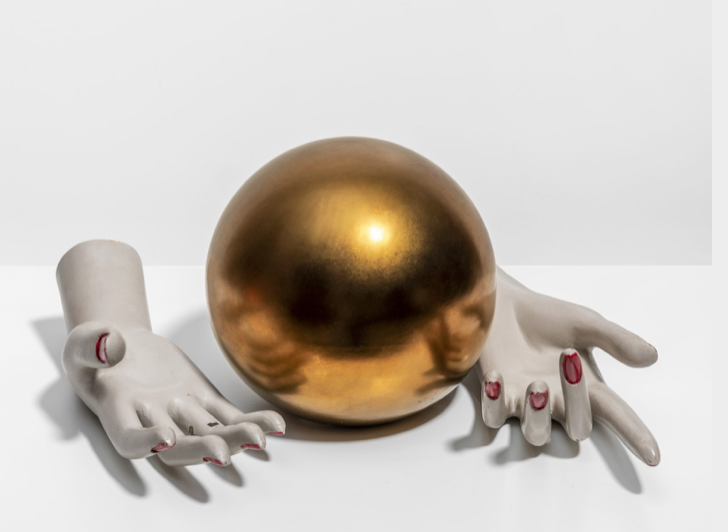
Alongside these images, the landscapes and found objects, as well as the forms created with clay, expand a repertoire in which the materials acquire a symbolic weight that transcends their appearance. The artist works with fragments of reality to construct unexpected associations and generate new meanings. Collage, accumulation, and intervention function as procedures for reinterpreting that which, in everyday life, usually remains hidden beneath a veneer of normality.
The feminist dimension of her work permeates this research without being reduced to mere illustrative discourse. Calvo places women and children at the center of a reflection on vulnerability, violence, and power relations. Her commitment is manifested in her ability to make silenced experiences visible and to question the cultural codes that have historically legitimized different forms of domination. The intensity of her language lies precisely in preventing these realities from becoming complacent images: her works challenge the viewer with discomfort and ambiguity.

You may be
interested
...