News
Gaudí enters the international scientific dialogue
From October 22 to 25, Barcelona is hosting the first international scientific congress dedicated specifically to the architect, with more than forty unpublished research studies that review his work from the perspective of construction, history and contemporary projection.
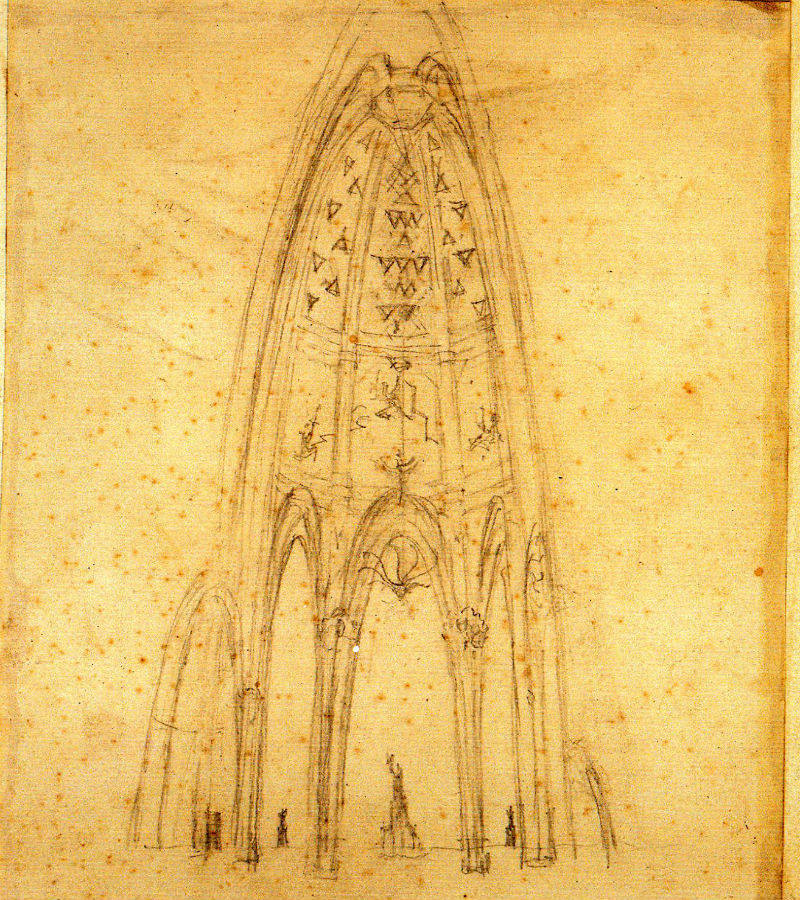
On the eve of the centenary of the death of Antoni Gaudí (1852-1926), Barcelona is preparing to become the stage for a new look at one of the most influential architects of modernity. The Gaudí International Congress 2026 will open its doors on October 22 with the aim of going beyond commemoration and placing the architect's work at the center of international scientific debate. Until October 25, the Auditorium of La Pedrera – Casa Milà will be the main venue for a meeting that will bring together specialists, researchers and professionals from different countries to share new readings on his thought, his construction methods and the validity of his legacy.
PURCHASE TICKETS FOR THE GAUDÍ CONGRESS
Conceived as the first disciplinary scientific congress dedicated to Gaudí on an international scale, the event was born with a vocation for continuity and with the expectation of being held every three years. The initiative aims to consolidate a stable space for academic exchange around a figure who, despite his extraordinary public projection, continues to offer numerous possibilities for research and interpretation.
The program brings together more than forty scientific contributions, all unpublished, which will make known research and discoveries that have not yet been published. One of the distinctive features of the congress is the commitment to new generations of researchers, together with the desire to put into dialogue disciplines that usually study the architect from different perspectives. The proposals have also gone through a double-blind peer evaluation process, a review system in which two independent experts examine each work without knowing the identity of the author or that of the other evaluator, with the aim of guaranteeing its scientific rigor.
Three perspectives to reread Gaudí
The congress is structured around three main axes that allow us to address the complexity of Gaudí's work. The first, Project, technique and conservation , emphasizes the processes of architectural conception, structural solutions, materials and the challenges posed by the preservation of his built heritage. The second, History, theory and documentation , delves into the cultural and intellectual context of the architect, as well as the documentary sources that allow us to reconstruct and reinterpret his career. The third, Communication, values and contemporary projection , examines the symbolic and informative dimension of his work, its reception and the influence it continues to exert on today's imagination.
This transversal structure responds to the desire to move away from a strictly monumental or biographical vision of Gaudí. His architecture is presented as a field of knowledge in which technical innovation, formal research, theoretical thought and cultural interpretations that have been constructed over time converge.
The meeting also wants to leave a mark that will last beyond the activities scheduled during these four days. The research presented, future scientific publications and the international network of professionals that will be generated around it should contribute to expanding knowledge about Gaudí and opening up new lines of study.

You may be
interested
...