
News
Bonart Conversations inaugurates a new stage of conversations with Rafael Tamayo in Bogotá
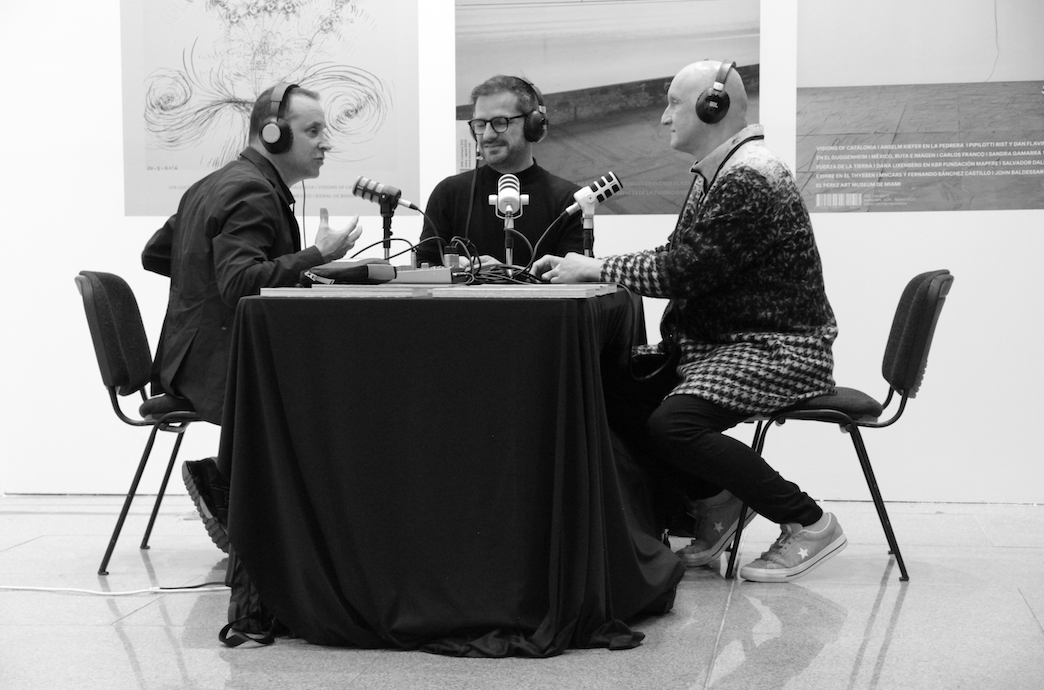
What place does the museum occupy in a society undergoing cultural transformations, political tensions, and new forms of relationship between communities and institutions? This question forms the backbone of the first episode of Bonart Dialogues in Bogotá , an audiovisual initiative with which Bonart reactivates its YouTube channel and opens a new phase of conversations about art, thought, and cultural policies. The protagonist of this first encounter is Rafael Tamayo, director of the Museum of Modern Art of Medellín (MAMM), with whom Ricard Planas and Fernando Cuevas discuss the challenges facing contemporary cultural institutions and their capacity to build meaningful connections with society.
The conversation took place in Bogotá, coinciding with the launch of issue number 3 of Bonart International , an edition that reinforces the publication's commitment to building bridges between Catalonia, Colombia, and other cultural contexts, creating spaces for exchange that transcend geographical boundaries. Within this framework, Bonart Dialogues revives the conversation format as a tool for engaging with those who, from different roles and perspectives, contribute to shaping the present and future of culture.
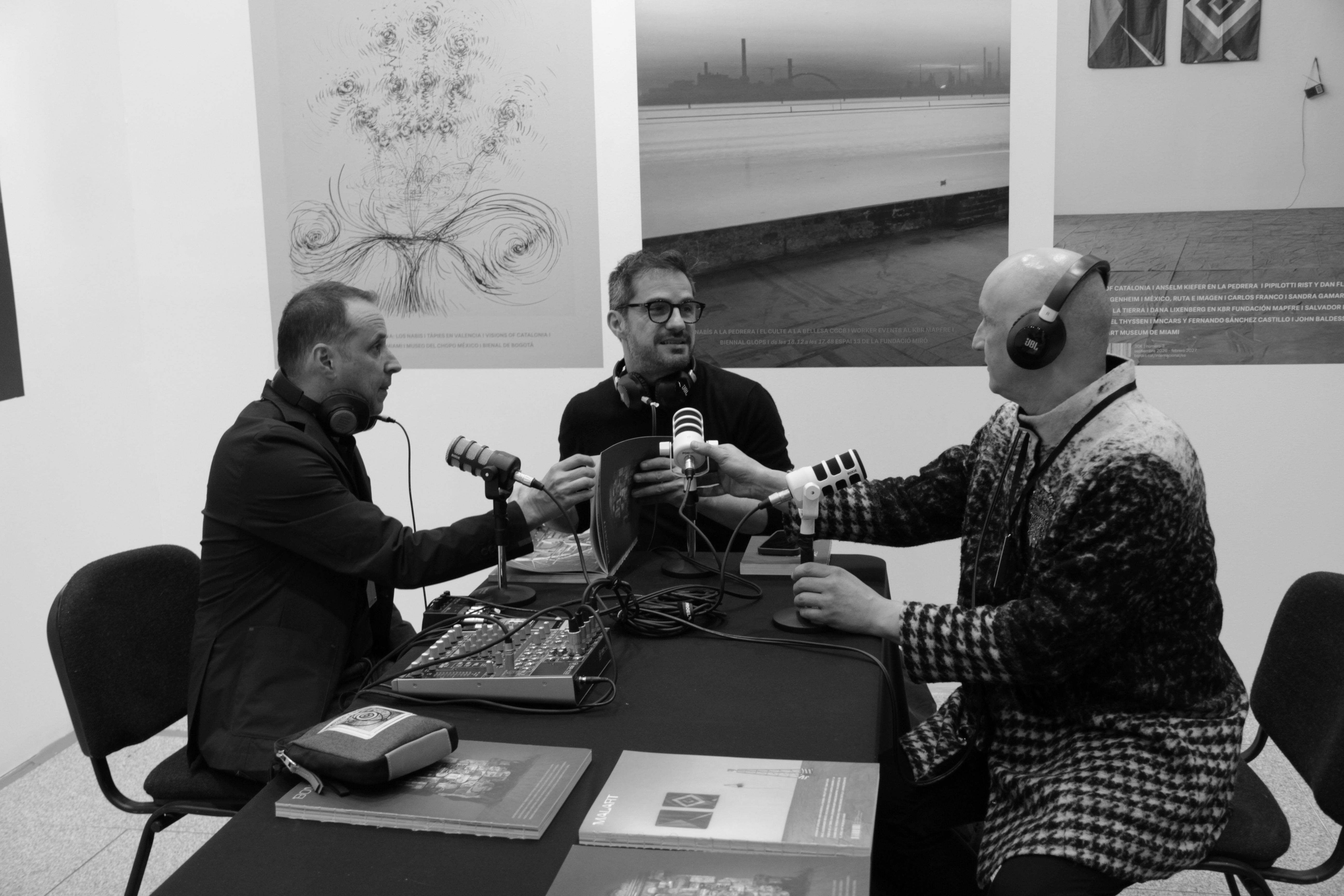
Rafael Tamayo's career offers a particularly fertile starting point for this reflection. His experience combines cultural management, academic research, and public policy development with an interdisciplinary background encompassing history, law, the humanities, and theology. With a doctorate in History from the National University of Colombia and a master's degree in International Law from the Université Paris II Panthéon-Assas, Tamayo has directed institutions such as the Museum of Memory of Colombia and BibloRed, the Bogotá District Network of Public Libraries. He has also collaborated with UNESCO and held positions related to international cooperation at the Colombian Ministry of Culture.
This approach allows us to envision a museum that transcends the idea of the institution as a space solely dedicated to preserving collections and organizing exhibitions. From this perspective, the contemporary museum must be a place for thought, participation, and encounter, capable of recognizing the particularities of its surroundings and establishing lasting relationships with the community. Its function is not limited to presenting works or articulating curatorial discourses, but also involves generating questions, fostering dialogue, and contributing to an understanding of the social realities in which it is embedded.
One of the central themes of the conversation is precisely the relationship between culture and community. How can a cultural institution listen to its surroundings without relinquishing its critical capacity? How can it construct narratives that connect artistic practices with the experiences of those who inhabit a territory? The answers require rethinking management models, mechanisms for participation, and the ways in which museums construct and communicate their narratives. They also invite us to consider the public dimension of culture as an area of shared responsibility.
This reflection takes on particular relevance in Latin America, where cultural institutions engage with diverse social and historical contexts and with communities whose experiences are not always represented in official narratives. In this scenario, the museum can act as a mediator, a platform for exchange, and a space for constructing new perspectives, without losing its capacity to question established discourses. The challenge lies in articulating local specificities with the international conversations that permeate the art world, avoiding both the isolation and the homogenization of cultural experiences.
The meeting between Ricard Planas, Fernando Cuevas, and Rafael Tamayo thus opens a conversation about the possibilities of imagining more open, critical institutions that are more connected to their time. This reflection aligns with Bonart's desire to expand its dissemination channels and generate audiovisual content capable of extending cultural dialogue beyond the printed page.
With this first episode of Bonart Dialogues in Bogotá , the magazine relaunches its YouTube channel and reinforces its commitment to formats that allow listeners to hear directly from the key figures involved. The initiative was launched in conjunction with the presentation of Bonart International issue number 3, but aims to establish its own space for exchange among professionals, artists, researchers, and cultural institution leaders.

You may be
interested
...