Ernest Pignon-Ernest in the Naples Corps
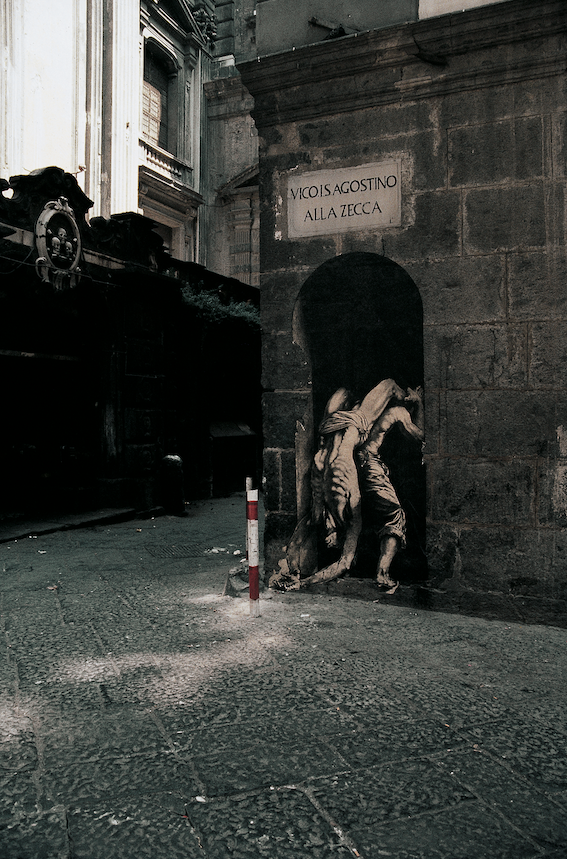
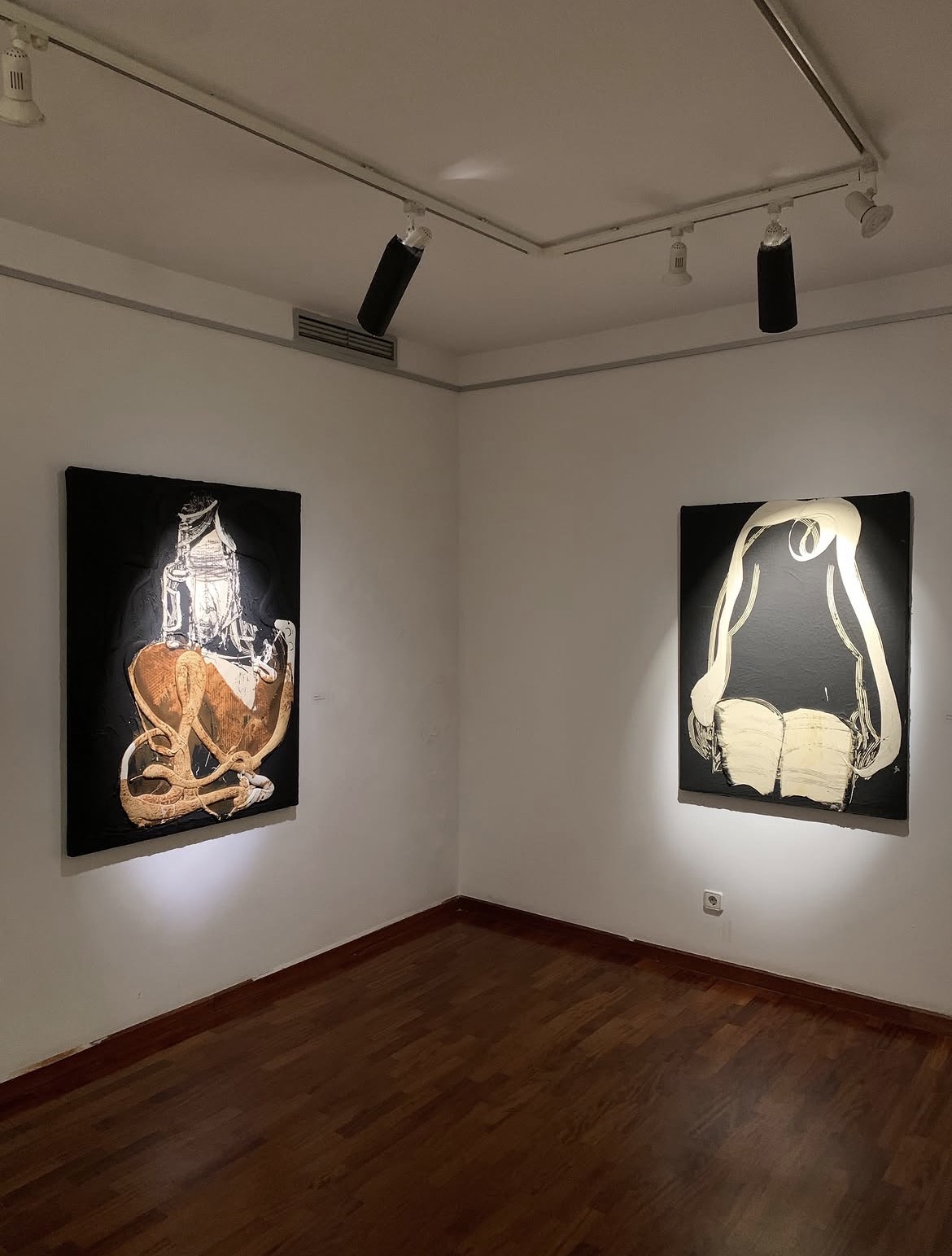
From May 23 to November 1, 2026, the Inguimbertine Library-Museum in Carpentras (Provence, France) will exhibit some two hundred works, some of them never before seen, created between 1988 and 2015 in Naples by the artist Ernest Pignon-Ernest (Nice, 1942). In France, Pignon-Ernest was the first to appropriate city walls, thirty years before the emergence of urban art. Since 1966, he has made the streets the main stage for his work, pasting life-size images onto building walls.
The Provençal exhibition, entitled Ombres de Naples (Shadows of Naples), brings together the traces of a carefully considered artistic, yet deliberately ephemeral, project. Between the late 1980s and early 1990s, the artist pasted his drawings (both life-size and in black and white) and screen prints in various corners of Naples' historic center. The subjects depicted evoked the Neapolitan painting tradition of the 17th century, particularly Caravaggio and the Caravaggisti, and were inspired by fragments of paintings held in Neapolitan museums and galleries.
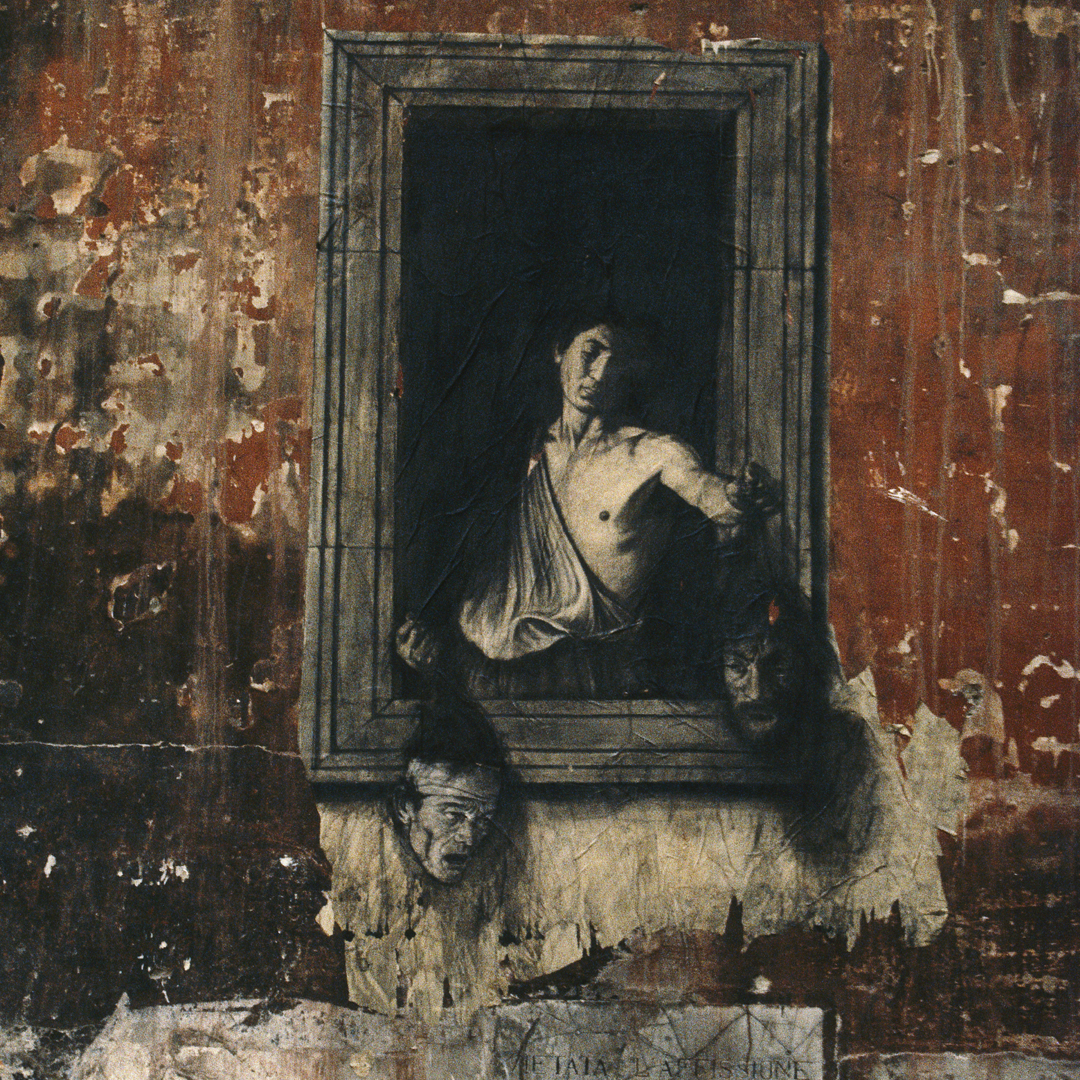
Paradoxically, the contrast between images evoking a reality of death, disease (the plague), and misery—which must have been quite shocking for Neapolitans at first—created an extremely vivid and impactful connection between the past and the present. In those years, Naples still bore the stark scars of the 1980 earthquake: the papers plastered on the walls mingled with the garbage that invaded every corner, the scaffolding supporting the ruined buildings, the widespread unemployment, and an existential disorder of daily life that constituted one of the city's most intimate characteristics. The material and symbolic reconstruction of the city had not yet begun, a reconstruction that, for some decades now, has given rise to an excess of tourism that is difficult for those who live there to bear.
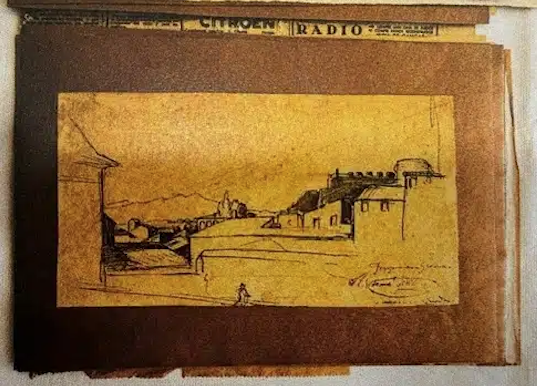
These images, whose frayed corners revealed the precariousness of their material, used artistic forms to express suffering, pain, hope, and life. Many of them were photographed by the artist himself, and these photos are on display in the exhibition along with dozens of preparatory sketches; others were photographed by Alain Volut, who in 1996 published the book Les ruelles de la mémoire to document Pignon-Ernest's Neapolitan interventions.
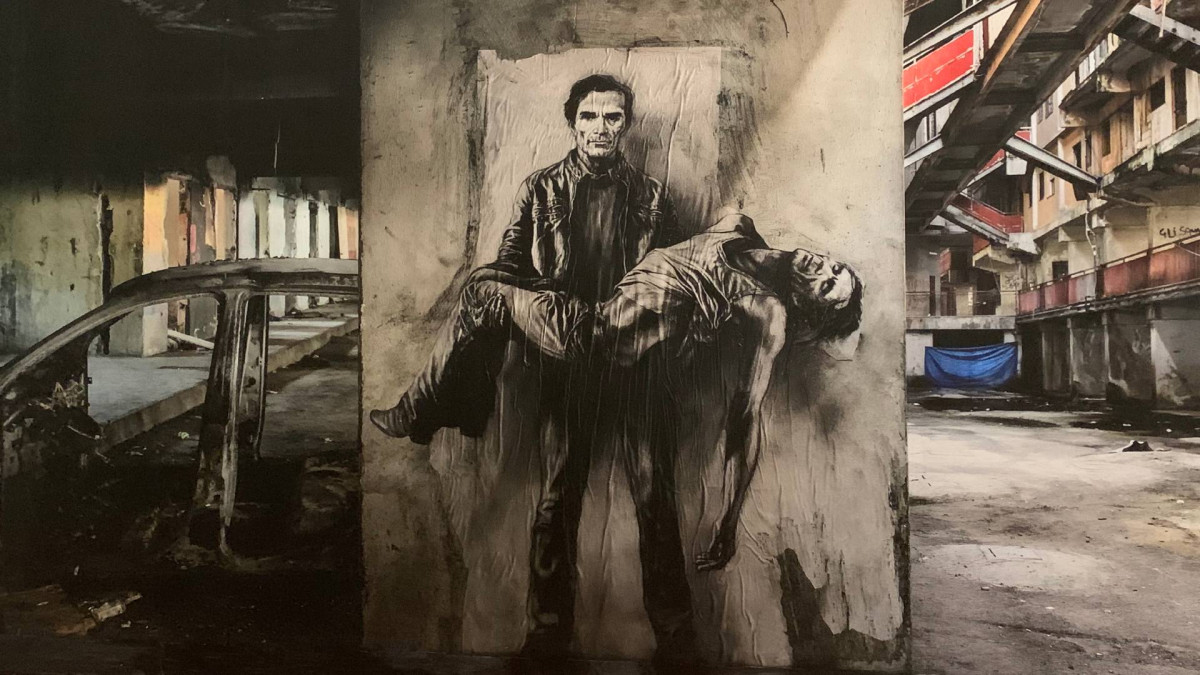
The catalogue for the Carpentras exhibition, curated by the artist himself, includes two texts (in addition to those by the artist): one by Jean-Yves Baudouy (director of the Inguimbertine) dedicated to Neapolitan works and books or books with Neapolitan themes preserved in the collections of the library-museum; the other, by Gennaro Toscano (scientific advisor of the collections of the National Library of France and a Neapolitan by origin), which evocatively reviews, from an art-historical point of view, the figurative sources of the 17th century of the work of Pignon-Ernest, and also offers us a small essay of "ego-history".
It is no coincidence that the exhibition is being held in this magnificent location in the Vaucluse region, as the dialogue with the museum's works reflects a shared connection with Italy. The Inguimbertine exhibition, which pays homage to the city of Naples, provides a direct link to the poets who also left their mark near Mount Ventoux, such as Petrarch.

You may be
interested
...