
News
Bernard Pagès, a key figure in contemporary French sculpture, has died.
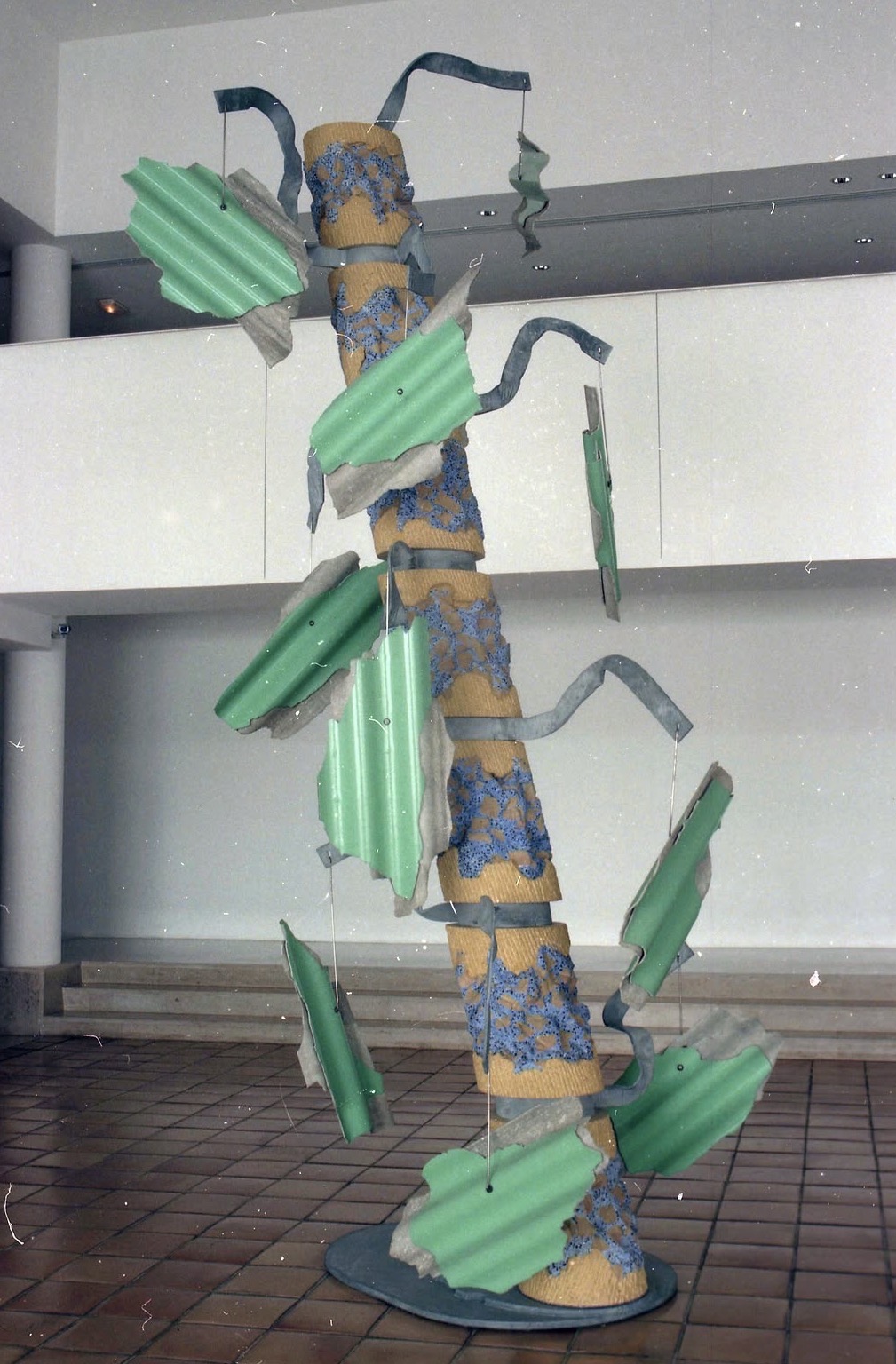
The sculptor and painter Bernard Pagès died on Tuesday, October 13, 2026, at the age of 86. Considered one of the leading figures in contemporary French sculpture, he was associated with the early years of the Supports/Surfaces movement, although he soon embarked on his own path, developing a unique artistic language. His work, built upon the dialogue between diverse materials, explored the physical properties of matter and the gestures that transform it, combining the boldness of assemblages with a constant search for balance.
Born in 1940 in Cahors, in southwestern France, Pagès grew up in a rural environment whose material and gestural memory would remain present throughout his career. After training at the Atelier d'art sacré in Paris, he settled in 1964 in Coaraze, in the interior of the Nice region. There, his encounters with Jacques Lepage, Claude Viallat, and Bernar Venet contributed to his distancing from sculptural conventions and his search for new possibilities for three-dimensional creation.
Closely associated with Supports/Surfaces, he participated in the early manifestations of this movement, which emerged in the late 1960s and was characterized by questioning the traditional foundations of painting and sculpture. However, in 1971 he distanced himself from that collective environment to delve into a personal investigation focused on materiality, construction, and the physical relationships between elements.
Wood, iron, stone, plaster, concrete, earth, rope, and brick form part of a sculptural vocabulary in which seemingly incompatible materials find new ways of coexisting. Since the late 1960s, his assemblages have challenged established hierarchies among sculptural materials and procedures. The surfaces retain their irregularities, densities, and strengths, while the traces of the manufacturing process remain visible. In his works, there is no intention to conceal the nature of the materials or to embellish them with finishes that disguise their original condition.
From his early Assemblages and Arrangements to the Piquets and Colonnes series, Pagès built a formal repertoire in which the relationships between components are as important as the elements themselves. Sculpture thus becomes a field of experimentation where weight, gravity, resistance, and fragility determine the configuration of each piece.
One of the most distinctive features of his work is its lack of grandiosity. His sculptures do not seek to impose themselves through monumental gestures, but rather to find a position and sustain themselves through a delicate system of forces. Even in the large-scale works, a certain vulnerability persists, as if each structure had to constantly negotiate with gravity, its stability the result of an ever-provisional conquest.


You may be
interested
...